# Server Room Humidity Control: Tech Company Case
In the heart of Singapore's bustling tech industry, where innovation meets high stakes, server rooms are the beating heart of operations. The protection and maintenance of these critical infrastructures are paramount, especially given Singapore's tropical climate. With over 15 years of industry experience in mould remediation and humidity control, we've seen firsthand the significant impact humidity can have on server rooms across various property types, from HDB flats to high-tech condominiums and landed properties.
Understanding Singapore's Climate
Singapore's climate is characterized by high humidity levels, often exceeding 80%, and consistent rainfall throughout the year. This creates a perfect environment for moisture buildup, which can lead to mould growth and equipment failure in server rooms.
Key Stat:
Singapore's average relative humidity is around 84% in the morning and 74% in the afternoon.
This high humidity poses a unique challenge for tech companies, particularly those operating from residential properties like HDB flats, where space and conditions might not be as controlled as in commercial buildings.
Challenges of High Humidity in Server Rooms
Maintaining optimal humidity levels in server rooms is crucial to prevent:
- Mould Growth: Excess moisture can lead to mould, which can damage sensitive electrical components and cause health issues.
- Condensation: High humidity can result in condensation on server equipment, leading to potential short circuits and hardware damage.
- Corrosion: Prolonged exposure to moisture can corrode metal parts, affecting the longevity and performance of servers.
Best Practices for Humidity Control in Server Rooms
1. Implementing Industry-Standard Equipment
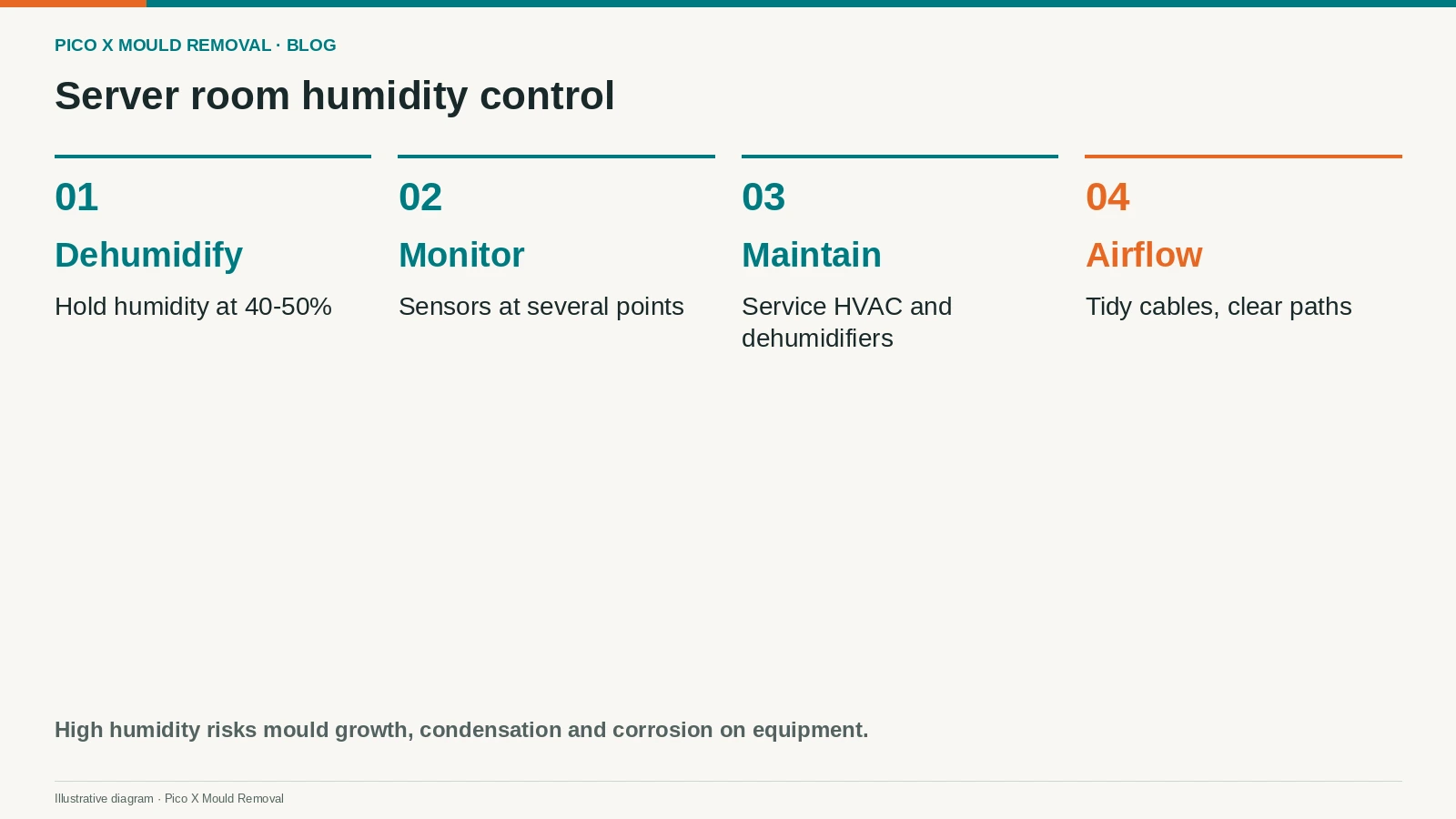
Utilizing professional-grade dehumidifiers and HVAC systems is essential for maintaining ideal humidity levels. These systems should be tailored to the specific needs of the server room, considering factors such as room size and equipment density.
- Dehumidifiers: Choose models designed for continuous operation and capable of maintaining humidity between 40-50%.
- HVAC Systems: Ensure they are calibrated to handle Singapore's climate, with features that allow precise humidity control.
2. Regular Monitoring and Maintenance
Ongoing monitoring is crucial to ensure optimal conditions.
- Install humidity sensors at various points in the server room to detect fluctuations.
- Schedule regular maintenance for all HVAC and dehumidification equipment to ensure efficiency and prolong lifespan.
3. Designing an Optimal Layout
The physical layout of server rooms can influence humidity control.
- Airflow Management: Use raised floors or ceiling plenums to enhance airflow.
- Cable Management: Organize cables to prevent airflow obstructions, reducing hotspots.
Real-Life Example: A Tech Company in Tampines
A prominent tech company in Tampines faced recurring issues with high humidity levels in their server room. By implementing industry-standard dehumidifiers and optimizing their HVAC system, they achieved a consistent humidity level of 45%, significantly reducing equipment downtime and preventing mould growth.
Cost Breakdown:
- Dehumidifiers: Custom-quoted after a site survey, depending on capacity
- HVAC Upgrades: Costs vary by provider and scope
- Humidity Sensors: Commercial monitoring is custom-quoted after a site survey
Local Property Considerations
Each property type in Singapore, from HDB flats to high-end condos, presents unique challenges for server room humidity control.
HDB Flats
- Space Constraints: Utilize compact dehumidifiers and efficient cable management to maximize space.
- Ventilation: Ensure adequate ventilation even in smaller rooms to facilitate airflow.
Condominiums
- Integrated Systems: Leverage building-wide HVAC systems with specialized settings for server rooms.
- Access to Professional Services: Benefit from in-house maintenance teams for regular checks.
Landed Properties
- Customization: Tailor solutions to larger, standalone server rooms with bespoke HVAC setups.
- Energy Efficiency: Implement energy-efficient equipment to manage costs in larger spaces.
Conclusion
Ensuring optimal humidity control in server rooms is not just about protecting equipment; it's about safeguarding your business's operational integrity. With professional expertise and adherence to industry best practices, you can prevent costly damage and maintain a reliable IT infrastructure.
Ready to optimize your server room's humidity control? Contact us today for a free inspection and personalized recommendations.Frequently Asked Questions
Why is humidity control important for server rooms?
Humidity control is crucial in server rooms to prevent equipment damage due to mould growth, condensation, and corrosion. Maintaining optimal humidity levels ensures the longevity and reliability of your IT infrastructure.
What is the ideal humidity level for server rooms?
The ideal humidity level for server rooms is typically between 40-50%. This range helps prevent moisture-related issues such as mould and condensation, which can damage sensitive electronic equipment.
How can homeowners manage server room humidity in HDB flats?
Homeowners in HDB flats can manage server room humidity by using compact dehumidifiers, ensuring adequate ventilation, and organizing cables to enhance airflow. Regular maintenance of equipment is also crucial to maintain optimal conditions.
What are the signs of high humidity in server rooms?
Signs of high humidity in server rooms include visible condensation on equipment, a musty odour indicating mould presence, and frequent equipment malfunctions. Monitoring humidity levels with sensors can help detect and address issues early.
How much does it cost to implement humidity control in a server room?
The cost of implementing humidity control in a server room can vary. Commercial dehumidification and humidity monitoring are custom-quoted after a site survey, while HVAC upgrade costs vary by provider and scope. Pico X quotes commercial work after a site survey, based on room size and specific requirements.