How to Use Singapore's Weather Data for Mould Prevention in HDBs
Singapore's tropical climate, characterized by high humidity and frequent rain, creates an ideal environment for mould growth in homes, particularly in Housing Development Board (HDB) flats. For homeowners, understanding how to use weather data to prevent mould is crucial. In this comprehensive guide, we'll explore how Singapore's weather patterns impact mould growth and what you can do to protect your home.
Expert Insight: "In Singapore, the combination of humidity, warmth, and frequent rainfall makes mould prevention a key concern for homeowners. Understanding and utilizing weather data can be your first line of defence."
Understanding Singapore's Climate and Its Impact on Mould Growth
Singapore's Weather Patterns
Singapore experiences a tropical rainforest climate with no distinct seasons. The weather is generally warm and humid throughout the year, with temperatures ranging from 25°C to 31°C. Relative humidity often exceeds 80%, and the annual rainfall averages about 2,340 mm.
Key Climate Statistics:
- Average Humidity: 84%
- Rainy Days Per Year: Approximately 167
- Average Temperature Range: 25°C - 31°C
How Weather Affects Mould Growth
Mould thrives in environments where there is moisture, warmth, and organic material. In Singapore, the high humidity levels provide the perfect breeding ground for mould spores, which can quickly lead to growth on walls, ceilings, and other surfaces if not properly managed.
Pro Tip: "Monitor the humidity levels in your home using a hygrometer. Keeping indoor humidity below 60% can significantly reduce the risk of mould growth."
Using Weather Data for Mould Prevention
Monitoring Humidity Levels
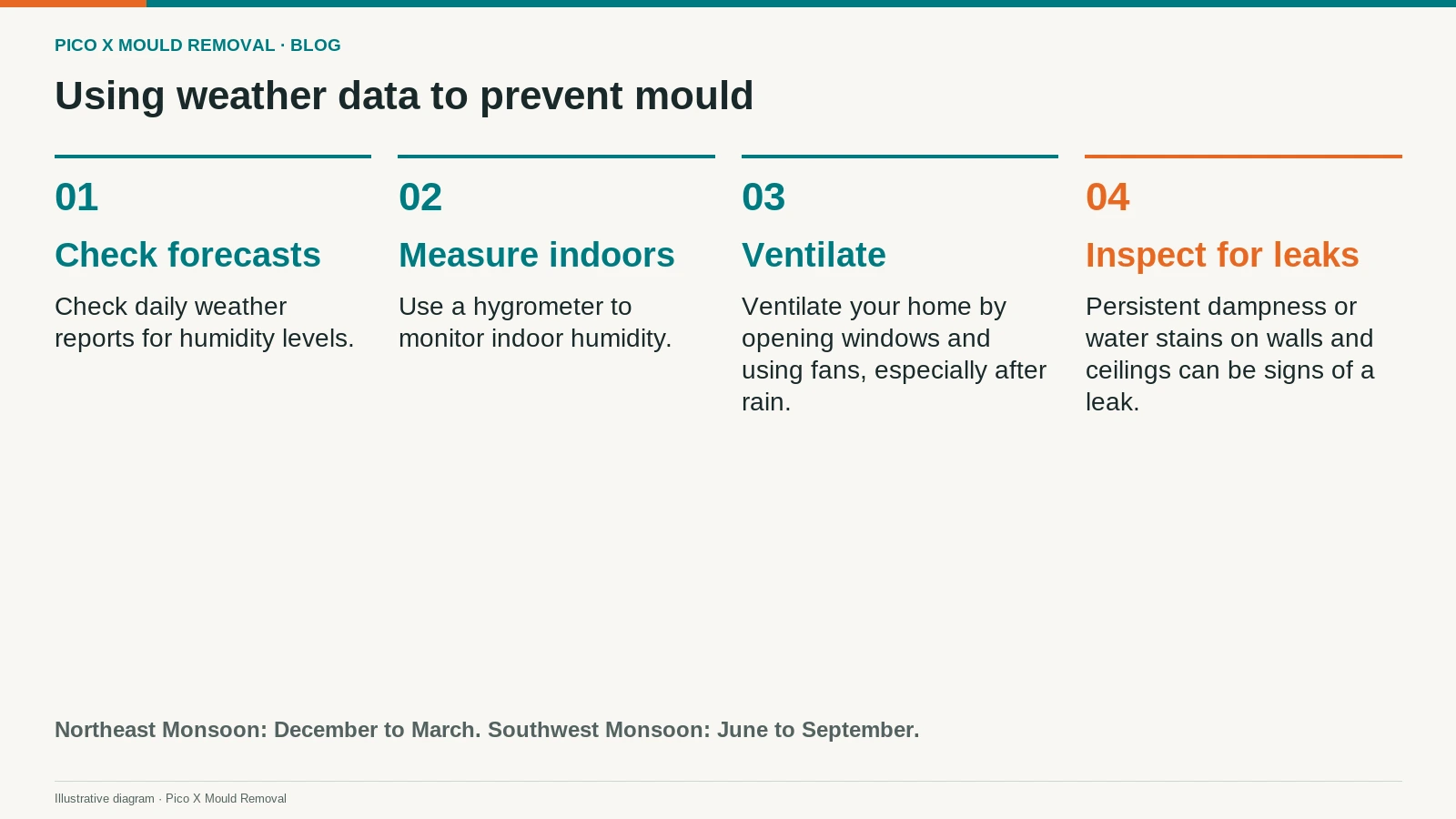
Regularly track the humidity levels reported in local weather forecasts. Websites and mobile apps provide real-time data that can help you anticipate when to take action. Consider investing in a digital hygrometer for precise indoor measurements.
Actionable Steps:
Adapting to Seasonal Changes
Singapore's two main monsoon seasons—the Northeast Monsoon (December to March) and the Southwest Monsoon (June to September)—bring increased rainfall and humidity. During these periods, extra vigilance is necessary.
- Northeast Monsoon: Focus on areas that are prone to condensation, such as kitchens and bathrooms.
- Southwest Monsoon: Ensure adequate ventilation and use dehumidifiers if necessary.
Responding to Heavy Rainfalls
Heavy rainfall can lead to water seepage and leaks, particularly in older HDB flats. Regular inspection and maintenance can help identify potential problem areas before they lead to mould growth.
Warning: "Persistent dampness or water stains on walls and ceilings can be signs of a leak. Address these issues promptly to prevent mould."
Mould Prevention Techniques for HDBs
Ventilation and Air Circulation
Proper ventilation is essential in preventing mould. Ensure that all rooms, especially bathrooms and kitchens, are well-ventilated. Use exhaust fans and open windows regularly to allow fresh air to circulate.
Regular Cleaning and Maintenance
Routine cleaning can prevent mould spores from taking hold. Focus on high-risk areas such as bathrooms, kitchens, and air conditioning units.
- Bathrooms: Use mould-resistant paint and clean with anti-fungal solutions.
- Kitchens: Wipe down surfaces regularly and ensure exhaust fans are operational.
- Air Conditioning Units: Clean filters every three months to prevent mould spores from circulating.
Professional Mould Inspections
Consider scheduling a professional mould inspection, particularly during high-risk periods. Experienced specialists can identify hidden mould and provide remediation advice.
Best Practice: "An annual inspection by trained professionals can uncover issues that may not be visible to the untrained eye, ensuring peace of mind."
Cost-Effective Solutions for Mould Prevention
Investing in Dehumidifiers
Dehumidifiers are an effective way to control humidity levels in your home. There are various models available to suit different space needs and budgets.
- Portable Units: Suitable for small to medium-sized rooms. Prices start at around S$150.
- Whole-House Systems: More expensive but ideal for larger spaces or severe humidity issues. Prices can range from S$1,000 to S$3,000.
DIY Mould Prevention Kits
There are several DIY mould prevention products available that can be used for maintenance and minor issues. These include anti-mould sprays, moisture absorbers, and mould-resistant paints.
Key Stat: "Studies show that maintaining indoor humidity below 60% can reduce the risk of mould growth by up to 50%."
Real-Life Examples of Mould Management in Singapore
Case Study: Tampines HDB
In Tampines, a family faced recurring mould issues due to high humidity and inadequate ventilation. By installing dehumidifiers and improving airflow, they significantly reduced mould growth and improved indoor air quality.
Case Study: Jurong Condo
A condo in Jurong saw frequent mould growth in the bathroom and kitchen. The owners implemented a regular cleaning schedule and used anti-fungal solutions, effectively controlling the problem.
Conclusion and Call to Action
Mould prevention in Singapore requires diligence and a proactive approach. By understanding and utilizing local weather data, homeowners can effectively manage and prevent mould growth in their HDB flats. If you suspect mould in your home, or simply want peace of mind, consider scheduling a free inspection with our team of experienced mould remediation specialists.
Contact us today to arrange your free inspection and protect your home from mould!Frequently Asked Questions
How does high humidity contribute to mould growth in Singapore?
High humidity levels, common in Singapore, provide the moisture that mould spores need to thrive. When indoor humidity exceeds 60%, it creates a conducive environment for mould to grow on walls, ceilings, and other surfaces. Using a dehumidifier and ensuring proper ventilation can help maintain optimal humidity levels and prevent mould.
What are the best ways to ventilate my HDB flat to prevent mould?
To ventilate your HDB flat effectively, open windows regularly to allow fresh air in, especially after cooking or showering. Use exhaust fans in kitchens and bathrooms to remove moisture-laden air. If natural ventilation is insufficient, consider using portable fans or air purifiers with HEPA filters to improve air circulation.
Are there affordable solutions for mould prevention in Singapore?
Yes, there are several cost-effective solutions for mould prevention. Portable dehumidifiers, priced from S$150, can help control indoor humidity. DIY solutions such as anti-mould sprays, moisture absorbers, and regular cleaning with anti-fungal products can also be effective. These measures are budget-friendly and can significantly reduce the risk of mould.
How often should I have my home inspected for mould?
It is advisable to have your home professionally inspected for mould at least once a year, particularly if you have experienced issues in the past. Regular inspections by trained specialists can identify hidden mould and prevent potential health risks associated with prolonged exposure.
What should I do if I find mould in my home?
If you discover mould in your home, act promptly to clean the affected area using anti-fungal solutions and improve ventilation. For extensive mould growth, it is best to consult professional mould remediation specialists who can safely and effectively remove the mould and prevent future occurrences.