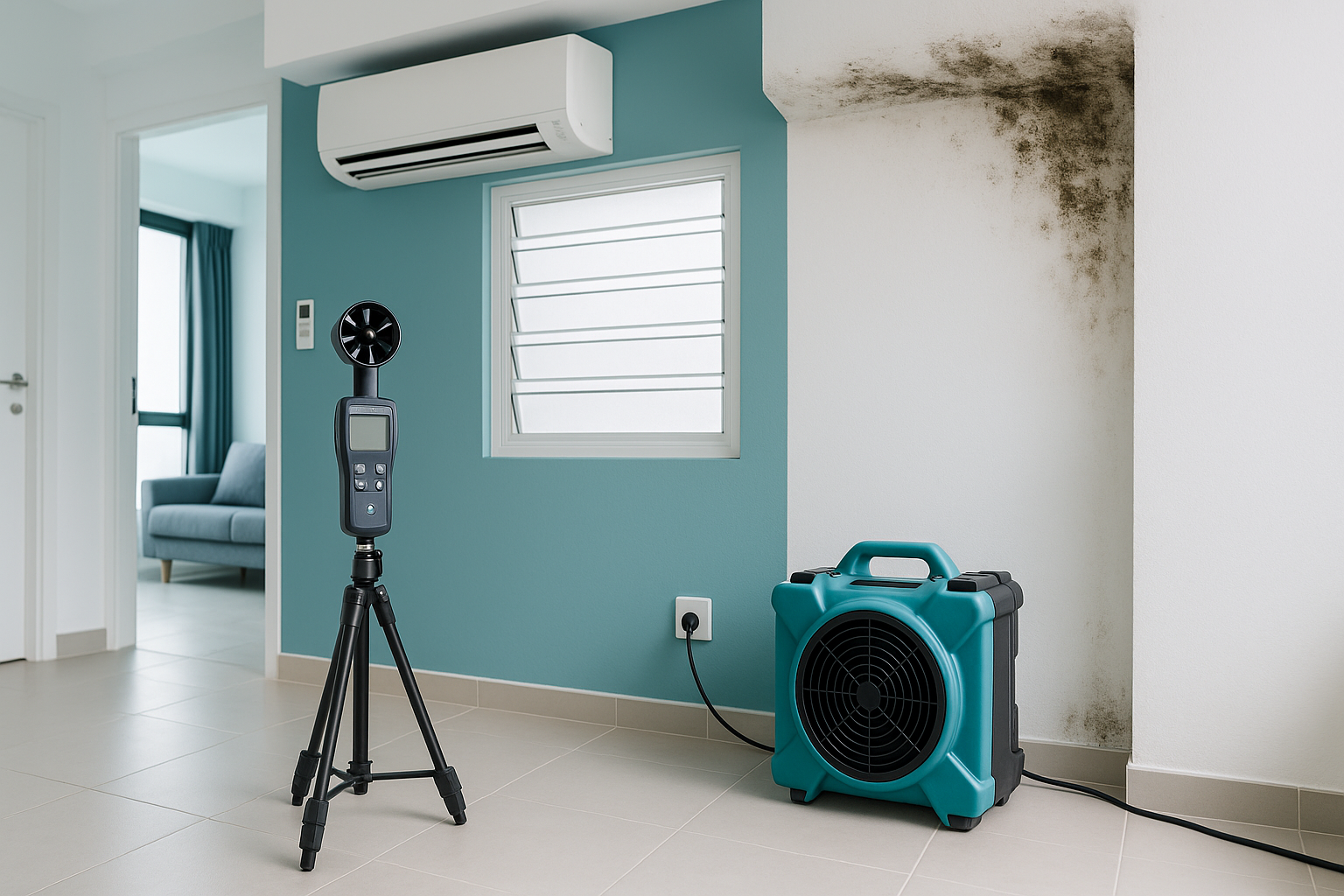
# Hidden Mould: Where to Look in Your HDB Flat
In Singapore's humid tropical climate, mould is more than just an unsightly nuisance; it can pose serious health risks and damage your home. As a seasoned mould remediation specialist with over 15 years of industry experience, I've seen first-hand how mould can quietly invade even the cleanest of homes. This guide will help you uncover hidden mould in your HDB flat and provide insights into effective mould prevention strategies.
The Singapore Climate and Mould Growth
Understanding the Humidity Factor
Singapore's climate is characterized by high humidity levels, typically ranging from 70% to 90%. This creates an ideal environment for mould spores to thrive. Key Stat: According to recent data, Singapore experiences an average of 178 rainy days per year, further amplifying moisture levels.
Expert Insight: "Mould thrives in moisture-rich environments. Regular ventilation and humidity control are essential in preventing its growth."
Impact on Different Property Types
While HDB flats are the focus here, it's important to note that different property types in Singapore, including condominiums and landed properties, also face similar mould challenges. The building materials and construction designs may vary, but the underlying risk factors remain consistent.
Common Hidden Mould Spots in HDB Flats
Bathrooms
Bathrooms are notorious for mould due to constant moisture exposure. Areas to inspect include:
Tile grout and caulking Under sinks and around plumbing fixtures Shower curtains and liners Best Practice: Regularly clean and dry these areas, and consider using a dehumidifier to reduce overall moisture.Kitchens
Kitchens, especially in HDB flats, can be compact and poorly ventilated, making them hotspots for mould growth.
Behind and under appliances like refrigerators and dishwashers Inside cabinets, especially those near sinks In exhaust fans and ductsPro Tip: "Ensure your kitchen is well-ventilated while cooking to reduce humidity levels."
Bedrooms
While bedrooms might seem unlikely places for mould, they can harbour hidden spores, particularly if humidity levels are not controlled.
Behind wardrobes and under beds On mattresses and pillows Around air conditioning units Actionable Tip: Use moisture absorbers or silica gel packs to keep humidity in check.Living Rooms
Living rooms can also be susceptible to mould, particularly in areas with poor airflow.
In and around windowsills Behind curtains and drapes Under carpets and rugs Professional Insight: Regular cleaning and ensuring good ventilation can significantly reduce the risk of mould development.Balconies and Utility Areas
These areas are often exposed to the elements, making them prime candidates for mould.
On walls and ceilings exposed to rain In storage areas with poor ventilation Around washing machines and dryersWarning: "Unchecked mould in these areas can quickly spread to other parts of your home."
Industry Best Practices for Mould Detection and Removal
Professional Mould Inspection
Hiring trained specialists for mould inspections ensures a thorough evaluation of your home. Our professional-grade equipment can detect mould even in hidden areas.
Effective Mould Removal Techniques
Upon detection, immediate action is critical. Here’s a step-by-step approach:
Key Stat: In Singapore, professional mould removal costs range from S$500 to S$2,000, depending on the extent of the infestation.
Preventive Measures
Regular Cleaning: Use mould-resistant cleaning products. Humidity Control: Maintain indoor humidity below 60%. Ventilation: Ensure adequate airflow throughout your home.Singapore-Specific Examples: Case Studies
Tampines: A High-Rise Challenge
Residents in Tampines often face mould issues due to high-rise living where airflow is limited. In one case, strategic placement of dehumidifiers and improved ventilation resolved persistent bathroom mould problems.
Jurong: Moisture from Nearby Bodies of Water
Properties near Jurong Lake tend to have higher ambient moisture. A recent project involved sealing exterior walls and installing moisture barriers to prevent mould ingress.
Bishan: Older HDB Flats
Older flats in Bishan often have outdated ventilation systems. A comprehensive mould remediation project included upgrading ventilation and applying mould-resistant paints.
Conclusion
Addressing hidden mould in your HDB flat requires vigilance and professional intervention. By understanding where to look and implementing preventive measures, you can protect your home from mould's damaging effects. If you suspect mould in your home, don't wait—schedule a free inspection with our trained specialists today for peace of mind.
Frequently Asked Questions
How can I prevent mould in my HDB flat?
To prevent mould in your HDB flat, it's crucial to maintain proper ventilation and control humidity levels. Regularly clean areas prone to moisture such as bathrooms and kitchens, and use dehumidifiers if necessary. Routine inspections, especially during the rainy season, can help in early detection and prevention of mould growth.
What should I do if I find mould in my flat?
If you find mould in your flat, it's important to act promptly. Start by cleaning small patches with vinegar or baking soda solutions. For larger infestations, consider hiring professional mould remediation specialists who can effectively remove mould and address underlying moisture issues.
Can mould affect my health?
Yes, exposure to mould can lead to respiratory problems, allergic reactions, and even more severe health issues for individuals with compromised immune systems. Mould spores can irritate the eyes, skin, nose, and throat, making it essential to address mould issues promptly.
Why is mould more common in Singapore?
Mould is more common in Singapore due to its tropical climate, characterized by high humidity and frequent rainfall. These conditions create an ideal environment for mould spores to thrive. Regular maintenance and humidity control are key to managing mould growth in such climates.