# How to Dry Your Home After Water Damage: A Comprehensive Guide for Singapore Homeowners
Water damage can strike unexpectedly, leaving homeowners in a state of disarray. Whether it's due to a burst pipe, heavy rainfall, or a malfunctioning appliance, the aftermath can be overwhelming. In Singapore, with its tropical climate characterized by high humidity and frequent rain, the risk of water damage is particularly significant. As a seasoned mould remediation specialist, I understand the urgency of addressing water damage promptly to prevent further complications such as mould growth. This guide will walk you through the process of drying your home effectively and efficiently, ensuring the safety and comfort of your living environment.
Water damage doesn't discriminate—it can impact HDB flats in Tampines, luxurious condos in Marina Bay, or spacious landed properties in Bukit Timah. Regardless of your home type, the steps to drying your home remain consistent. It's crucial to act swiftly to mitigate damage and avoid costly repairs. Let's dive into the specifics of how you can tackle water damage effectively.
Understanding Water Damage and Its Implications
Types of Water Damage
Water damage can be categorized into three types:
Impact of Water Damage
- Structural Damage: Prolonged exposure can weaken structural elements, compromising the safety of your home.
- Mould Growth: In Singapore's humid climate, mould can develop within 24-48 hours after water intrusion.
- Health Risks: Mould exposure can lead to respiratory issues and allergic reactions.
Warning: Always address water damage promptly to minimize health risks and structural integrity issues.
Essential Steps to Dry Your Home
Drying your home after water damage involves several critical steps. Follow this guide to ensure your home is thoroughly dried and safe from potential harm.
1. Ensure Safety First
Before you start the drying process, ensure the safety of your home environment.
- Switch Off Power: To avoid electrical hazards, turn off the power supply to affected areas.
- Wear Protective Gear: Use gloves and masks to protect against contaminants.
Pro Tip: If the water damage involves black water, consider hiring professionals due to health risks.
2. Remove Standing Water
The first step in drying your home is to remove any standing water.
3. Dry Out Affected Areas
Once the standing water is removed, focus on drying out the remaining moisture.
Use of Dehumidifiers and Fans
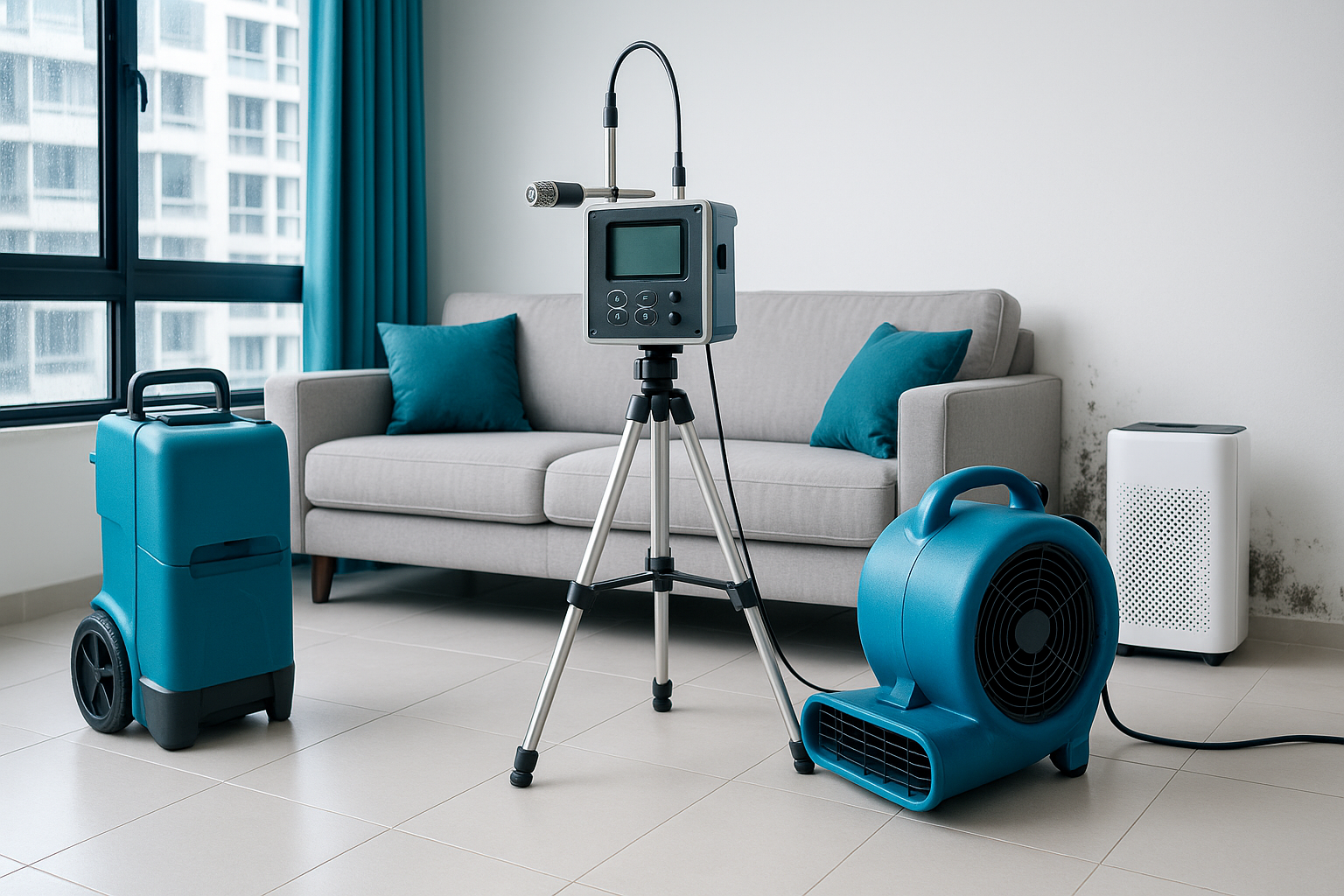
- Dehumidifiers: Essential in Singapore to reduce humidity levels and speed up drying.
- Fans: Increase air circulation to aid in evaporation.
Key Stat: Relative humidity in Singapore averages around 84%, emphasizing the need for effective dehumidification.
Natural Ventilation
- Open Windows and Doors: Allow cross-ventilation to enhance air movement.
- Remove Wet Items: Take out carpets, furniture, and other items that can trap moisture.
4. Monitor for Mould Growth
Given Singapore's climate, vigilance against mould is crucial.
- Inspect Regularly: Check for any signs of mould, especially in hidden areas like under carpets and behind walls.
- Use Anti-Mould Solutions: Apply NEA-approved fungicides to areas prone to mould.
Expert Insight: "In Singapore, mould can develop rapidly due to high humidity. Regular inspections post-water damage are essential."
5. Repair and Restore
After ensuring your home is dry, focus on repairs.
- Structural Repairs: Address any weakened structures with professional help.
- Cosmetic Repairs: Paint and refurbish as needed to restore your home's appearance.
Best Practice: Engage local contractors familiar with Singapore's building standards for effective repairs.
Cost Considerations for Drying Your Home
Understanding the potential costs involved can help you budget effectively.
- Dehumidifier Rental: S$50 - S$150 per day, depending on the model and capacity.
- Professional Water Extraction: S$300 - S$1,000, varying by severity.
- Mould Remediation: S$500 - S$3,000, depending on extent and area size.
Key Stat: Addressing water damage promptly can save up to 40% on future repair costs.
NEA Guidelines and Local Regulations
Adhering to local guidelines ensures the safety and legality of your remediation efforts.
- NEA Recommendations: Follow guidelines on safe mould removal and disposal.
- HDB Regulations: Check for specific rules regarding repairs and modifications in public housing.
Warning: Non-compliance with NEA guidelines can lead to fines and further complications.
Conclusion
Water damage is an unfortunate yet manageable issue for Singapore homeowners. By following the outlined steps and remaining vigilant against potential mould growth, you can safeguard your home and health. If you find the task overwhelming, don't hesitate to seek professional assistance. Schedule a free inspection with our expert team today to ensure your home is safe and secure.
Frequently Asked Questions
How quickly should I act after noticing water damage?
It's crucial to begin drying your home within 24-48 hours to prevent mould growth, especially given Singapore's humid climate. Prompt action can significantly reduce the risk of structural damage and health issues.
Can I use household fans to dry my home effectively?
Household fans can help increase air circulation but may not be sufficient alone. In Singapore, using dehumidifiers in conjunction with fans is recommended to effectively reduce humidity levels and speed up the drying process.
What should I do if I discover mould after water damage?
If mould is present, it's important to address it immediately. Use NEA-approved mould removal products and consider hiring professionals for extensive infestations, especially if black water was involved.
Are there specific NEA guidelines for water damage restoration?
Yes, the NEA provides guidelines on mould removal and safe practices for handling water damage. Ensuring compliance with these guidelines is essential to avoid fines and ensure safety.
Is professional water damage restoration expensive?
These are typical market ranges in Singapore, not Pico X Health pricing: professional water extraction runs about S$300–S$1,000, with mould remediation on top. Our own mould pricing is fixed at Essential Care S$299 per full wall or ceiling (S$199 first surface during the promo) and Signature Care S$400.