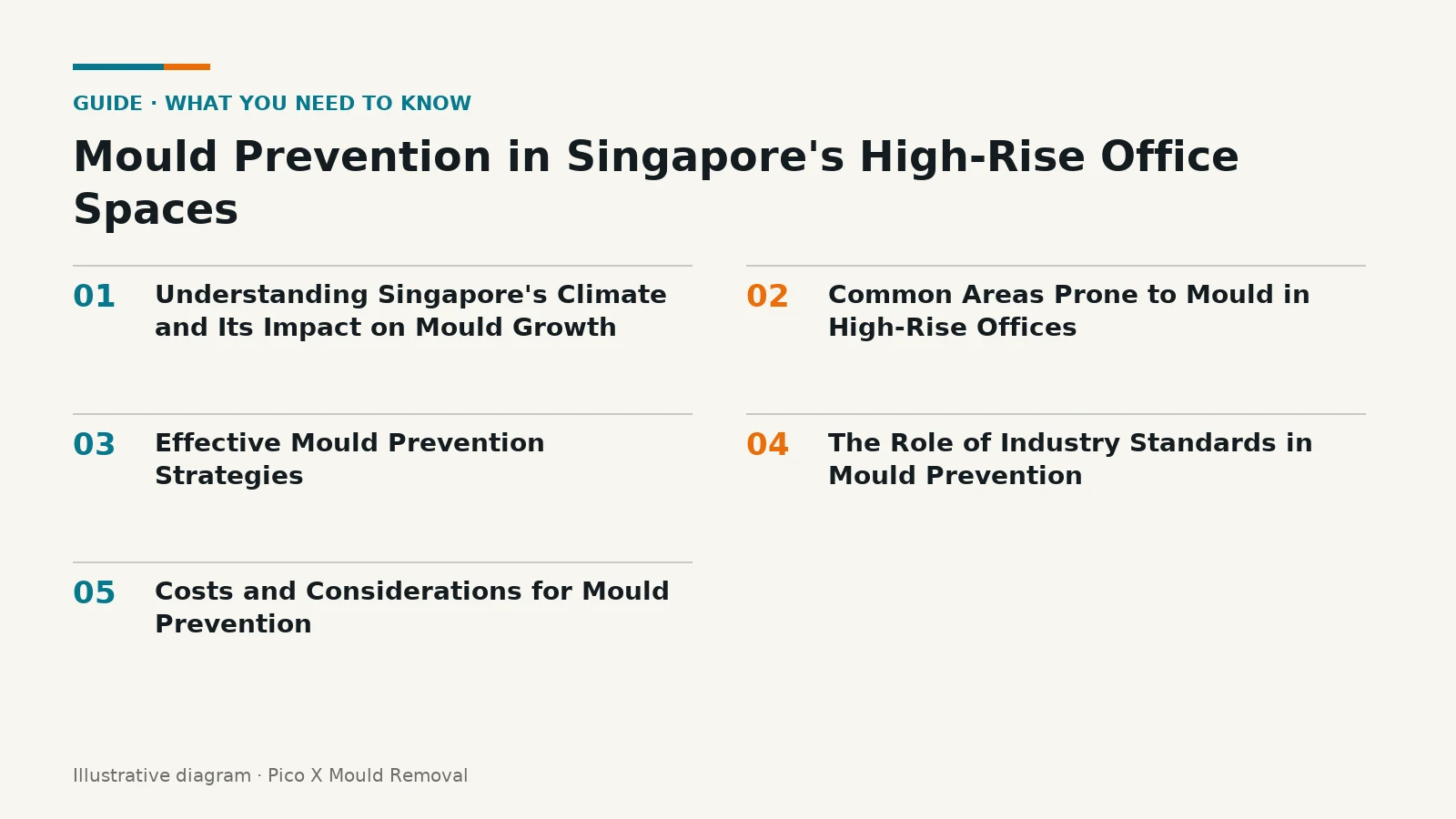
# Mould Prevention in Singapore's High-Rise Office Spaces
Singapore's tropical climate, characterized by high humidity and frequent rainfall, creates an ideal breeding ground for mould. For homeowners and office managers alike, understanding how to prevent mould growth in high-rise spaces is crucial. Given the unique challenges posed by Singapore's climate, particularly in densely populated areas like Tampines, Jurong, and Marina Bay, proactive mould prevention strategies are essential.
In this comprehensive guide, we'll explore expert tips and industry-standard practices for preventing mould in high-rise office spaces in Singapore. With our 15+ years of industry experience, we've tailored these insights to help you maintain a healthy, mould-free environment.
Understanding Singapore's Climate and Its Impact on Mould Growth
High Humidity Levels
Singapore's average humidity levels range between 70% and 90%, creating a conducive environment for mould growth. This is particularly problematic in spaces with poor ventilation, where moisture accumulates over time.
- Key Stat: Relative humidity levels above 60% can significantly increase the risk of mould growth.
Frequent Rainfall
The island experiences frequent rains, especially during the monsoon seasons. This can lead to water intrusion in high-rise buildings, providing the moisture needed for mould spores to flourish.
- Best Practice: Regularly inspect windows and building facades for leaks that could lead to mould-friendly environments.
Common Areas Prone to Mould in High-Rise Offices
HVAC Systems
Heating, ventilation, and air conditioning (HVAC) systems can harbor mould if not maintained properly. Dust and moisture can accumulate in the ducts, promoting mould growth.
- Actionable Tip: Schedule regular cleaning and maintenance of HVAC systems to prevent mould build-up.
Bathrooms and Pantry Areas
These areas often have higher humidity levels due to water usage, making them prime targets for mould.
- Pro Tip: Install exhaust fans and dehumidifiers to manage moisture levels effectively.
Carpets and Ceilings
Carpets can trap moisture, while ceilings, especially in damp conditions, are susceptible to mould growth.
- Warning: Regularly inspect these areas and replace any materials that show signs of mould damage promptly.
Effective Mould Prevention Strategies
Regular Inspections and Maintenance
Conducting regular inspections is crucial in identifying potential problem areas before they escalate.
Improving Ventilation
Proper ventilation reduces humidity levels, making it harder for mould to thrive.
- Best Practice: Ensure all office spaces have adequate airflow. This can be achieved through open windows, fans, or mechanical ventilation systems.
Utilizing Professional-Grade Dehumidifiers
Dehumidifiers can significantly reduce indoor humidity levels, making it difficult for mould to develop.
- Expert Insight: Invest in professional-grade dehumidifiers that are suitable for larger office spaces. Ensure they are appropriately sized for maximum effectiveness.
The Role of Industry Standards in Mould Prevention
Professional Training and Certifications
Our team uses industry-standard practices and is equipped with professional training to handle mould prevention effectively. Certifications such as those from the IICRC ensure that best practices are always followed.
- Key Stat: Regular training updates ensure that our team remains knowledgeable about the latest industry techniques and standards.
Tailored Solutions for Singapore's Property Types
Different property types, whether HDB flats, condos, or commercial buildings like those in Marina Bay, require unique solutions tailored to their specific needs.
- Actionable Tip: Customize mould prevention plans to suit the unique characteristics of your property type.
Costs and Considerations for Mould Prevention
Cost Breakdown
Investing in mould prevention can save significant costs in the long run by avoiding extensive damage and health issues.
Long-Term Benefits
Investing in mould prevention not only protects the structural integrity of your office space but also safeguards the health of its occupants.
Expert Insight: Preventative measures can enhance employee health and productivity, reducing sick days linked to mould exposure.
Conclusion
Mould prevention in Singapore's high-rise office spaces requires a proactive approach, combining regular maintenance, professional inspections, and the implementation of industry-standard practices. By understanding the unique challenges posed by Singapore's climate, you can efficiently prevent mould growth and maintain a healthy, productive environment.
For a comprehensive assessment of your office space and tailored mould prevention strategies, schedule a free inspection with our trained specialists today.
Frequently Asked Questions
Why is mould prevention important in Singapore's high-rise office spaces?
Mould prevention is crucial in Singapore due to the high humidity and frequent rainfall, which create ideal conditions for mould growth. In high-rise office spaces, mould can affect air quality, cause health issues, and lead to significant property damage if not addressed promptly.
What are the most effective ways to prevent mould in office spaces?
Effective mould prevention strategies include regular inspections, improving ventilation, using professional-grade dehumidifiers, and maintaining HVAC systems. Tailoring these strategies to the specific needs of your office space ensures the best results.
How often should I schedule mould inspections for my office?
It's recommended to schedule professional mould inspections at least twice a year. However, in areas prone to moisture or with previous mould issues, more frequent inspections may be necessary to prevent recurrence.
What role do dehumidifiers play in mould prevention?
Dehumidifiers help reduce indoor humidity levels, making it difficult for mould to thrive. Professional-grade dehumidifiers are particularly effective in large office spaces, ensuring the environment remains dry and inhospitable to mould.
Can I handle mould prevention on my own, or should I hire professionals?
While basic maintenance can be done on your own, professional services are crucial for comprehensive mould prevention. Trained specialists can identify potential issues early and apply industry-standard solutions to prevent mould effectively.