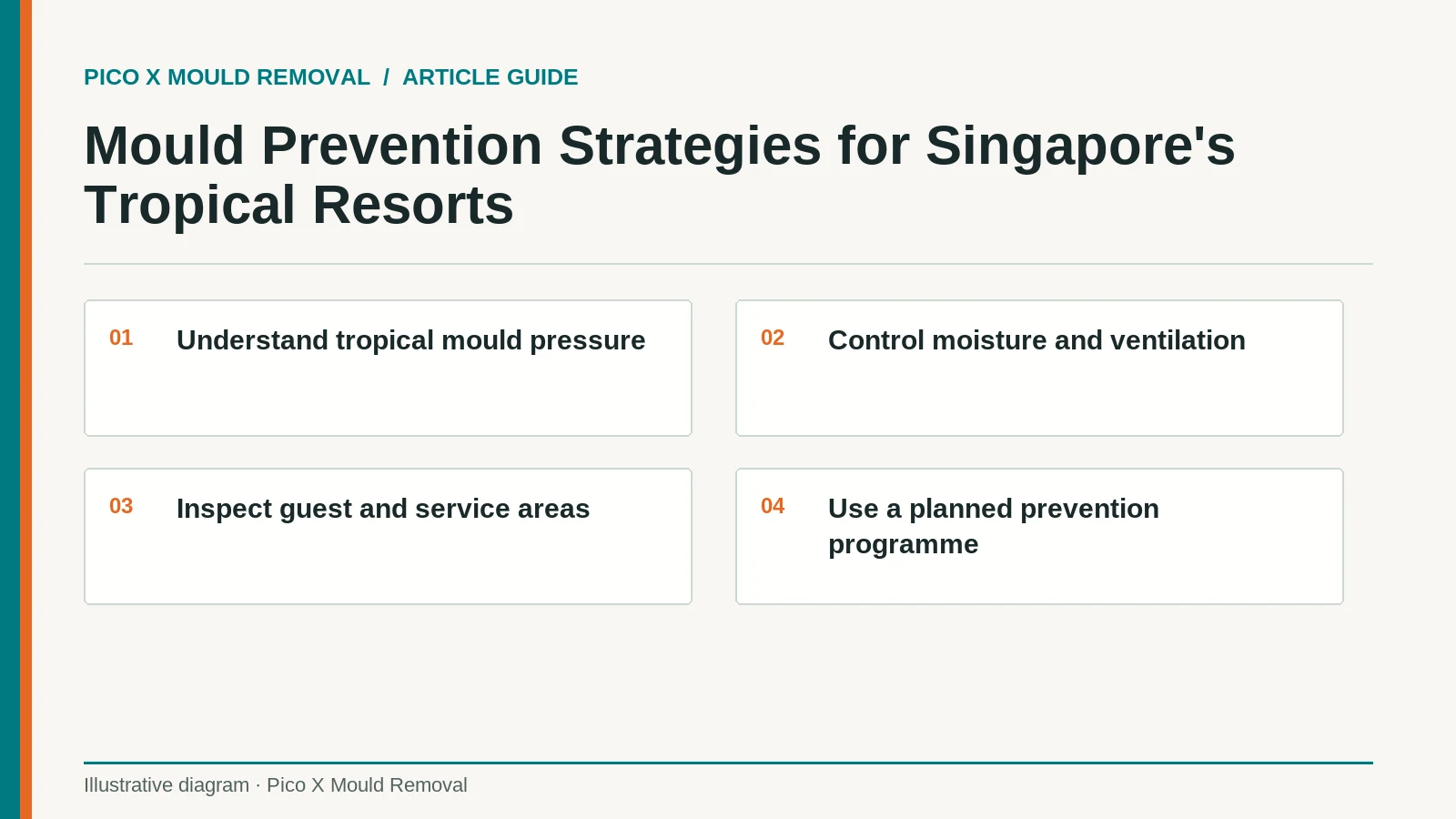
Keeping Mould at Bay: Essential Prevention Strategies for Singapore's Tropical Resorts
Singapore's tropical climate is both a boon and a bane. While it provides lush greenery and warm temperatures year-round, it also presents unique challenges, especially for property owners. Among these challenges, mould growth stands out as a persistent and often frustrating issue. With over 15 years of experience in mould remediation, I have seen firsthand how mould can affect the aesthetics and health of Singapore’s homes, particularly in resort-like properties. This article arms you with industry-standard strategies to prevent mould, ensuring your Singapore home remains a sanctuary.
Understanding Singapore's Climate and Its Impact on Mould Growth
Tropical Climate: A Double-Edged Sword
Singapore experiences a humid equatorial climate, characterized by consistent temperatures averaging 25-31°C (77-88°F) and high humidity levels, often exceeding 80%. These conditions create an ideal breeding ground for mould, which thrives in warm, moist environments.
Key Stat: On average, Singapore receives about 2,340 mm of rainfall annually, with the wettest months from November to January.
How Mould Affects Different Property Types
- HDB Flats: With shared walls and often limited ventilation, mould can quickly spread from one unit to another.
- Condominiums: While more upscale, condos can suffer from mould in communal areas like gyms and pools.
- Landed Properties: Larger spaces mean more areas to monitor, with basements and attics being particularly vulnerable.
Industry-Standard Mould Prevention Strategies
Ventilation: The First Line of Defense
Proper ventilation is crucial in preventing mould by reducing moisture levels indoors.
- Install exhaust fans in bathrooms and kitchens to expel humid air.
- Utilize dehumidifiers to maintain indoor humidity below 60%.
- Open windows and doors regularly to improve airflow.
Pro Tip: Regularly check and clean air-conditioner filters to maintain efficient airflow and prevent moisture build-up.
Regular Maintenance and Inspection
A proactive approach to maintenance can significantly reduce the risk of mould.
Professional-Grade Cleaning Practices
Incorporate professional-grade cleaning practices to keep mould at bay.
- Use anti-mould sprays on surfaces prone to dampness.
- Employ high-grade cleaning products that eliminate mould spores without harmful chemicals.
Expert Insight: Regular professional cleaning of carpets and upholstery can prevent mould spores from taking root in these often-overlooked areas.
Localized Solutions for Singapore Homes
Tailoring Strategies for Different Areas
- Tampines & Jurong Properties: With frequent rain and humidity, focus on robust waterproofing solutions.
- Marina Bay Residences: Leverage advanced HVAC systems for optimal indoor climate control.
- Bishan Homes: Utilize landscaping to direct rainwater away from home foundations.
Cost Considerations
While prevention may require an upfront investment, it is often more cost-effective than remediation. Here’s a rough breakdown:
- Dehumidifiers: S$200 - S$500
- Ventilation Systems: S$1,000 - S$3,000
- Professional Inspections: S$150 - S$500 per session
The Importance of Professional Mould Remediation
In cases where mould has already taken hold, professional remediation is essential. Trained specialists use advanced techniques and equipment to effectively remove mould and prevent future growth. Their expertise ensures that remediation is thorough, safe, and aligned with best practices.
Warning: Attempting DIY mould removal can often exacerbate the problem. Without proper equipment and knowledge, you risk spreading mould spores further.
Call to Action: Schedule Your Free Inspection
The health and safety of your home should never be compromised. If you suspect mould or simply want peace of mind, contact our team of trained specialists for a free inspection. We bring over 15 years of expertise to ensure your Singapore home remains mould-free.
---
Frequently Asked Questions
How can I prevent mould in my HDB flat?
To prevent mould in an HDB flat, ensure good ventilation by keeping windows open when possible and using exhaust fans in the kitchen and bathrooms. Regularly inspect and clean air-conditioner filters and use dehumidifiers to maintain low indoor humidity levels.
What are the signs of mould growth I should look out for?
Common signs of mould growth include musty odours, visible black or green spots on walls and ceilings, and allergic reactions like sneezing or skin irritation when indoors. Regular inspections can help catch these signs early.
Is professional mould remediation worth the cost?
Yes, professional mould remediation is worth the cost as it ensures thorough removal and prevents future growth. Professionals use industry-standard equipment and methods, which are more effective than DIY solutions.
Can mould affect my health?
Yes, prolonged exposure to mould can lead to health issues like respiratory problems, allergies, and skin irritation. It is particularly harmful to individuals with asthma or weakened immune systems.
What should I do if I find mould in my property?
If you find mould, it's important to act quickly. Contact a professional remediation service to assess the situation. Meanwhile, try to reduce humidity and improve ventilation in the affected area.