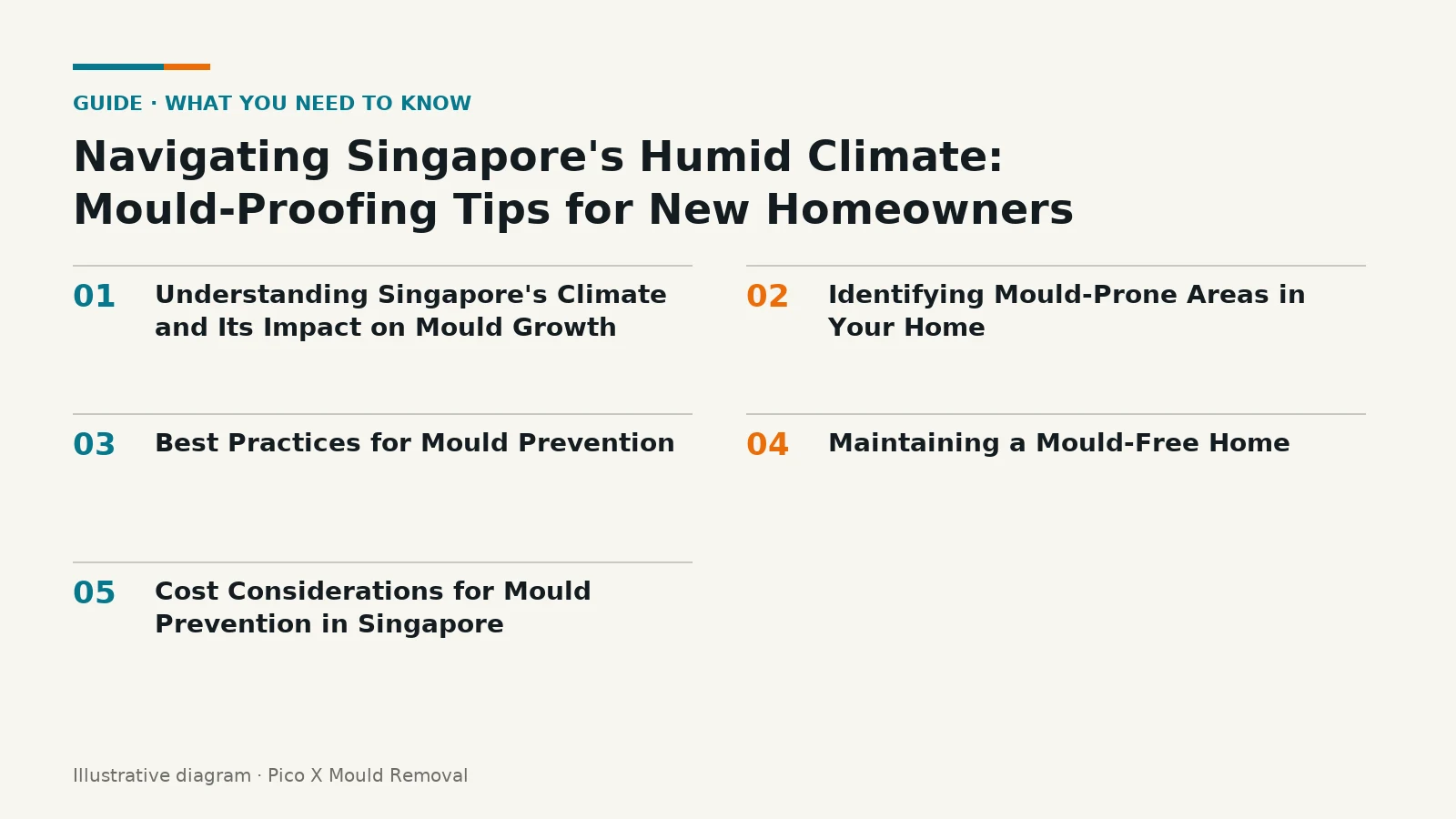
# Navigating Singapore's Humid Climate: Mould-Proofing Tips for New Homeowners
As a vibrant city-state located just one degree north of the equator, Singapore is renowned for its lush greenery and tropical climate. However, while the warm weather is a boon for outdoor activities, it also presents a unique challenge for homeowners: mould growth. New homeowners in Singapore, whether moving into an HDB flat in Tampines, a condo in Marina Bay, or a landed property in Bukit Timah, must navigate the intricacies of maintaining a mould-free home. With over 15 years of industry experience in mould remediation, I am here to share practical, professional-grade strategies to help you keep your home healthy and mould-free.
Key Stat: Singapore experiences an average annual relative humidity of 84%, providing ideal conditions for mould proliferation.
Understanding Singapore's Climate and Its Impact on Mould Growth
The Humidity Factor
Singapore's climate is characterized by consistent temperatures averaging around 26 to 28°C, coupled with high humidity levels. This environment is conducive to mould growth, as mould thrives in damp and warm conditions. In areas like Jurong and Bishan, where daily activities such as cooking and showering are frequent, this can lead to persistent moisture issues.
Seasonal Variations
Although Singapore does not have distinct seasons like temperate countries, it does experience monsoon periods. These periods, typically from November to January and June to September, bring increased rainfall, further elevating indoor humidity levels. Homeowners in high-rise buildings or older constructions may notice a spike in moisture-related issues during these times.
Identifying Mould-Prone Areas in Your Home
Common Hotspots
Mould can appear anywhere in your home, but certain areas are more susceptible due to their moisture content:
- Bathrooms: Poor ventilation can lead to moisture accumulation.
- Kitchens: Cooking activities generate steam and grease.
- Basements and Attics: These areas often have poor airflow.
- Air Conditioning Units: Condensation can build up inside units.
Signs of Mould Presence
Look out for these indicators of mould in your home:
- Musty odour
- Visible black, green, or white spots on walls and ceilings
- Peeling or bubbling paint
- Allergic reactions like sneezing or skin irritation
Best Practices for Mould Prevention
Enhance Ventilation
Proper ventilation is crucial in preventing mould growth. Here are some strategies:
Control Indoor Moisture
Managing moisture levels is key to mould prevention:
- Fix Leaks Promptly: Address any plumbing issues immediately to prevent water accumulation.
- Insulate Pipes: Prevent condensation by insulating cold surfaces.
- Wipe Down Surfaces: Regularly clean areas prone to moisture, such as shower walls and kitchen counters.
Professional-Grade Solutions
For a more robust approach, consider these industry-standard methods:
- Anti-Mould Paints and Coatings: These products contain fungicides that inhibit mould growth.
- Waterproofing Solutions: Ideal for basements and foundations prone to water ingress.
- Professional Mould Inspections: Engage trained specialists to assess and remediate areas of concern.
Expert Insight: Investing in professional mould prevention solutions can save homeowners significant time and money in the long run by avoiding extensive damage and health issues.
Maintaining a Mould-Free Home
Routine Maintenance
Regular maintenance is essential to keep mould at bay:
- Schedule Regular Inspections: Conduct bi-annual checks of your home, particularly after the monsoon seasons.
- Clean Air Conditioner Filters: Replace or clean filters monthly to prevent mould spore circulation.
- Monitor Humidity Levels: Use a hygrometer to keep indoor humidity below 60%.
Quick Response to Mould Outbreaks
If you discover mould, prompt action can prevent it from spreading:
Warning: DIY mould removal can sometimes exacerbate the problem if not done correctly. Professional intervention is recommended for extensive infestations.
Cost Considerations for Mould Prevention in Singapore
Budgeting for Prevention
Investing in mould prevention does not have to break the bank. Here’s a basic cost breakdown:
- Exhaust Fans: Installation can range from S$150 to S$500 depending on the model.
- Dehumidifiers: Prices start from S$200.
- Professional Inspections: Expect to pay between S$80 and S$200 per session.
Long-Term Savings
Although upfront costs for prevention measures can seem high, the long-term savings on potential repairs and health-related expenses are significant. Mould damage in structural elements or health complications from prolonged exposure can lead to costs escalating into the thousands.
Conclusion: Take Control of Your Home Environment
Navigating Singapore’s humid climate as a new homeowner involves more than just settling into a new space. It requires proactive steps to maintain a healthy living environment. By implementing these mould-proofing tips, you can enjoy your home without the unwelcome presence of mould. If you suspect mould in your home or want a comprehensive assessment, consider scheduling a professional inspection to ensure peace of mind.
For a tailored solution to your mould challenges, contact us today to schedule a free inspection.
Frequently Asked Questions
Why is mould so common in Singapore homes?
Mould is particularly common in Singapore due to the country's high humidity levels, which average around 84% annually. This creates an ideal environment for mould spores to thrive, especially in poorly ventilated areas like bathrooms and kitchens.
How can I prevent mould growth in my HDB flat?
To prevent mould in an HDB flat, enhance ventilation by installing exhaust fans and keeping windows open when possible to improve airflow. Regularly use dehumidifiers, especially in rooms with high moisture levels, and promptly repair any leaks to control sources of moisture.
What should I do if I find mould in my condo?
If you discover mould in your condo, first identify and fix the source of moisture. Contain the affected area to prevent spores from spreading and consider hiring a professional mould remediation specialist to ensure thorough removal and treatment.
Are there cost-effective ways to manage indoor humidity?
Yes, managing indoor humidity can be cost-effective. Use natural ventilation by opening windows and doors when possible, invest in a budget-friendly dehumidifier, and regularly maintain your air conditioning system to ensure it is effectively removing excess humidity.
Can professional mould inspections really make a difference?
Absolutely. Professional mould inspections provide a comprehensive assessment of your property, identifying hidden mould sources and potential problem areas. Trained specialists use industry-standard techniques to address current issues and prevent future occurrences, ultimately protecting your health and property.