# Post-Remediation Verification Process Explained: A Guide for Singapore Homeowners
In Singapore's humid climate, mould growth is a common concern for homeowners across HDB flats, condos, and landed properties. Once you've invested in professional mould remediation, it's crucial to ensure the process was successful. This is where the post-remediation verification process comes into play.
Expert Insight:Post-remediation verification is not just a formality. It's a critical step ensuring that mould has been effectively removed and that your indoor environment is safe and healthy.
With over 15 years of experience in mould remediation, we have seen first-hand how thorough verification can prevent future mould issues. This comprehensive guide will walk you through the post-remediation verification process, tailored specifically for Singapore's unique climate and property types.
Understanding Singapore's Climate and Its Impact on Mould Growth
High Humidity Levels
Key Stat:Singapore's average relative humidity ranges between 70% and 80%, creating an ideal environment for mould growth.
Humidity is a well-known catalyst for mould. In Singapore, the consistently high humidity levels make it essential for homeowners to be proactive about mould prevention and remediation.
Common Property Types and Mould Challenges
- HDB Flats: Often face ventilation issues, especially in bathrooms and kitchens, leading to mould growth in these areas.
- Condos: High-rise living can lead to water seepage problems, especially during heavy rainfalls.
- Landed Properties: Typically have more space but are not immune to basement or roof leaks, which can promote mould.
Understanding these unique challenges helps tailor the post-remediation verification process to each property type.
What is the Post-Remediation Verification Process?
The post-remediation verification process is an industry-standard method to confirm the successful removal of mould after remediation efforts. It involves a series of inspections and tests to ensure that the mould has been effectively eliminated and that the space is safe for habitation.
Importance of Verification
- Ensures Safety: Confirms that the mould levels are reduced to a safe level.
- Prevents Recurrence: Identifies any remaining sources of moisture or mould.
- Protects Investment: Validates the effectiveness of the remediation, ensuring your money was well spent.
Steps in the Post-Remediation Verification Process
1. Visual Inspection
The first step involves a thorough visual examination of the remediated area. This inspection checks for visible signs of mould and assesses whether the cleaning was thorough.
Checklist for Visual Inspection:
- Ensure all surfaces are free from visible mould.
- Check for moisture or water stains.
- Confirm that all materials specified for removal have been properly disposed of.
2. Moisture Assessment
Mould thrives in moisture-rich environments. Therefore, it's crucial to measure humidity levels and identify moisture sources that could lead to future mould growth.
Best Practice:Use professional-grade moisture meters to detect hidden moisture in walls, ceilings, and floors.
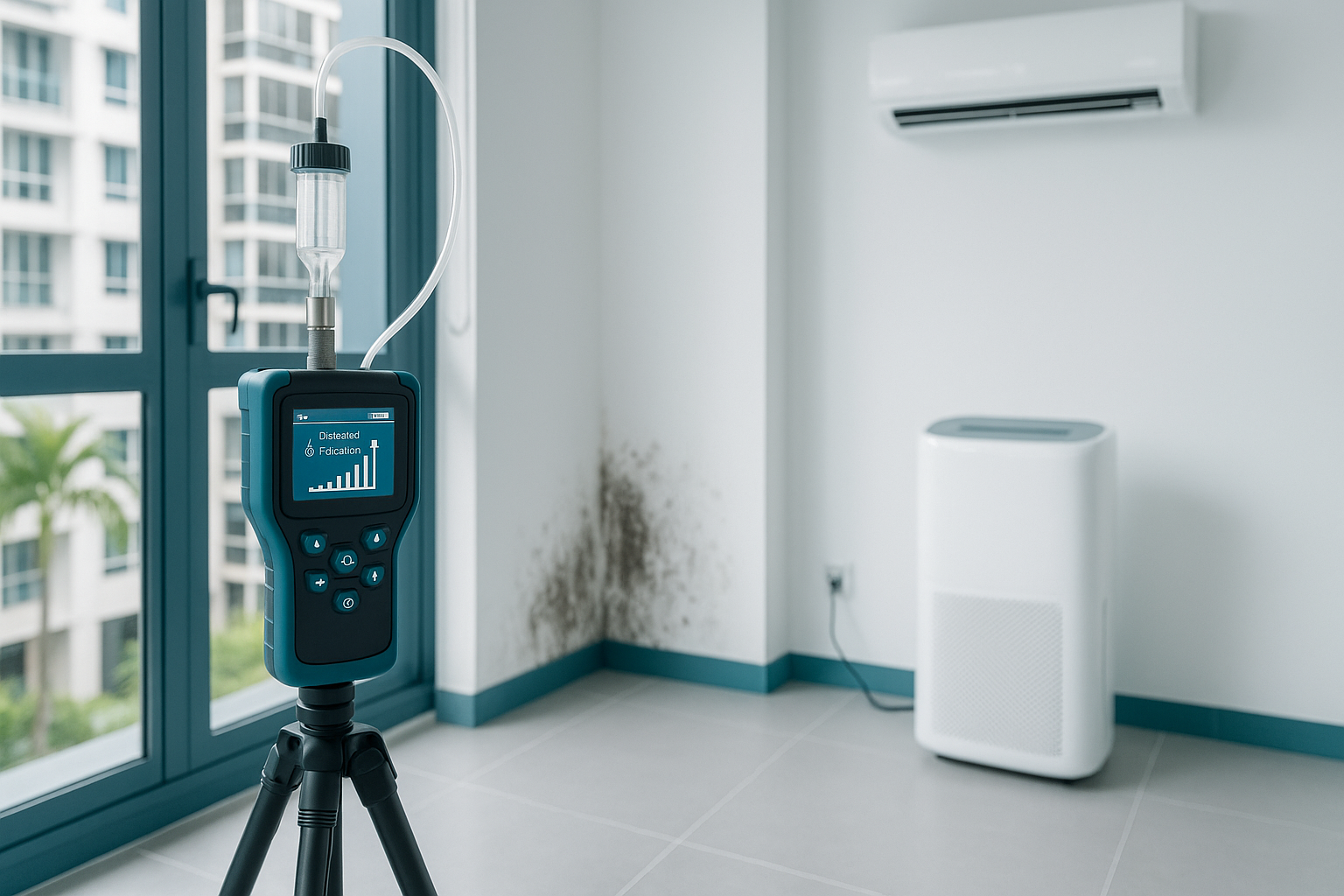
3. Air Quality Testing
Air quality tests are conducted to measure the concentration of mould spores in the air. These tests compare pre- and post-remediation spore counts to ensure a significant reduction.
Types of Air Quality Tests:
- Spore Trap Sampling: Captures airborne spores for analysis.
- Surface Sampling: Tests settled dust for mould spores.
4. Clearance Testing
Clearance testing is the final step. It involves a combination of the aforementioned inspections and tests to provide a comprehensive assessment of the space.
Pro Tip:Schedule clearance testing at least 24-48 hours after remediation to ensure accurate results.
Industry Best Practices for Mould Remediation Verification
Trained Specialists
- Rely on trained specialists with comprehensive industry training, such as IICRC certification, to conduct your post-remediation verification.
- Ensure the use of professional-grade equipment for all testing procedures.
Local Expertise
- Work with specialists familiar with Singapore's climate and property types for tailored solutions.
- Track Record: Choose professionals with a proven track record of successful remediation in various Singaporean locales like Tampines, Jurong, and Marina Bay.
Cost Considerations
While the cost for post-remediation verification in Singapore can vary, here's a typical breakdown:
- Visual Inspection: S$200 - S$400
- Moisture Assessment: S$300 - S$500
- Air Quality and Clearance Testing: S$500 - S$800
Total costs may range from S$1,000 to S$1,700 depending on factors like property size and complexity.
Conclusion
Ensuring a successful mould remediation process doesn't end with the removal of mould. The post-remediation verification process is a critical step in safeguarding your home, health, and investment. By understanding and implementing these industry best practices, Singapore homeowners can effectively manage and prevent mould issues.
Call to Action:Schedule your free mould inspection today and let our trained specialists ensure your home is mould-free and safe for your family.
Frequently Asked Questions
What is post-remediation verification and why is it important?
Post-remediation verification is a process that confirms the successful removal of mould after remediation efforts. It's important because it ensures that mould levels are safe, prevents future occurrences, and validates the effectiveness of the remediation service.
How does Singapore's climate affect mould growth?
Singapore's high humidity, averaging between 70% and 80%, creates an ideal environment for mould growth. The consistent moisture levels mean that properties in Singapore are prone to mould issues, making proactive prevention and thorough remediation essential.
What are common mould challenges in HDB flats?
HDB flats often face ventilation issues, particularly in areas like bathrooms and kitchens, which can lead to mould growth. Effective ventilation solutions and regular moisture checks are crucial for preventing mould in these homes.
How much does post-remediation verification typically cost in Singapore?
The cost for post-remediation verification in Singapore can range from S$1,000 to S$1,700. This includes visual inspections, moisture assessments, and air quality testing, with costs varying based on property size and complexity.
What qualifications should a mould remediation specialist have?
A qualified mould remediation specialist should have industry training such as IICRC certification and a proven track record with local properties. They should use professional-grade equipment and be familiar with Singapore's unique climate challenges.