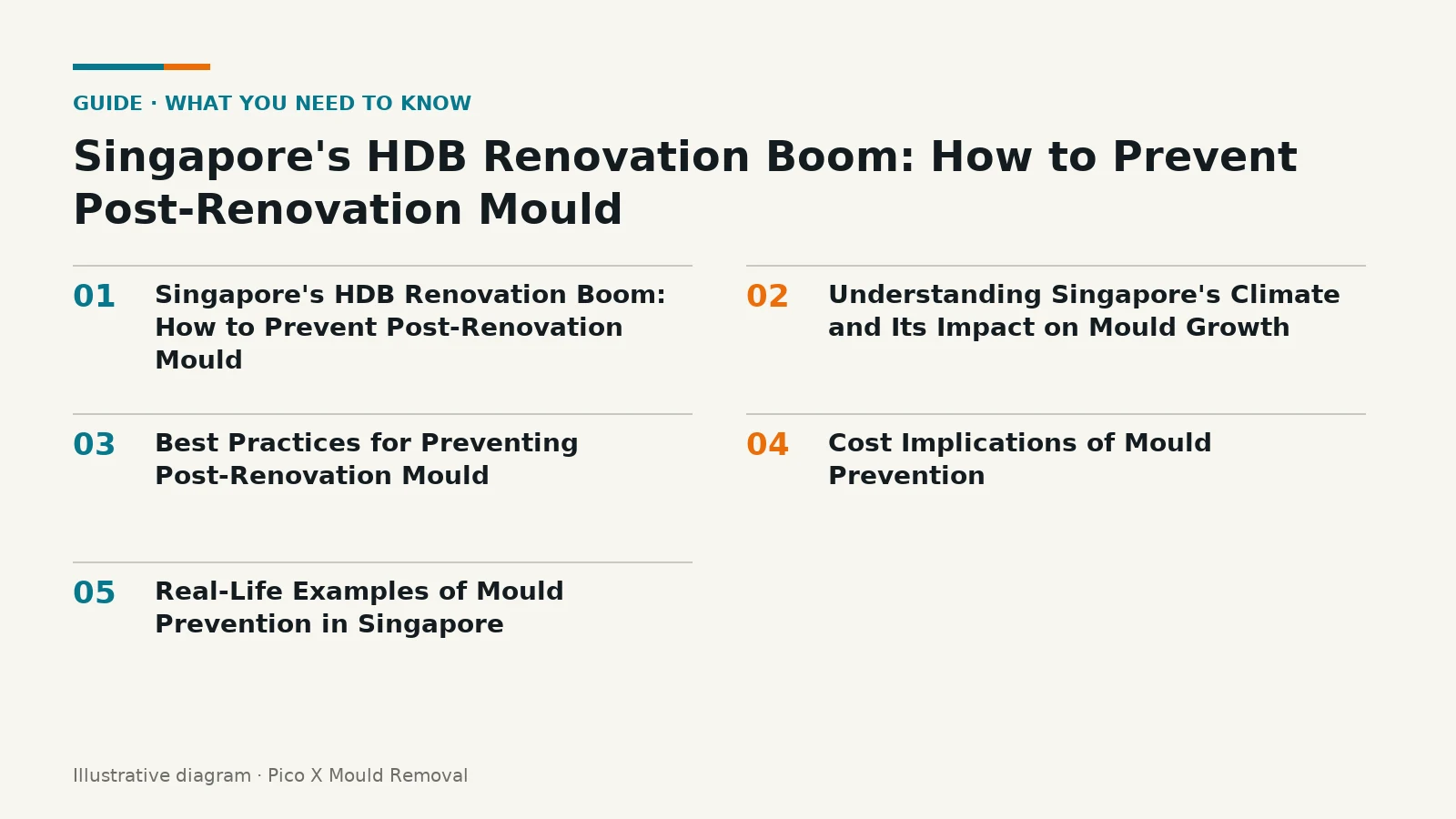
Singapore's HDB Renovation Boom: How to Prevent Post-Renovation Mould
The bustling skyline of Singapore is a testament to the city-state’s rapid development and architectural prowess. With Housing Development Board (HDB) flats housing over 80% of the population, it's no surprise that renovation activities have surged in recent years. This renovation boom promises modern living spaces but also introduces a hidden adversary—post-renovation mould. As a seasoned mould remediation specialist with over 15 years of industry experience, I aim to guide Singapore homeowners on how to prevent this common yet often overlooked issue.
Singapore's tropical climate, characterized by high humidity and frequent rainfall, creates the perfect breeding ground for mould. This is particularly problematic in newly renovated spaces where moisture levels can inadvertently rise. Understanding how to mitigate these risks is crucial for maintaining a healthy living environment.
Understanding Singapore's Climate and Its Impact on Mould Growth
Tropical Climate Characteristics
Singapore experiences a tropical rainforest climate with no distinct seasons, uniform temperature, and high humidity levels ranging between 70% to 80%. This climate provides ideal conditions for mould to thrive, especially in enclosed spaces with limited ventilation.
Key Stat: "Singapore’s average annual rainfall is approximately 2,340 mm, contributing to persistent humidity levels."
Mould Growth Dynamics
Mould spores are ubiquitous and can settle on any surface, awaiting the right conditions to proliferate. The combination of moisture, warmth, and organic material from renovations creates fertile ground for mould. Understanding these dynamics is crucial in preventing its growth.
Best Practices for Preventing Post-Renovation Mould
Pre-Renovation Planning
Identify Potential Problem Areas:- Opt for mould-resistant building materials like treated wood and drywall.
- Use anti-mould paint for walls and ceilings.
Pro Tip: "Choose materials that are less conducive to mould growth, such as tiles instead of carpets in moisture-prone areas."
During Renovation
Control Moisture Levels:- Use dehumidifiers to maintain optimal indoor humidity levels.
- Ensure proper sealing of windows and doors to prevent moisture ingress.
- Regularly clean up renovation debris and dust, as they can harbor mould spores.
- Cover materials and furniture to protect them from accumulating dust and moisture.
Post-Renovation Strategies
Regular Inspection and Maintenance:- Schedule regular inspections to catch any early signs of mould.
- Clean and maintain air-conditioning units and filters to ensure they are free from mould and dust.
- Install exhaust fans in bathrooms and kitchens to reduce moisture.
- Encourage cross-ventilation by opening windows and doors regularly.
Warning: "Ignoring ventilation in newly renovated areas can lead to increased humidity and subsequent mould growth."
Cost Implications of Mould Prevention
Initial Investment
Investing in moisture-resistant materials and professional-grade dehumidifiers may seem costly upfront, ranging from S$500 to S$2,000, depending on the scale and specific needs. However, these investments can save significant costs in future remediation efforts.
Long-term Savings
Preventive measures significantly reduce the likelihood of mould remediation costs, which can range from S$1,000 to S$5,000 depending on the severity of the infestation.
Real-Life Examples of Mould Prevention in Singapore
Case Study: Tampines HDB
A homeowner in Tampines consulted with mould specialists pre-renovation. By implementing moisture control measures and using anti-mould paint, they successfully prevented any post-renovation mould growth.
Case Study: Jurong Condo
In Jurong, a condo owner faced a minor mould issue post-renovation due to inadequate ventilation. By installing additional exhaust fans and using dehumidifiers, the issue was resolved swiftly.
Conclusion
Singapore’s HDB renovation boom offers homeowners the opportunity to modernize their living spaces, but it is imperative to consider the risk of post-renovation mould. By understanding the local climate, employing industry-standard best practices, and investing in preventive measures, homeowners can ensure a mould-free environment.
For a professional assessment of your home’s mould risk, schedule a free inspection with our trained specialists today.
Frequently Asked Questions
Why is mould such a common issue in Singapore homes?
Singapore's tropical climate, characterized by high humidity and frequent rainfall, creates ideal conditions for mould growth. This is exacerbated by poor ventilation in many homes, particularly during and after renovations, which can increase moisture levels and create a conducive environment for mould to thrive.
What are the signs of mould growth I should look for after a renovation?
Common signs of mould include a musty odour, visible black or green spots on walls and ceilings, and peeling or discoloured paint. It's important to also check hidden areas such as behind furniture and in corners for any signs of mould growth.
How can I control humidity levels in my home to prevent mould?
To control humidity, use dehumidifiers to maintain indoor humidity levels below 60%, install exhaust fans in moisture-prone areas like bathrooms and kitchens, and ensure proper sealing of windows and doors to prevent moisture ingress. Regularly opening windows to allow cross-ventilation also helps reduce indoor humidity.
What materials are best to use in renovations to prevent mould growth?
Opt for mould-resistant materials such as treated wood, mould-resistant drywall, and anti-mould paint. In moisture-prone areas, tiles are preferable to carpets, as they are less likely to retain moisture and harbour mould.
Is it necessary to hire a professional for mould prevention during renovation?
While some preventive measures can be done independently, hiring a professional ensures a comprehensive approach to mould prevention. Professionals have the expertise to identify potential problem areas, recommend suitable materials, and implement effective moisture control strategies.