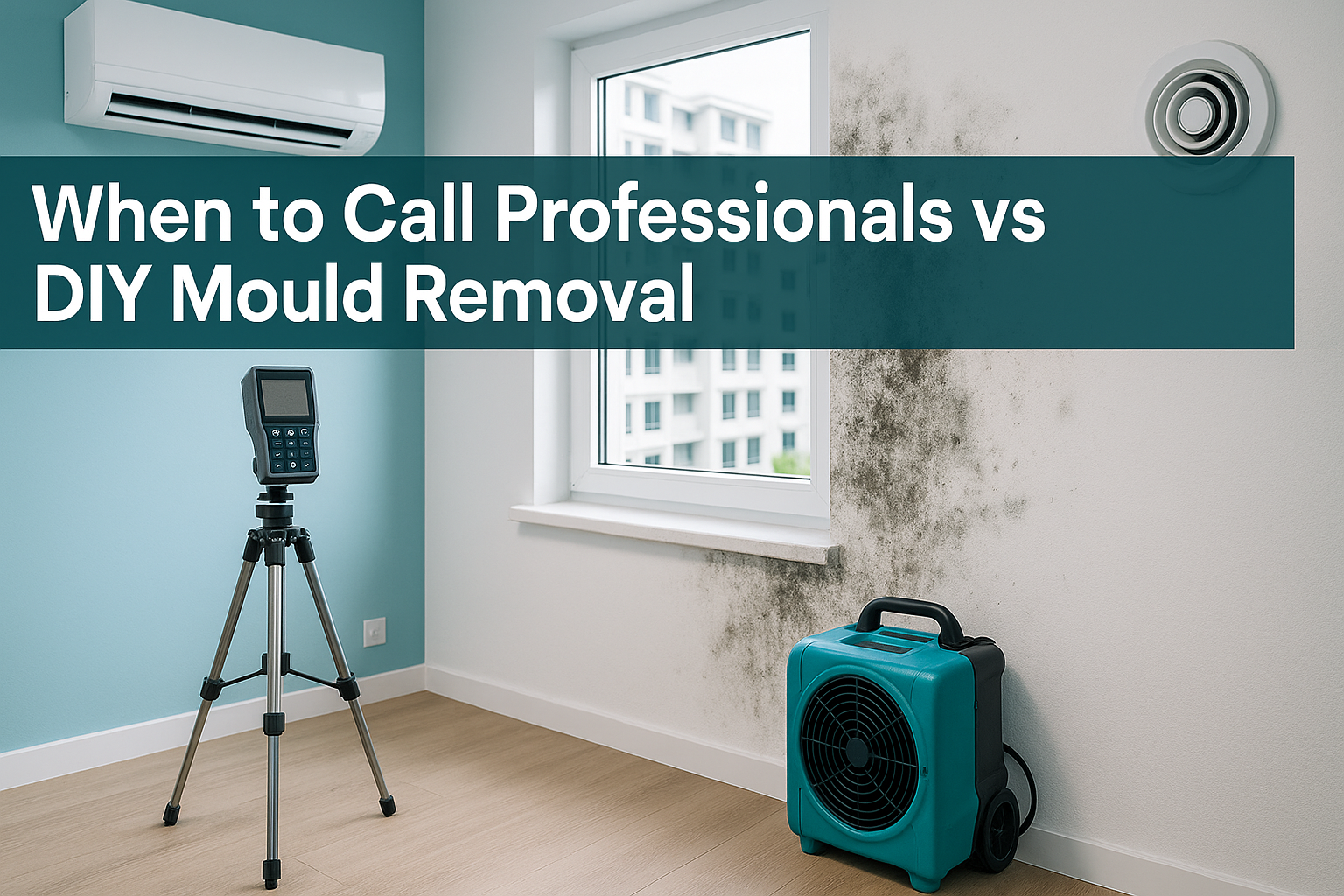
# When to Call Professionals vs DIY Mould Removal for Singapore Homeowners
In the tropical climate of Singapore, with its high humidity and frequent rainfall, mould growth is a common issue faced by homeowners, whether in HDB flats, condominiums, or landed properties. Mould not only blemishes your walls and ceilings but can also pose serious health risks. Homeowners are often faced with the decision: should they tackle mould removal themselves, or is it time to call in the professionals? Understanding when to make this crucial decision can save you time, money, and potential health issues.
Understanding Mould Growth in Singapore
Before deciding on DIY or professional mould removal, it's essential to understand why mould is such a prevalent issue in Singapore.
Singapore's Climate and Mould Growth
Singapore's climate is characterised by its high humidity levels, often exceeding 80%, and an average temperature ranging from 25°C to 31°C. These conditions create an ideal environment for mould spores to thrive.
📊 Key Stat: According to the National Environment Agency (NEA), relative humidity levels over 60% can promote mould growth indoors.
Common Areas for Mould in Different Property Types
- HDB Flats: Due to limited ventilation, mould often appears in bathrooms and kitchens.
- Condominiums: Mould can be found in air-conditioned rooms where condensation occurs.
- Landed Properties: Basements and attics, due to their lack of natural light and ventilation, are common spots.
When to Opt for DIY Mould Removal
DIY mould removal can be a cost-effective solution for minor infestations. However, it's important to assess the situation accurately to avoid unnecessary health risks.
Assessing the Severity of Mould
Small and Manageable Infestations
- Surface Area: If the mould covers less than 1 square meter, it may be manageable on your own.
- Location: Mould on non-porous surfaces like tiles or glass can often be cleaned easily.
✅ Best Practice: Use a mixture of vinegar and water to clean small mould patches. Ensure the area is well-ventilated during the process.
Tools and Materials for DIY
- Protective Gear: Gloves, masks, and goggles to protect against spores.
- Cleaning Solutions: Vinegar, baking soda, or commercial mould removers.
- Equipment: Brushes, sponges, and a vacuum with a HEPA filter.
Steps for DIY Mould Removal
When to Call Professionals
Sometimes, the scope of a mould problem surpasses the capabilities of DIY methods. Here's when you should consider professional help.
Large or Recurring Infestations
- Extensive Coverage: If mould covers more than 1 square meter or is widespread across multiple areas.
- Persistent Issues: If mould returns after DIY attempts, it may indicate hidden moisture issues.
Health and Safety Concerns
- Health Risks: If household members have allergies, asthma, or weakened immune systems, professional removal is safer.
- Toxic Mould: Some mould types, like Stachybotrys, are toxic and require expert handling.
⚠️ Warning: Attempting to remove toxic mould without proper equipment and expertise can worsen health risks.
Professional Services and Costs
- Inspection and Testing: Professionals use specialised equipment to identify mould types and sources.
- Remediation: Comprehensive removal processes, including air filtration and treatment of affected areas.
- Costs: Professional services can range from S$500 to S$5,000, depending on the severity and area affected.
💡 Pro Tip: Always verify that the remediation company follows NEA guidelines and uses certified mould removal protocols.
NEA Guidelines and Local Regulations
Compliance with NEA Standards
The NEA provides guidelines for maintaining indoor air quality and preventing mould growth:
- Ventilation: Ensure adequate airflow in all rooms, particularly in high-moisture areas.
- Dehumidifiers: Use dehumidifiers to maintain indoor humidity below 60%.
- Regular Inspections: Conduct routine checks in areas prone to moisture accumulation.
📊 Key Stat: The NEA reports that improving ventilation can reduce indoor mould growth by up to 30%.
Legal Implications for Property Owners
- Responsibility: Property owners are responsible for maintaining mould-free environments.
- Tenant Rights: Tenants can report severe mould problems to the Building and Construction Authority (BCA) if not addressed by landlords.
Tips for Preventing Mould in Singapore Homes
Routine Maintenance
- Inspect Regularly: Check bathrooms, kitchens, and other high-moisture areas frequently.
- Repair Leaks: Fix any plumbing leaks immediately to prevent moisture buildup.
Optimising Home Environment
- Use Exhaust Fans: Install and use fans in bathrooms and kitchens to reduce humidity.
- Sunlight Exposure: Allow natural light to enter rooms, inhibiting mould growth.
Conclusion: Making the Right Choice
Deciding between DIY and professional mould removal depends on the situation's severity and your comfort level with handling potential health risks. While minor issues can often be resolved with DIY methods, don't hesitate to call professionals if the problem seems extensive or hazardous. Ensuring a mould-free home not only protects your property but also your health.
✅ Call to Action: If you're dealing with persistent or large-scale mould issues, contact a professional mould remediation service in Singapore today to ensure your home is safe and healthy.
Frequently Asked Questions
How can I prevent mould growth in my HDB flat?
To prevent mould growth in your HDB flat, ensure good ventilation by using exhaust fans, especially in the bathroom and kitchen. Keep humidity levels below 60% using dehumidifiers, and fix any water leaks promptly. Regular cleaning and allowing sunlight to reach indoor spaces can also help.
What are the health risks of mould exposure?
Mould exposure can cause respiratory problems, allergic reactions, and exacerbate asthma symptoms. It can be particularly harmful to individuals with weakened immune systems, the elderly, and young children. If you suspect mould is affecting your health, consult a healthcare professional.
Can I use bleach to remove mould?
While bleach can kill mould on non-porous surfaces, it is not recommended for porous materials, as it may not penetrate deeply enough to remove mould roots. Vinegar or specialised mould removers are more effective and safer alternatives.
How much does professional mould removal cost in Singapore?
The cost of professional mould removal in Singapore can range from S$500 to S$5,000, depending on the extent of the infestation and the area affected. It's advisable to get quotes from multiple certified companies and ensure they follow NEA guidelines.
When should I consider professional mould removal over DIY?
Consider professional mould removal if the affected area is larger than 1 square meter, if mould recurs after DIY attempts, or if there are health and safety concerns due to toxic mould types. Professional services provide thorough remediation and long-term solutions.