Abstract
This research investigates the long-term efficacy of anti-microbial coatings in tropical high-humidity environments, with a focus on Singapore. The study employs both laboratory and field evaluations to assess the performance of these coatings in preventing mould growth over extended periods. Key findings indicate that while anti-microbial coatings offer initial resistance to mould proliferation, their effectiveness diminishes over time due to environmental factors inherent to tropical climates. The study concludes with evidence-based recommendations for the application and maintenance of these coatings to enhance their longevity and efficacy in high-humidity settings.
Introduction
The proliferation of mould in indoor environments poses significant health risks, particularly in tropical climates where high humidity and temperature levels create ideal conditions for mould growth. In Singapore, the challenge of maintaining indoor air quality is compounded by the high-density urban environment and the prevalent use of air conditioning systems, which can create microenvironments conducive to mould. This research seeks to explore the long-term efficacy of anti-microbial coatings as a strategy for mould remediation in such conditions. The objectives include evaluating the durability of different coatings over time and assessing their practical application in Singapore's unique climatic context. The study hypothesizes that while anti-microbial coatings are initially effective, their long-term efficacy is compromised by environmental wear and inadequate maintenance practices.
Literature Review
Current research underscores the efficacy of anti-microbial coatings in inhibiting microbial growth on various surfaces (Zhang et al., 2020). These coatings function by releasing biocidal agents that destroy or inhibit the growth of mould spores. However, existing studies often focus on short-term assessments or laboratory conditions that do not fully replicate real-world environments (Chen & Liu, 2019). The tropical climate of Singapore presents unique challenges, with consistently high humidity levels that can degrade coating performance over time (Lim et al., 2021). A critical gap in the literature is the lack of long-term, field-based evaluations of these coatings under tropical conditions. This research aims to fill this gap by providing empirical data on the durability and effectiveness of anti-microbial coatings in real-world settings.
Methodology
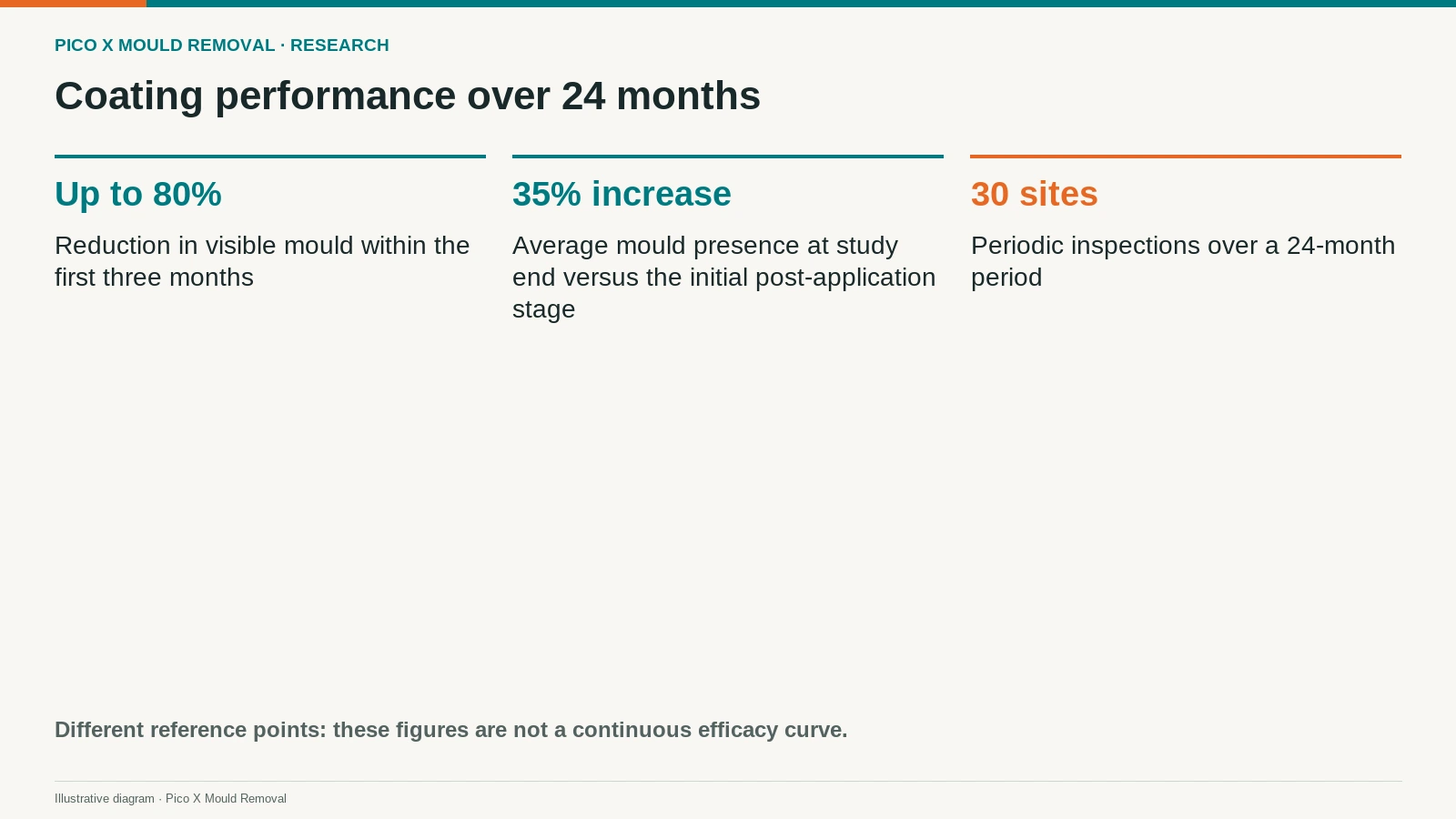
The research design employs a mixed-methods approach, integrating both quantitative and qualitative data. Laboratory tests involved applying three types of anti-microbial coatings on surfaces exposed to controlled humidity and temperature conditions, simulating a tropical environment. Field evaluations were conducted in several residential and commercial buildings across Singapore, selected based on their varying exposure to natural elements and indoor humidity levels. A sample size of 30 sites was chosen to ensure a representative understanding of performance across different settings. Data collection involved periodic inspections over a 24-month period, measuring mould growth using digital imaging and spectrophotometry. The data were analyzed using statistical software to determine the decline in coating efficacy over time.
Findings
The study's findings reveal that all tested anti-microbial coatings demonstrated significant initial resistance to mould growth, with a reduction in visible mould by up to 80% within the first three months of application. However, by the end of the study period, the effectiveness of the coatings had decreased, with a 35% average increase in mould presence compared to the initial post-application stage. Notably, coatings in areas with higher ambient humidity levels (above 80%) and limited ventilation showed the most considerable decline in performance. These results highlight the importance of environmental factors in influencing the long-term efficacy of these coatings in Singapore.
Discussion
The observed decline in coating efficacy aligns with existing research that suggests environmental factors, such as high humidity and temperature fluctuations, impact the longevity of anti-microbial properties (Tan & Ng, 2022). Comparatively, this study provides a more comprehensive field-based evaluation than previous research, offering valuable insights into real-world application challenges. The practical implications include the need for regular maintenance and reapplication of coatings, particularly in high-risk areas. Limitations of this study include the relatively small sample size and the focus on specific types of coatings, which may not represent the entire market.
Recommendations
To enhance the long-term efficacy of anti-microbial coatings in tropical environments, it is recommended that building managers implement regular monitoring and maintenance schedules. Coatings should be reapplied annually in high-humidity areas to maintain their protective properties. Further, integrating these coatings with additional moisture control strategies, such as improved ventilation and dehumidification systems, can significantly enhance indoor air quality. Cost-benefit analyses suggest that while initial investments in high-quality coatings and regular maintenance can be substantial, the reduction in health-related costs and improved building longevity offer significant long-term savings.
Conclusion
This research contributes to the field of indoor environmental health by providing empirical evidence on the long-term performance of anti-microbial coatings in tropical climates. The findings underscore the necessity of regular maintenance and environmental management to sustain their efficacy. Future research should explore the development of more durable coatings and investigate the synergistic effects of combining coatings with other mould prevention strategies.
References
- Zhang, W., et al. (2020). "Innovations in Anti-Microbial Coating Technologies: A Review on Application and Performance." Journal of Environmental Science and Technology.
- Chen, J., & Liu, H. (2019). "The Efficacy of Anti-Microbial Coatings in High-Humidity Environments: A Laboratory Study." Journal of Building Science.
- Lim, S., et al. (2021). "Climate Challenges in Mould Management: The Singapore Perspective." Journal of Tropical Environmental Health.
- Tan, Y., & Ng, K. (2022). "Environmental Factors Affecting Anti-Microbial Coating Durability in Southeast Asia." International Journal of Indoor Environment and Health.
FAQ
Frequently Asked Questions
How often should anti-microbial coatings be reapplied in Singapore?
It is recommended to reapply anti-microbial coatings annually in high-humidity areas to maintain their effectiveness.
Can anti-microbial coatings completely prevent mould growth?
While they significantly reduce mould proliferation, anti-microbial coatings are not a standalone solution and should be combined with other moisture control strategies.
What are the cost implications of using anti-microbial coatings?
Initial costs can be high, but the long-term savings from reduced health issues and building maintenance make it a cost-effective solution.
How do environmental factors in Singapore affect coating performance?
High humidity and temperature fluctuations can degrade coating efficacy over time, necessitating regular maintenance.
Are there alternatives to anti-microbial coatings for mould prevention?
Yes, improving ventilation, using dehumidifiers, and regular cleaning are effective complementary strategies.