# Haze Season and Mould: Double Trouble for Singapore Homes
Singapore, known for its tropical climate and lush greenery, offers a unique living environment but also presents certain challenges for homeowners. One such challenge is the annual haze season, a period marked by poor air quality due to forest fires in the region. Coupled with Singapore's high humidity levels, this creates a perfect storm for a less visible yet equally concerning issue: mould growth in homes. As an expert in mould remediation with over 15 years of industry experience, I have seen firsthand how these two phenomena can wreak havoc on living spaces, particularly during the haze season. This blog post aims to shed light on how haze and mould together can cause "double trouble" for Singapore homes and what you, as a homeowner, can do about it.
Understanding the Haze and Its Impact
What is the Haze?
The haze in Singapore is primarily a result of forest fires, especially in Indonesia, where land clearing practices involve burning. This transboundary pollution results in the Air Quality Index (AQI) rising to unhealthy levels, affecting daily life and the environment.
Key Stat: During severe haze periods, AQI levels can exceed 300, which is considered hazardous.
Effects of Haze on Indoor Air Quality
While the immediate effects of haze on outdoor air quality are evident, it also significantly impacts indoor air environments. The fine particulate matter (PM2.5) can infiltrate homes, worsening indoor air quality, and contributing to health issues such as respiratory problems.
Mould Growth in Singapore Homes
Why Singapore is Prone to Mould
Singapore's climate is characterized by high humidity, often exceeding 80%. Such conditions are ideal for mould spores to thrive. When combined with the lack of adequate ventilation in some property types, such as older HDB flats, the situation can become dire.
Pro Tip: Regularly monitor indoor humidity levels and aim to keep them below 60% to deter mould growth.
Common Areas for Mould Infestation
Mould can grow on any organic material, and in Singapore homes, it is commonly found in:
- Bathrooms, especially around leaking pipes or inadequate ventilation systems
- Kitchens, due to steam and cooking residues
- Air-conditioning units, which can harbor mould if not maintained properly
- Walls and ceilings, particularly in older buildings where water ingress is more common
The Haze-Mould Connection
How Haze Aggravates Mould Problems
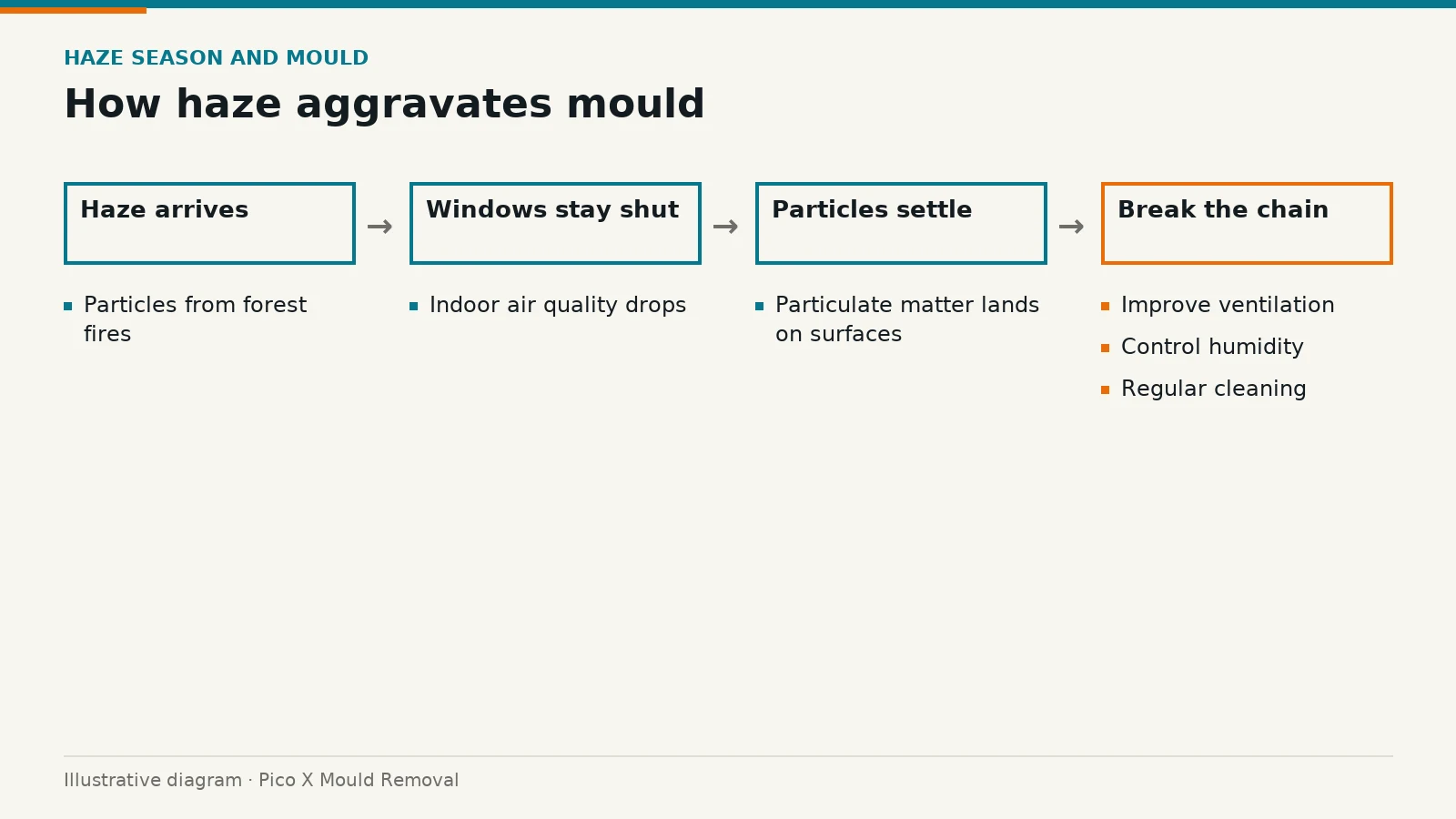
The particulate matter from haze can settle on surfaces inside homes, providing additional nutrients for mould spores. Moreover, the tendency to keep windows closed during haze periods to prevent smoke infiltration can inadvertently trap moisture indoors, further promoting mould growth.
Consequences of Ignoring the Problem
Ignoring mould problems can lead to severe health implications, including allergies, asthma, and other respiratory issues. Additionally, mould can cause structural damage to properties, resulting in costly repairs.
Warning: If you notice a musty odor or visible mould growth, take immediate action to prevent further damage.
Industry Best Practices for Mould Remediation
Professional Assessment
When dealing with mould, a professional assessment is crucial. Trained specialists utilize industry-standard protocols to identify the extent of mould infestation and determine the appropriate remediation strategy.
Steps for Professional Mould Remediation
DIY Tips for Homeowners
While professional intervention is recommended for severe cases, homeowners can take preventive measures:
- Improve Ventilation: Use exhaust fans in bathrooms and kitchens.
- Control Humidity: Use dehumidifiers or air conditioners to maintain optimal humidity levels.
- Regular Cleaning: Clean and dry areas prone to moisture regularly.
Cost Considerations in Singapore
Mould Remediation Costs
The cost of mould remediation can vary widely, depending on the severity and location of the infestation. For a typical HDB flat, homeowners might expect costs to range from S$500 to S$2,500. More extensive issues in larger properties, such as landed homes, can exceed S$5,000.
Expert Insight: Investing in regular maintenance and inspections can save you from more significant expenses in the long run.
Conclusion: Taking Action Against Haze and Mould
The haze season and mould pose a significant threat to the indoor environment of Singapore homes. By understanding the risks and implementing preventive measures, homeowners can protect their living spaces and health. If you suspect a mould problem or wish to ensure your home is safe, consider scheduling a professional inspection. With our expertise and industry-standard practices, we are here to help you maintain a healthy and mould-free home.
Call to Action
For a comprehensive assessment and tailored mould remediation plan, contact us today to schedule a free inspection. Protect your home from the dual threats of haze and mould with professional expertise.
Frequently Asked Questions
How does haze contribute to mould growth in homes?
Haze contributes to mould growth by increasing the amount of particulate matter indoors, which can settle on surfaces and provide nutrients for mould spores. Additionally, during haze periods, people tend to keep windows closed to prevent smoke ingress, which can trap moisture and further promote mould growth.
What are the common signs of mould infestation in Singapore homes?
Common signs of mould infestation include a persistent musty odor, visible mould growth on walls or ceilings, especially in bathrooms and kitchens, and increased allergy symptoms among household members. It's important to address these signs promptly to prevent further damage.
Can I remove mould myself, or do I need professional help?
While minor mould issues can sometimes be managed with proper cleaning and moisture control, significant infestations require professional help. Trained specialists use industry-standard equipment and techniques to effectively remove mould and prevent recurrence, ensuring a safe indoor environment.
How can I prevent mould growth during the haze season?
To prevent mould growth during the haze season, ensure proper ventilation by using exhaust fans and opening windows when air quality improves. Use dehumidifiers to maintain indoor humidity below 60%, and clean surfaces regularly to remove settled particulate matter.
What is the cost of professional mould remediation in Singapore?
The cost of professional mould remediation in Singapore varies based on the severity and location of the mould. For HDB flats, costs typically range from S$500 to S$2,500, while larger properties like landed homes may exceed S$5,000. Regular inspections can help mitigate costs by addressing issues early.