Mould Prevention in Singapore's Historic Buildings: Challenges and Solutions
In the vibrant cityscape of Singapore, where modernity meets tradition, historic buildings stand as cherished relics that embody the rich cultural tapestry of the nation. These architectural gems, however, face an invisible adversary that threatens their very existence: mould. Given Singapore's humid tropical climate, mould prevention in historic buildings presents unique challenges that require expertise and industry-standard solutions.
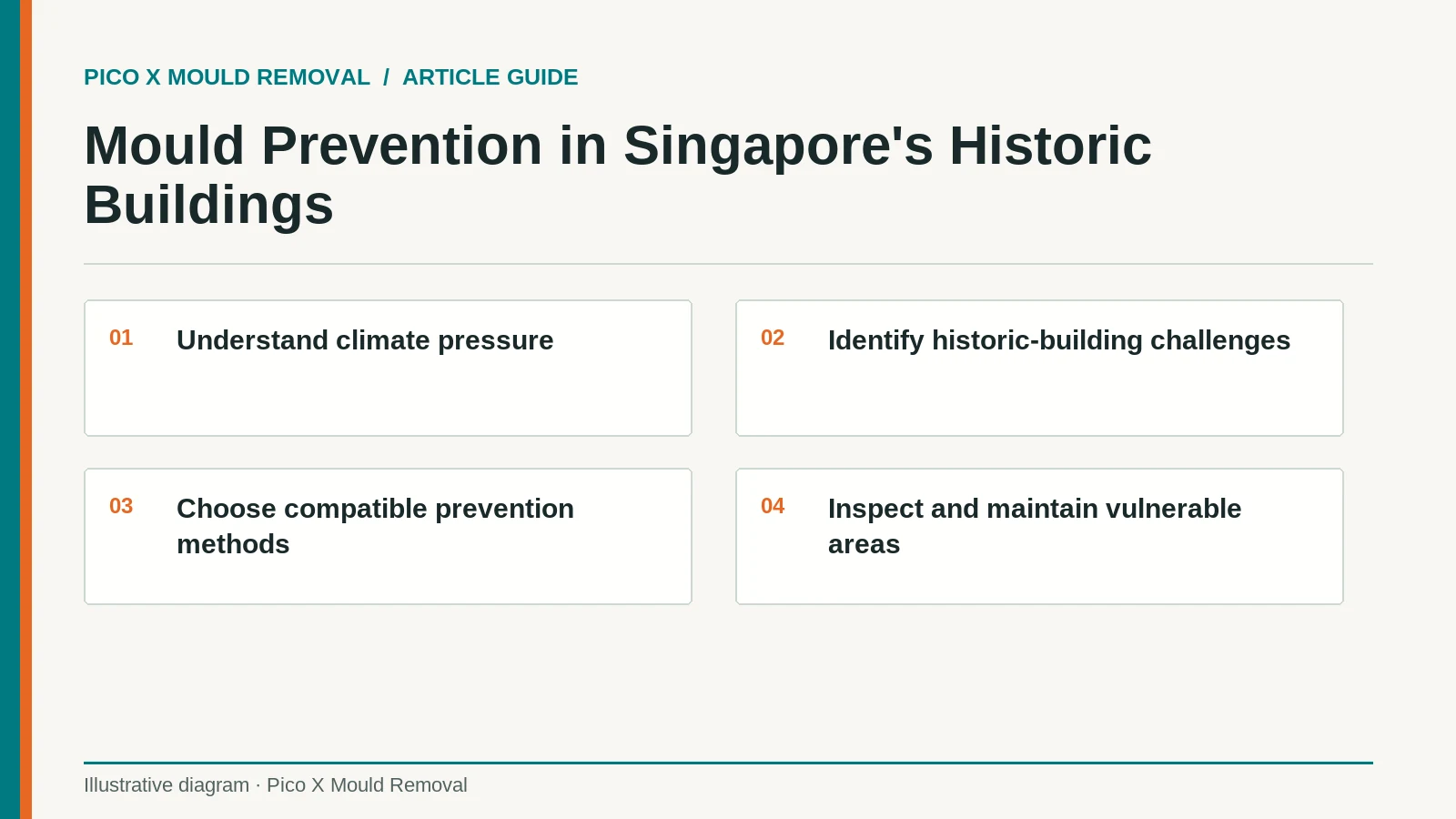
Understanding Singapore’s Climate and Its Impact on Mould Growth
Singapore's climate is characterized by consistently high humidity levels, averaging around 84% throughout the year. Combine this with average temperatures ranging from 25°C to 31°C, and you have ideal conditions for mould proliferation. The relentless humidity infiltrates buildings, especially older ones that may not have been designed with modern moisture control methods.
Key Stat:
"In Singapore, the relative humidity often exceeds 90% during the rainy season, creating a perfect breeding ground for mould."
Challenges of Mould Prevention in Historic Buildings
Preservation of Structural Integrity
Historic buildings in Singapore, such as those in Tiong Bahru and Kampong Glam, often feature materials like wood and plaster that are particularly susceptible to mould. Maintaining these structures requires a delicate balance between preservation and modern intervention.
- Older Materials: Many historic buildings were constructed with materials that lack the protective treatments found in modern construction.
- Ventilation Issues: These buildings often have outdated ventilation systems, exacerbating moisture retention.
Limitations in Modern Retrofitting
Modern retrofitting solutions are sometimes incompatible with the preservation requirements of historic buildings. The challenge lies in integrating effective mould prevention measures without compromising the historical value.
- Architectural Restrictions: Preservation laws often restrict modifications that could alter the building's original appearance.
- Limited Space for Modern Systems: Historic buildings might not have the architectural capacity to incorporate modern HVAC systems.
Effective Mould Prevention Strategies
Regular Inspections and Maintenance
Routine inspections by trained specialists are vital for early detection and prevention of mould. These inspections should focus on:
- Identifying Damp Spots: Areas prone to moisture accumulation, such as basements and attics.
- Assessing Ventilation: Ensuring that current ventilation systems are effective in reducing humidity levels.
Professional-Grade Dehumidification
Installing portable or centralized dehumidifiers can significantly reduce indoor humidity levels, providing a less hospitable environment for mould.
- Portable Dehumidifiers: Ideal for confined spaces and cost between S$300 to S$800.
- Centralized Systems: More expensive, ranging from S$2,000 to S$5,000, but effective for larger buildings.
Utilization of Mould-Resistant Materials
Where possible, replace or treat vulnerable materials with mould-resistant alternatives. This proactive approach can drastically reduce the recurrence of mould.
- Mould-Resistant Paints: These can be applied to interior walls to create a barrier against moisture.
- Treated Wood: Using pressure-treated or chemical-treated wood can help prevent decay.
Implementing Industry Best Practices
Use of HEPA Filters
High-efficiency particulate air (HEPA) filters are effective in trapping mould spores and preventing their spread within buildings. Implementing air purification systems with HEPA filters can greatly reduce indoor air contamination.
Professional Cleaning Protocols
Engaging professional cleaning services that adhere to industry best practices ensures that mould is not only removed but also prevented from returning. These services typically include:
- Comprehensive Surface Cleaning: Using professional-grade biocides and cleaners.
- Air Duct Cleaning: Ensuring that all aspects of the HVAC system are free from mould spores.
Case Study: Mould Prevention in Tiong Bahru
The conservation efforts in Tiong Bahru provide a blueprint for mould prevention in historic districts. By employing a combination of modern technology and traditional preservation techniques, specialists have successfully mitigated mould issues that once plagued these iconic shophouses.
Key Practices:
- Regular Monitoring: Community-wide initiatives for regular moisture level checks.
- Community Education: Workshops for residents on mould prevention techniques.
Conclusion
Preserving Singapore's historic buildings from the threat of mould requires a nuanced approach that respects their architectural integrity while leveraging modern technology. By employing industry-standard practices and engaging trained specialists, homeowners can safeguard these national treasures. If you own a historic property and need guidance on mould prevention, schedule a free inspection with our experienced team today.
---
Frequently Asked Questions
What causes mould to grow in historic Singapore buildings?
Mould growth in historic Singapore buildings is primarily due to high humidity levels, which average 84% throughout the year. The tropical climate provides an ideal environment for mould, especially in buildings with older materials and inadequate ventilation systems.
How can I prevent mould in my historic property in Singapore?
To prevent mould, ensure regular inspections and maintenance, install dehumidifiers, and use mould-resistant materials. Engaging professional cleaning services that follow industry best practices is also vital. These steps help maintain lower humidity levels and prevent mould growth.
Are there cost-effective solutions for mould prevention in historic buildings?
Yes, cost-effective solutions include regular inspections, using portable dehumidifiers (S$300 to S$800), and applying mould-resistant paints. These measures can mitigate mould growth while preserving the building's historic value.
Can modern HVAC systems be integrated into historic buildings in Singapore?
While challenging, it is possible to integrate modern HVAC systems into historic buildings with careful planning. This requires a balance between preserving the building's architectural integrity and implementing effective moisture control measures.
Why is professional expertise important in mould remediation for historic buildings?
Professional expertise is crucial because historic buildings require a delicate approach to mould remediation. Trained specialists understand how to preserve the building's structural integrity while using industry-standard techniques to prevent and remove mould effectively.