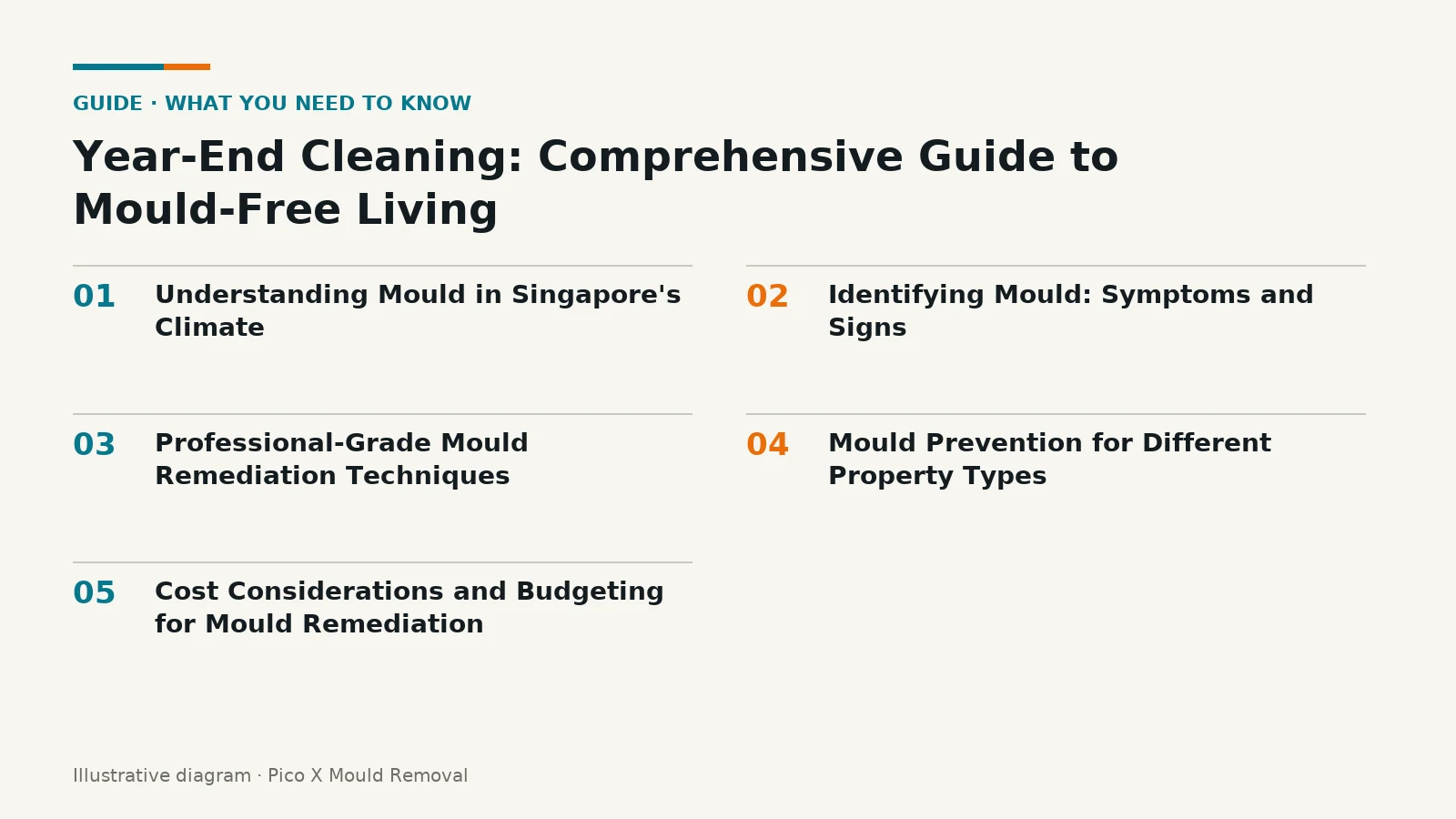
# Year-End Cleaning: Comprehensive Guide to Mould-Free Living in Singapore
As the year draws to a close, many Singapore homeowners are gearing up for a thorough cleaning to welcome the new year with a fresh start. But beyond the usual dusting and vacuuming, there's a silent invader that demands attention: mould. In Singapore’s humid tropical climate, mould growth is a common issue in many homes, from HDB flats in Tampines to upscale condominiums in Marina Bay. This comprehensive guide will walk you through everything you need to know about ensuring a mould-free living environment, equipping you with industry-standard practices and professional insights.
Understanding Mould in Singapore's Climate
Singapore's Climate and Its Impact on Mould Growth
Singapore's equatorial climate is characterized by consistently high humidity levels, often exceeding 80%. This environment creates the perfect breeding ground for mould, which thrives in damp, warm conditions. The frequent rainfalls and high temperatures mean that mould can develop rapidly, sometimes within 24-48 hours of moisture exposure.
Key Stat: Studies have shown that mould can begin to grow in as little as 48 hours under ideal conditions.
Common Areas Affected by Mould
Mould can manifest in various parts of your home, including:
- Bathrooms and Kitchens: High moisture areas due to frequent water usage.
- Bedrooms and Living Rooms: Especially if there is inadequate ventilation.
- Air Conditioning Units: Condensation can create a moisture-laden environment.
Understanding these hotspots helps in strategizing effective mould prevention and remediation techniques.
Identifying Mould: Symptoms and Signs
Physical Signs of Mould
Mould often presents itself in the form of:
- Visible Discolouration: Black, green, or white patches on walls and ceilings.
- Musty Odours: A persistent damp smell, especially in enclosed spaces.
Health Symptoms Associated with Mould
Exposure to mould can lead to health issues such as:
- Respiratory Problems: Coughing, wheezing, and difficulty breathing.
- Allergic Reactions: Skin rashes, itchy eyes, and nasal congestion.
- Exacerbation of Asthma: Especially concerning for individuals with pre-existing conditions.
Warning: If you experience persistent health issues, it may be a sign of hidden mould in your home.
Professional-Grade Mould Remediation Techniques
Industry-Standard Practices for Mould Removal
Professional Tips for Effective Mould Prevention
Maintain indoor humidity levels below 60% using dehumidifiers. Ensure proper ventilation in high-moisture areas. Regularly inspect and clean air conditioning units.Pro Tip: Regular maintenance and prompt attention to leaks can significantly reduce the risk of mould growth.
Mould Prevention for Different Property Types
HDB Mould Prevention Strategies
For HDB dwellings, efficient space utilization often leads to densely packed interiors, which can trap moisture. Consider these strategies:
- Install exhaust fans in kitchens and bathrooms.
- Use moisture-absorbing products in wardrobes and storage spaces.
- Opt for mould-resistant paints for walls and ceilings.
Condo and Landed Property Considerations
Condo and landed properties, while often larger, are not immune to mould issues:
- Ensure air conditioning units are regularly serviced to prevent condensation build-up.
- Utilize landscape drainage solutions to direct water away from the foundation.
- Implement routine inspections for roof leaks and plumbing issues.
Expert Insight: Tailor mould prevention strategies to your property's specific layout and usage patterns for optimal results.
Cost Considerations and Budgeting for Mould Remediation
Understanding Mould Remediation Costs in Singapore
Costs for mould remediation can vary based on the extent of the issue and property type. On average, homeowners might expect:
- Basic Inspection: S$150 - S$300
- Remediation Services: S$500 - S$5,000 depending on severity and area size
- Preventive Measures: S$100 - S$1,000 for equipment and materials
Budget-Friendly Tips
Prioritize tackling visible and high-risk areas first. Invest in quality dehumidifiers or air purifiers to offset frequent remediation needs. Engage in regular maintenance to prevent costly repairs.Conclusion: Achieving Mould-Free Living
Achieving a mould-free home in Singapore requires a combination of proactive prevention, regular maintenance, and professional intervention when necessary. By understanding the unique challenges posed by Singapore's climate and being vigilant about potential mould hotspots, homeowners can ensure a healthy living environment year-round. For those seeking professional assistance, scheduling a free inspection with trained specialists can provide peace of mind and a tailored approach to your specific needs.
Call to Action: Ready to tackle mould in your home? Schedule a free inspection with our experienced specialists today and pave the way for a healthier, mould-free living environment.Frequently Asked Questions
How can I prevent mould growth in my HDB flat?
To prevent mould in your HDB flat, ensure good ventilation by opening windows and using exhaust fans in high-moisture areas like the kitchen and bathroom. Consider using moisture absorbers in closets and storage spaces, and regularly check for leaks or water damage that could promote mould growth.
What are the costs associated with professional mould remediation in Singapore?
Professional mould remediation in Singapore can vary widely based on the severity of the infestation and the size of the affected area. Typically, a basic inspection costs between S$150 and S$300, while remediation services can range from S$500 to S$5,000. It's advisable to get a quote from a reputable service provider for an accurate estimate.
Are there effective DIY methods for mould removal?
While small mould problems can sometimes be managed with DIY methods such as using vinegar or baking soda solutions, larger infestations require professional intervention. DIY methods often fail to address the root cause, leading to recurring issues. For comprehensive and lasting solutions, it is best to consult with professionals trained in mould remediation.
Why is mould a common problem in Singapore homes?
Mould is common in Singapore homes due to the country's tropical climate, which features high humidity and frequent rainfall. These conditions provide the perfect environment for mould to thrive, particularly in areas with poor ventilation or where moisture accumulates.
What should I do if I suspect hidden mould in my home?
If you suspect hidden mould, it's crucial to conduct a thorough inspection, possibly with the help of a professional. Look for signs such as musty odours, water stains, or health symptoms like allergies and respiratory issues. Professional inspectors can use specialized equipment to detect and address hidden mould effectively.