# Best Waterproofing Methods for Singapore Condo Bathrooms
In Singapore, with its tropical climate characterized by high humidity and frequent rainfall, effective waterproofing in bathrooms is not a luxury but a necessity. For condo owners, ensuring that their bathroom is well-protected against moisture is crucial in maintaining property value and preventing costly repairs. With over 15 years of experience in the industry, I've seen firsthand how water-related issues can escalate if not addressed with the right methods and materials.
Bathrooms, especially in condo units, face unique challenges due to their compact design and the high rate of daily water usage. Addressing these challenges with industry-standard and professional-grade waterproofing techniques can save homeowners from the headache of mould infestations and structural damage.
Understanding Singapore's Climate and Its Impact on Bathrooms
Climate Characteristics
Singapore's climate is equatorial, featuring:
- High Humidity: Averaging around 84% throughout the year, which creates a perfect breeding ground for mould if moisture is not properly managed.
- Heavy Rainfall: With annual rainfall ranging from 2,400mm to 3,000mm, water ingress is a common issue in improperly waterproofed areas.
"In Singapore, a single oversight in waterproofing can lead to significant water damage, especially in high-rise condos where water can seep through ceilings and walls."
Impact on Condo Bathrooms
Bathrooms in condos, such as those in areas like Tampines, Jurong, and Bishan, are often compact, leading to limited ventilation. This exacerbates moisture retention, making effective waterproofing even more critical.
Key Waterproofing Techniques for Condo Bathrooms
1. Membrane Waterproofing
Membrane waterproofing is a tried-and-tested method that involves applying a protective layer to surfaces.
Types of Membranes
- Liquid Membranes: Applied as a liquid that hardens into a seamless, waterproof layer. Ideal for bathrooms due to its flexibility and ease of application.
- Sheet Membranes: Pre-formed sheets that are adhered to surfaces. While effective, they require meticulous installation to avoid seams.
"Ensure that membranes extend beyond wet areas, covering wall-floor joints and corners, which are common weak points."
2. Cementitious Waterproofing
This method involves the use of cement-based compounds that bond with bathroom surfaces.
- Advantages: Highly durable and suitable for high-moisture environments.
- Application: Often used on concrete surfaces and is a popular choice for shower stalls and floors.
3. Polyurethane Waterproofing
Polyurethane is a versatile waterproofing solution that offers excellent flexibility.
- Benefits: It's particularly effective in areas with potential movement, such as on tiles and around fixtures.
- Application: Applied as a liquid, it forms a seamless and highly durable barrier.
"Polyurethane is sensitive to moisture during application; ensure surfaces are dry to avoid compromising the seal."
Common Challenges in Condo Bathroom Waterproofing
Ventilation Issues
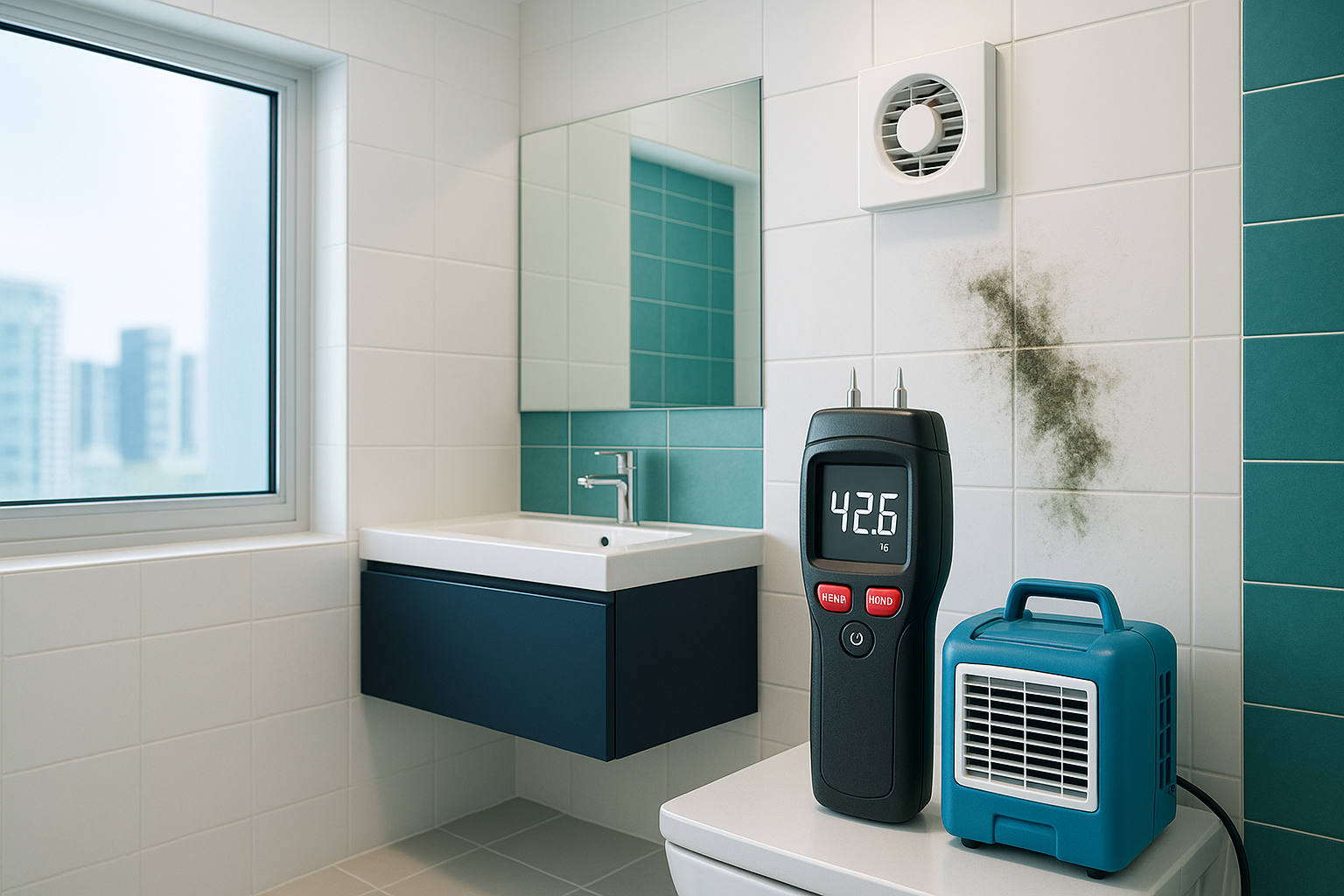
Poor ventilation can trap moisture, leading to mould growth.
Solutions:- Install exhaust fans to improve airflow.
- Use dehumidifiers to maintain a dry environment.
Design Limitations
Condo bathrooms often have limited space, which can complicate waterproofing efforts.
- Design Tip: Opt for slim-profile membranes and fixtures to maximize space without compromising on protection.
Material Selection
Choosing the right materials is crucial for long-term effectiveness.
- Recommended Materials: Opt for high-quality, professional-grade products that are designed for tropical climates.
Cost Considerations in Waterproofing
When planning for bathroom waterproofing in Singapore, it's essential to budget appropriately. The cost can vary based on several factors:
Breakdown of Costs
"Investing in quality waterproofing can prevent damages that cost up to S$5,000 in repairs."
Steps to Ensure Effective Waterproofing
Step 1: Assessment
Conduct a thorough inspection of your bathroom to identify potential leak points and areas prone to moisture accumulation.
Step 2: Preparation
Prepare the surfaces by cleaning and drying them thoroughly. This ensures optimal adhesion of waterproofing materials.
Step 3: Application
Apply the chosen waterproofing method, ensuring thorough coverage of all surfaces, especially joints and corners.
Step 4: Testing
After application, perform a water test to ensure that the waterproofing is effective. This involves checking for any leaks or water ingress.
Conclusion
Effective waterproofing is an investment in your property's longevity and your peace of mind. By employing industry-standard techniques and seeking assistance from trained specialists, condo owners in Singapore can protect their bathrooms from the adverse effects of moisture and humidity. If you're considering waterproofing your bathroom, reach out to a professional for a free inspection and tailored advice.
##
Frequently Asked Questions
Why is waterproofing important for condo bathrooms in Singapore?
Given Singapore's humid climate and high rainfall, condo bathrooms are prone to moisture-related issues like mould growth and structural damage. Waterproofing provides a critical barrier, protecting your investment and ensuring the longevity of your bathroom.
What are the most effective waterproofing methods for bathrooms?
The most effective methods include membrane waterproofing (both liquid and sheet), cementitious waterproofing, and polyurethane waterproofing. These methods create robust barriers that prevent water ingress and are suitable for high-moisture environments.
How much does it cost to waterproof a bathroom in Singapore?
The cost can vary based on materials and labor, typically ranging from S$500 to S$1,500. High-quality materials may add to the cost but offer better long-term protection, potentially preventing costly repairs.
Can I waterproof my bathroom myself?
While DIY waterproofing is possible, it is recommended to hire trained specialists to ensure that the job is done correctly. Professional services offer expertise and precision, which are crucial for effective waterproofing.
How long does bathroom waterproofing last?
When done with high-quality materials and professional application, waterproofing can last for several years. Regular maintenance checks are recommended to ensure continued effectiveness.