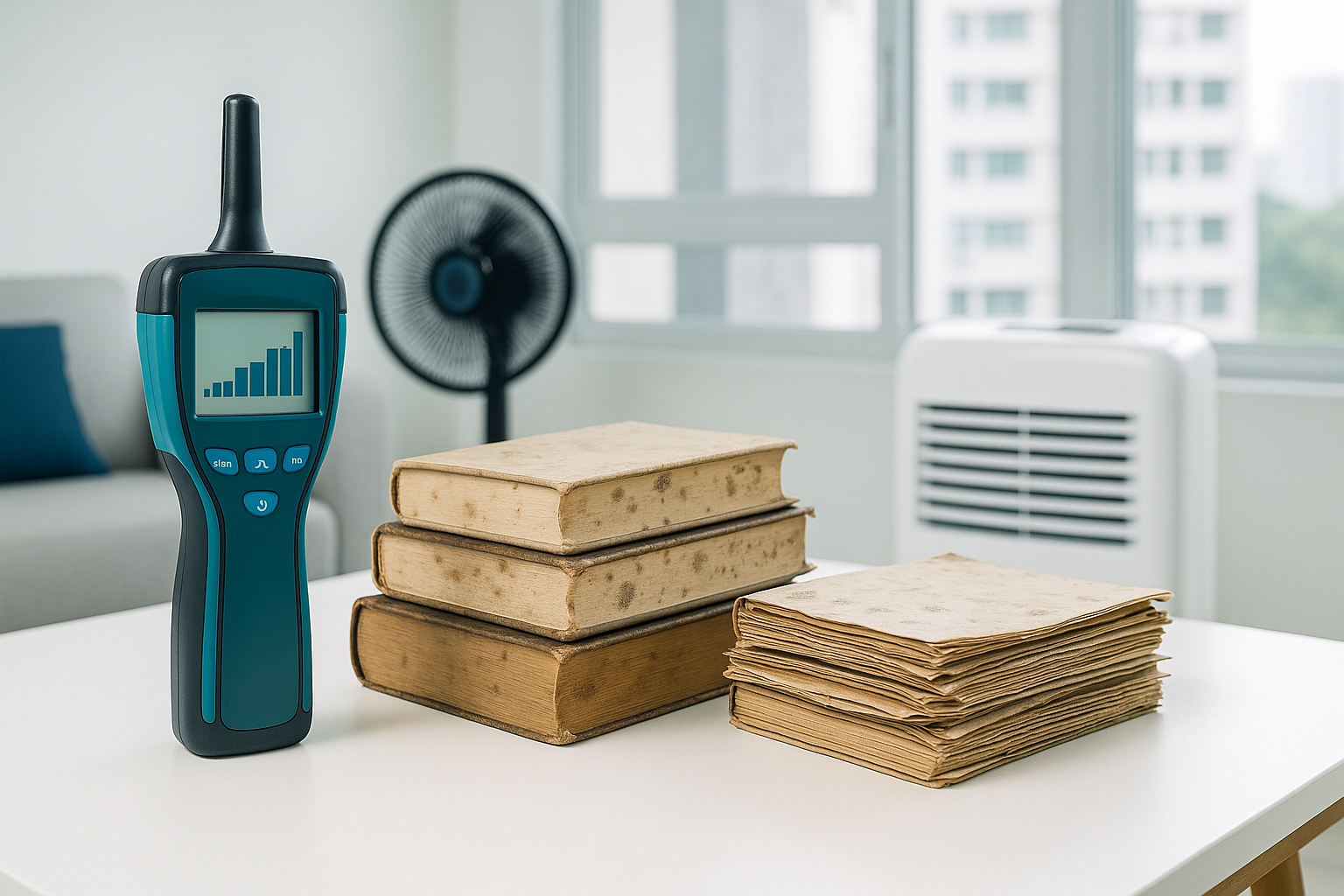
# Protecting Books and Documents from Mould Damage in Singapore
In the bustling urban environment of Singapore, homeowners face many challenges in maintaining their living spaces, one of which is the persistent threat of mould. With our tropical climate characterized by high humidity and frequent rainfall, mould growth becomes a common issue, especially in residential areas like HDB flats, condos, and landed properties. Among the various household items that mould can damage, books and documents are particularly susceptible. This blog post will delve into effective strategies to protect your valuable collections from mould damage, using industry-standard practices honed over years of experience.
Understanding the Singapore Climate and Its Impact on Mould Growth
The Humidity Factor
Singapore's climate is marked by consistently high humidity levels, often exceeding 80%. This environment creates the perfect breeding ground for mould spores, which thrive in moist conditions. For homeowners, this means that books and documents, often stored in less ventilated areas, are at constant risk.
Key Stat:
Singapore experiences an average of 167 rainy days per year, with an annual rainfall of about 2,340 mm.
Local Property Considerations
Different property types in Singapore have unique vulnerabilities to mould:
- HDB Flats: Typically, HDB units are compact, with limited natural ventilation, making it essential to actively manage indoor humidity.
- Condominiums: While often equipped with modern amenities, condos can still suffer from inadequate ventilation in storage areas.
- Landed Properties: These homes might have larger storage areas, but the extensive space can make climate control challenging.
Best Practices for Mould Prevention in Books and Documents
Maintaining Optimal Storage Conditions
Protective Measures for Books and Documents
- Use of Protective Covers: Store books and documents in plastic sleeves or airtight containers to shield them from moisture.
- Regular Cleaning: Dust books and document surfaces regularly to prevent the accumulation of mould spores.
- Desiccants: Place silica gel packets in storage areas to absorb excess moisture.
Pro Tip:
Rotate books on shelves to expose different sides to air periodically, reducing the chance of mould growth.
Industry-Standard Remediation Techniques
Professional Assessment and Cleaning
Engaging professional mould remediation specialists can provide a comprehensive assessment of your home’s mould risks. Trained specialists can identify hidden mould sources and recommend tailored solutions for your property type.
Expert Insight:
In-depth inspections often reveal mould in unexpected areas such as behind wallpaper or in air conditioning ducts. Addressing these sources is crucial for long-term protection.
Safe and Effective Mould Removal
Cost Considerations for Mould Remediation in Singapore
Breakdown of Costs
- Initial Inspection: S$100-S$300, depending on property size.
- Dehumidifier Purchase: S$200-S$600 for a reliable model.
- Professional Remediation Services: S$500-S$2,000, depending on the extent of mould damage and property type.
Best Practice:
Investing in preventive measures can be more cost-effective in the long run compared to extensive remediation efforts.
Conclusion: Take the First Step Towards Mould-Free Living
Protecting your books and documents from mould damage requires a proactive approach tailored to Singapore's unique climate and property dynamics. By implementing industry-standard prevention techniques and engaging professional services when necessary, you can safeguard your valuable collections.
Ready to take action? Schedule a free inspection with our team of experienced specialists today and ensure your home is mould-free.Frequently Asked Questions
Why is mould such a common issue in Singapore?
Mould thrives in warm and humid environments, which are characteristic of Singapore's climate. With high humidity levels often exceeding 80% and frequent rainfall, the conditions are ideal for mould growth, particularly in poorly ventilated areas of homes.
How can I tell if my books or documents are at risk of mould damage?
Signs that your books or documents are at risk include a musty odour, visible mould spots on covers or pages, and any dampness in the storage area. Regular inspections and maintaining optimal storage conditions are crucial to prevent damage.
What are the most effective ways to prevent mould on books and documents?
The most effective ways include controlling humidity with a dehumidifier, ensuring good air circulation, using protective covers, and regularly cleaning storage areas. Additionally, professionals can provide tailored solutions based on your specific property and climate conditions.
Are professional mould remediation services worth the investment?
Yes, professional services are worth the investment as they provide thorough assessments and use industry-standard techniques to effectively remove mould and prevent future growth. This is especially important for protecting valuable or irreplaceable items like books and documents.
What should I do if I discover mould on my documents?
If you discover mould on your documents, isolate the affected items to prevent spread. Use a soft brush to gently remove mould spores, and consider consulting a professional for safe cleaning solutions that won't damage the paper. Ensure the storage environment is dry and well-ventilated to prevent recurrence.