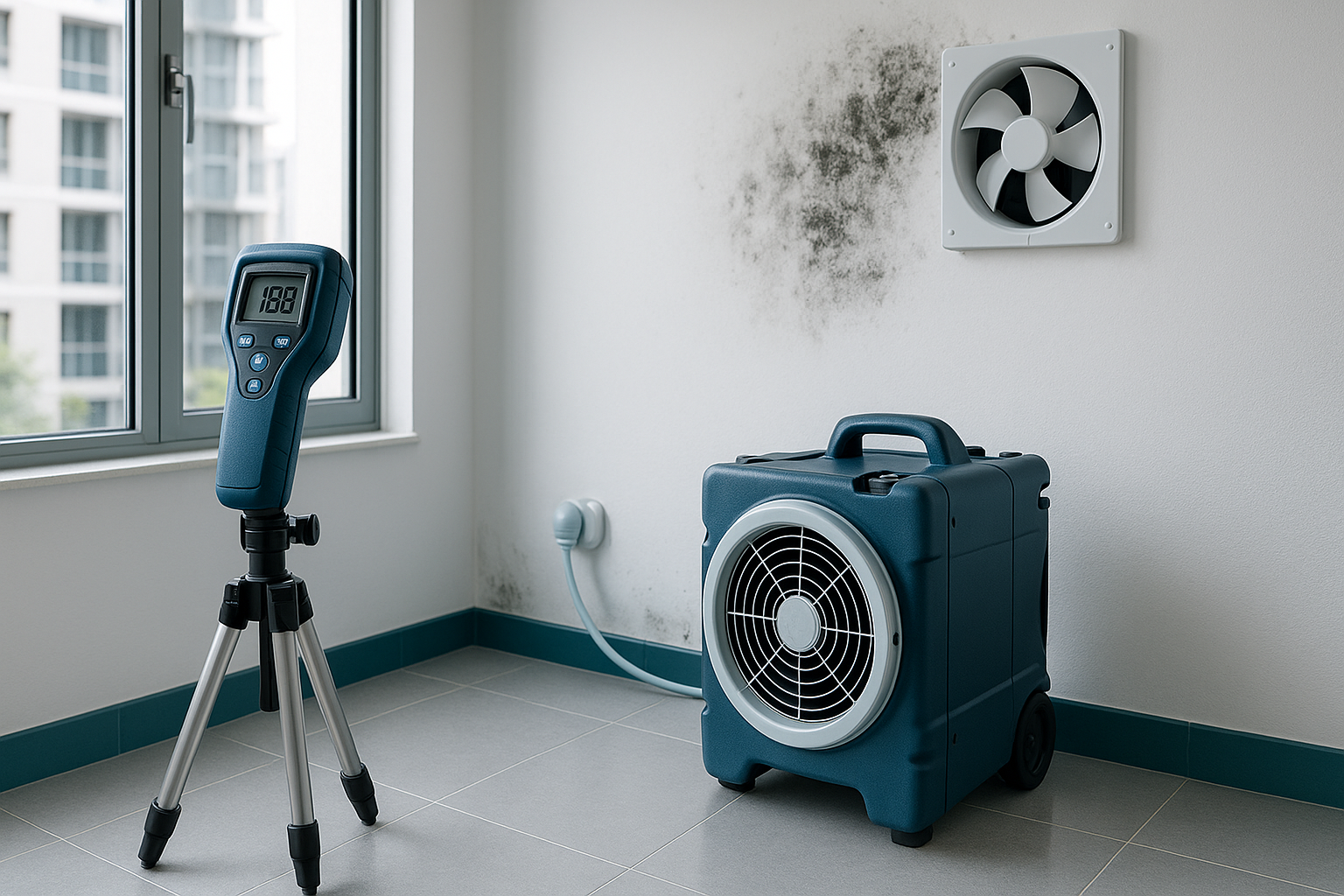
The Temptation to Paint Over Mould
When you spot mould on your walls, the quickest solution seems obvious: grab some paint and cover it up. After all, if you can't see it, it's not a problem, right? Unfortunately, this approach is not only ineffective but can actually make your mould problem significantly worse.
In Singapore's humid climate, where 80-90% relative humidity is common, mould finds ideal conditions to thrive. Painting over active mould is like putting a bandage over an infected wound without treating the infection.
Why Paint Cannot Stop Mould
Mould is a living organism with root-like structures called hyphae that penetrate deep into porous surfaces. When you paint over mould:
- Hyphae remain embedded - The roots continue living beneath the paint surface
- Moisture persists - Paint traps moisture, creating an even better environment for growth
- Spores spread - Mould releases spores that escape through microscopic paint pores
- Paint becomes food - Many paints contain organic compounds that mould can actually consume
Within weeks to months, you'll typically see dark patches bleeding through, paint bubbling or peeling, and often a worse mould problem than you started with.
The Correct Treatment Process
Professional mould remediation before painting involves several critical steps:
- Assessment - Identify mould type, extent, and moisture source
- Containment - Prevent spore spread during treatment
- Removal - Physical removal of mould and affected materials
- Treatment - Application of antimicrobial solutions
- Drying - Ensure moisture levels are below 15%
- Priming - Apply mould-resistant primer
- Painting - Use quality anti-mould paint
Our professional mould removal and painting service follows this exact 4-step process: moisture check, deep clean, sealer application, and anti-mould paint. Prices start from $288 with warranty included.
Choosing the Right Anti-Mould Paint
After proper treatment, selecting the right paint provides ongoing protection:
- Nippon VirusGuard - Contains silver-ion technology that inhibits mould growth
- Jotun Mould Resist - Specifically formulated for tropical humidity
- Zinsser Perma-White - Professional-grade with built-in fungicides
- Dulux Wash & Wear Anti-Bacterial - Good for bathroom and kitchen areas
Always apply a mould-resistant primer before the topcoat for maximum protection.
Frequently Asked Questions
Can I just paint over mould to hide it?
No, painting over mould is never a solution. Mould will continue to grow beneath the paint and eventually break through, often worse than before. The paint may blister, peel, or become discoloured within weeks to months. Proper remediation must always come first.
What happens if I paint over mould without treatment?
Painting over untreated mould leads to: continued mould growth behind the paint, paint bubbling and peeling within weeks, musty odours persisting, potential structural damage, and health risks from hidden mould spores. You'll end up spending more on proper remediation plus repainting.
How long should I wait after mould treatment before painting?
Wait at least 24-48 hours after mould treatment to ensure the surface is completely dry and the antimicrobial treatment has cured. For areas with previous moisture issues, waiting 3-5 days with good ventilation is recommended. A moisture reading below 15% indicates the surface is ready for paint.
What type of paint should I use after mould treatment?
Use anti-mould paint specifically formulated for Singapore's climate. We recommend Nippon VirusGuard, Jotun Mould Resist, or Zinsser Perma-White. These contain fungicides that provide ongoing protection. Apply a mould-resistant primer first for best results.
How much does professional mould treatment cost before painting?
Professional mould treatment in Singapore typically costs $300-$800 for a standard room, depending on severity. This includes assessment, treatment, and preparation for painting. While it adds to painting costs, it prevents repeated repainting and protects your health and property value.