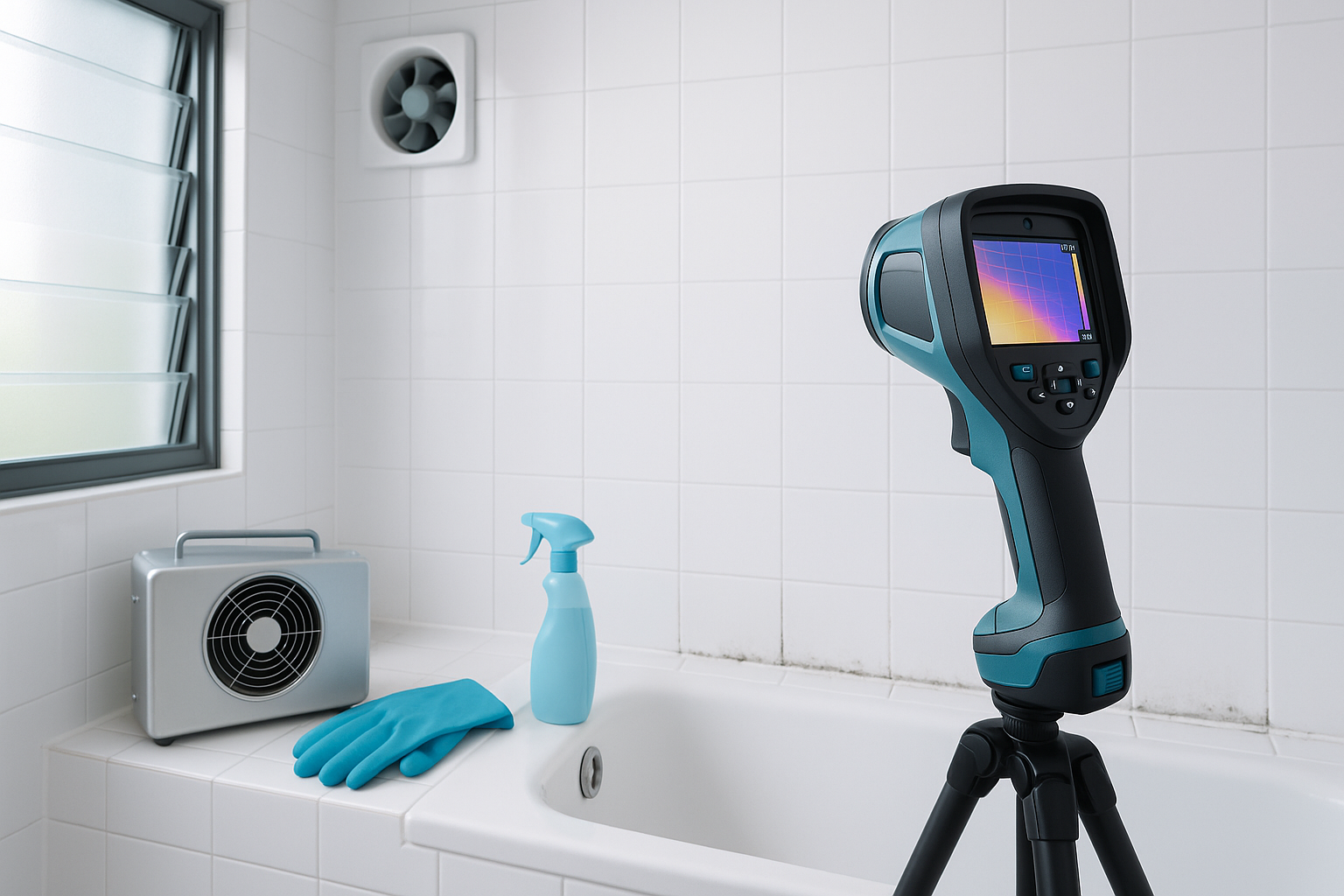
Cleaning Mould from Grout
Mild to Moderate Mould
- Make a paste with baking soda and water
- Apply to grout lines with an old toothbrush
- Let sit for 10-15 minutes
- Spray with white vinegar (will fizz)
- Scrub with brush and rinse
Heavy Mould
- Apply hydrogen peroxide (3%) directly to grout
- Let sit for 10 minutes
- Scrub with grout brush
- Rinse thoroughly
- For stubborn stains, use diluted bleach (1:10 with water)
Prevention
- Seal grout annually with quality grout sealer
- Wipe down after every shower
- Use weekly anti-mould spray
Cleaning Mould from Tiles
Tiles are non-porous, making them easier to clean:
- Spray with commercial bathroom cleaner or vinegar solution
- Let sit 5-10 minutes
- Wipe with microfiber cloth
- Rinse and dry
Tip: For textured tiles, use a soft brush to get into crevices.
Cleaning Mould from Silicone Sealant
Surface Mould
- Apply bleach gel or paste directly on silicone
- Cover with plastic wrap to prevent drying
- Leave for several hours or overnight
- Remove wrap and scrub gently
- Rinse thoroughly
When to Replace Silicone
- Mould returns repeatedly after cleaning
- Silicone is cracking, peeling, or shrinking
- Deep black staining that won't come out
- Gaps forming between silicone and surface
Note: When replacing, use anti-mould silicone sealant for longer protection.
Frequently Asked Questions
How often should I clean bathroom grout to prevent mould?
In Singapore's humid climate, clean grout with anti-mould solution at least once a month. Wipe down shower tiles and walls after each use to remove moisture. Deep clean quarterly, and reseal grout annually for best protection.
Can I use bleach on coloured grout?
Bleach can fade coloured grout. Use oxygen-based cleaners (like hydrogen peroxide) or commercial grout cleaners specifically safe for coloured grout. Test in an inconspicuous area first and rinse thoroughly.
When should I replace silicone sealant instead of cleaning it?
Replace silicone when: mould returns repeatedly despite cleaning, the silicone is cracking or peeling, there's discoloration deep within the material, or gaps have formed. Typically, bathroom silicone should be replaced every 3-5 years.
Is it better to use natural or chemical cleaners for bathroom mould?
Both can be effective. Natural options (vinegar, baking soda, hydrogen peroxide) are safer but may need longer contact time. Chemical cleaners work faster but require good ventilation. For severe mould, professional-grade treatments may be needed.
How can I prevent mould from returning after cleaning?
Run exhaust fan during and 30 minutes after showers, squeegee walls after each use, leave bathroom door open when possible, use dehumidifier if needed, seal grout annually, and apply anti-mould spray weekly as preventive maintenance.