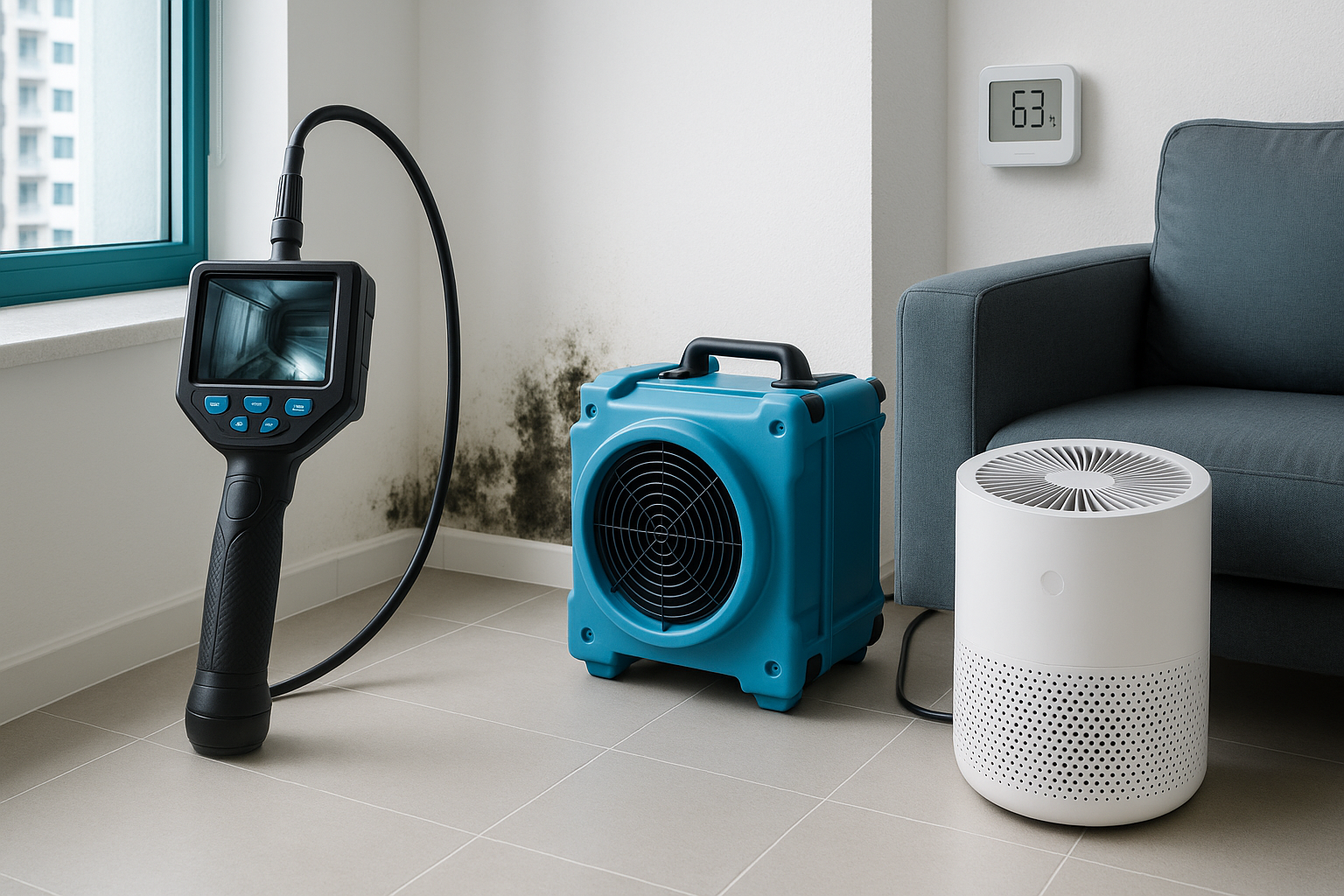
Warning Signs of Hidden Mould
Sensory Clues
- Musty odors: A persistent earthy, damp smell – especially if you can't find the source
- Smell gets stronger: Odor intensifies in certain areas or when humidity rises
- Allergy symptoms: Unexplained sneezing, congestion, or itchy eyes at home
Visual Indicators
- Water stains: Brown or yellow marks on walls or ceilings
- Paint problems: Bubbling, cracking, or peeling paint
- Wallpaper issues: Peeling, warping, or discoloration
- Wall texture changes: Soft spots, warping, or bulging
- Discoloration: Unexplained dark patches or staining
Structural Signs
- Floor warping: Uneven or bouncy floors
- Door frame swelling: Doors that suddenly don't close properly
- Ceiling sag: Drooping or soft spots in ceiling
High-Risk Areas to Check
In Singapore homes, mould commonly hides in:
- Behind wardrobes on exterior walls: Temperature difference causes condensation
- Under bathroom flooring: Water seepage from showers
- Inside wall cavities near plumbing: Slow leaks go unnoticed
- Behind kitchen cabinets: Sink leaks and cooking moisture
- In ceiling voids: Roof leaks or upstairs bathroom leaks
- Around air conditioning units: Condensation drip trays and pipes
Detection Methods
DIY Approaches
- Move furniture: Regularly inspect walls behind large furniture
- Use your nose: Systematically smell different areas of your home
- Monitor humidity: Use a hygrometer to identify problem areas
- Check during rain: Look for water ingress during heavy rain
Professional Detection Tools
- Thermal imaging: Detects moisture and temperature differences in walls
- Moisture meters: Measures moisture content in materials
- Boroscopes: Small cameras that can inspect wall cavities
- Air quality testing: Measures mould spore concentrations
Frequently Asked Questions
What are signs of hidden mould behind walls?
Key signs include: persistent musty odors, unexplained allergic symptoms, visible water stains or discoloration, bubbling or peeling paint, warped or soft drywall, and a history of water damage or leaks in the area.
Can I use a moisture meter to detect hidden mould?
Moisture meters detect elevated moisture levels which indicate conditions favorable for mould, but they don't detect mould directly. High moisture readings suggest further investigation is needed. Professional inspectors use thermal cameras and other tools for more accurate detection.
How can I tell if mould is growing behind furniture?
Check for musty odors near furniture against walls, look for discoloration on walls behind furniture, and periodically move furniture to inspect hidden areas. Furniture against exterior walls or in humid rooms is higher risk.
Should I cut into walls to look for hidden mould?
This is not recommended for homeowners as it can release spores into your living space. If you suspect hidden mould, have a professional conduct a proper inspection using non-invasive methods first, or contained sampling if needed.
Can air quality tests detect hidden mould?
Air quality tests can detect elevated mould spore counts which may indicate hidden growth. However, results vary with conditions and don't pinpoint the location. They're best used alongside other inspection methods for a complete picture.