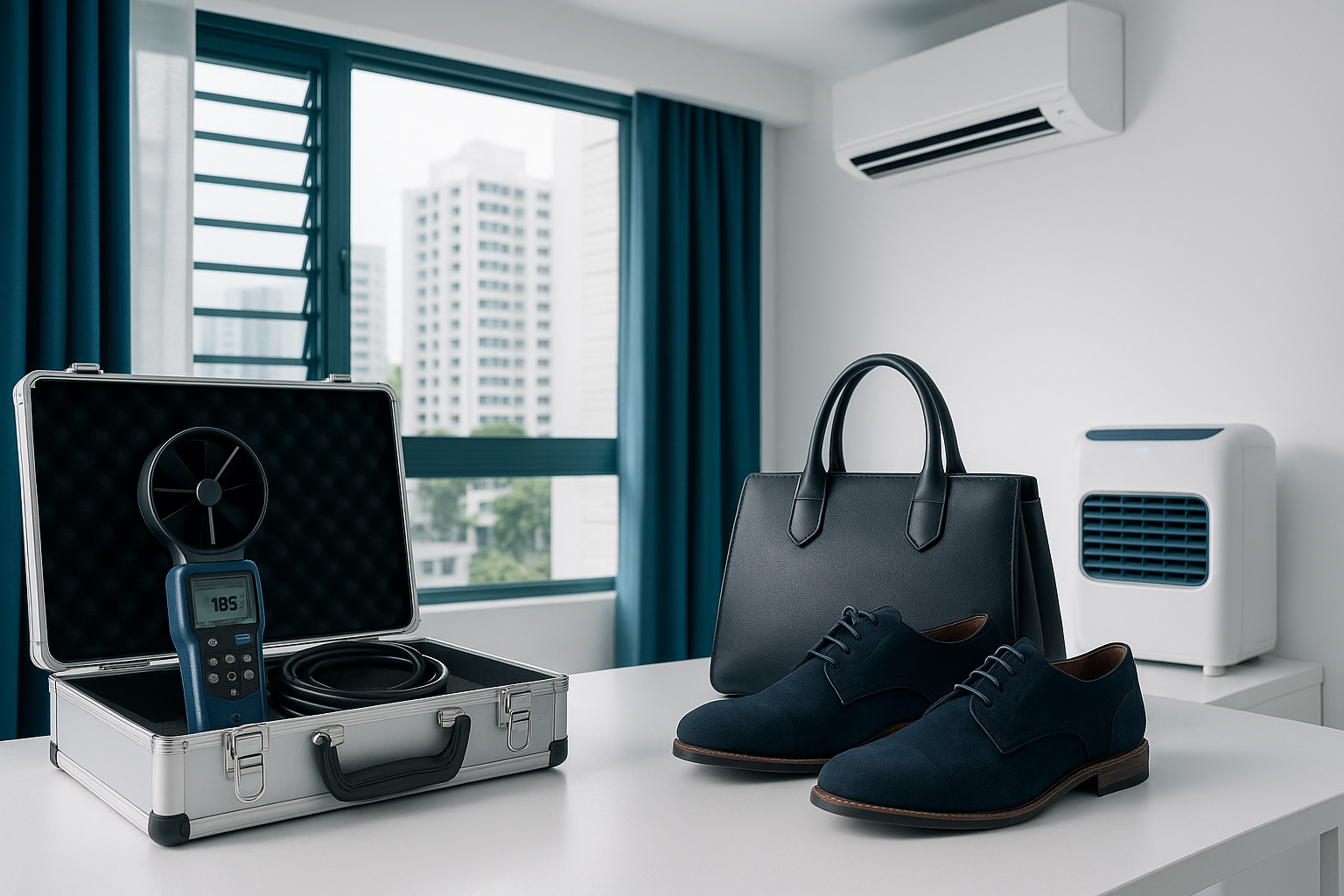
# Leather Goods Care: Preventing Mould on Bags and Shoes
Singapore's tropical climate, characterized by high humidity and frequent rainfall, is a breeding ground for mould. For homeowners in areas like Tampines, Jurong, and Bishan, this can be particularly challenging. Leather goods, such as bags and shoes, are especially susceptible due to their organic nature, which can attract mould if not properly cared for. In this comprehensive guide, we'll explore how to prevent mould from damaging your valuable leather items, leveraging over 15 years of industry experience and professional-grade practices.
Understanding the Singaporean Climate
The Humidity Factor
Singapore's relative humidity often ranges between 70% to 90%, creating ideal conditions for mould growth. Leather, being porous, can absorb moisture from the air, providing a suitable environment for mould spores to thrive.
Key Stat: On average, Singapore experiences around 167 rainy days per year, exacerbating the humidity levels and increasing the risk of mould in homes.
Seasonal Challenges
During the monsoon seasons, typically from November to January and June to September, the risk of mould growth escalates. Homeowners in various property types, from HDB flats to landed properties, need to be particularly vigilant.
Best Practices for Leather Goods Care
Regular Maintenance
Pro Tip: Always test any cleaning or conditioning product on a small, inconspicuous area to ensure it doesn't discolor or damage the leather.
Proper Storage
Choosing the Right Environment
- Store leather goods in a cool, dry place, away from direct sunlight and heat sources.
- Use breathable fabric covers instead of plastic, which can trap moisture.
Desiccants and Dehumidifiers
- Place silica gel packets inside bags and shoes to absorb excess moisture.
- Consider investing in a dehumidifier for your home, especially in closets or storage areas, to maintain optimal humidity levels.
Expert Insight: In high-humidity areas like Singapore, a dehumidifier can significantly reduce the risk of mould by maintaining indoor humidity below 60%.
Prevention Strategies for Different Property Types
HDB Flats
- Use moisture-absorbing products in wardrobes and storage areas.
- Ensure adequate ventilation by keeping windows open when possible or using fans.
Condominiums
- Leverage air conditioning to control indoor humidity levels.
- Utilize built-in storage solutions with ventilation to prevent mould buildup.
Landed Properties
- Regularly inspect and maintain basements and attics for leaks or water damage.
- Install exhaust fans in enclosed storage spaces to enhance airflow.
Addressing Existing Mould Issues
Identifying Mould
- Look for discoloration or musty odors on leather goods.
- Inspect seams and hidden areas where mould might first appear.
Professional Remediation
Warning: DIY mould removal can sometimes exacerbate the issue. Professional intervention ensures thorough remediation without damaging your leather goods.
Cost Considerations and Investment
Budgeting for Prevention
- Dehumidifiers can range from S$150 to S$500, depending on capacity and features.
- Professional-grade leather care products typically cost between S$20 and S$100.
The Value of Professional Services
- Initial mould inspection and assessment may cost around S$100 to S$300, but investing in prevention can save thousands in potential damage to high-value leather items.
Conclusion
Protecting your leather goods from mould in Singapore's challenging climate requires a proactive approach. By implementing these industry-standard practices, you can extend the life of your bags and shoes, keeping them mould-free and in pristine condition. For comprehensive protection and peace of mind, consider scheduling a free inspection with our team of experts. Contact us today to ensure your leather items remain in excellent condition for years to come.
Frequently Asked Questions
How often should I condition my leather goods to prevent mould?
To prevent mould, it's recommended to condition your leather goods every three to six months. This frequency helps maintain the leather's natural oils and prevents cracking, which can attract mould. For best results, use a professional-grade conditioner specifically designed for leather.
Are there any specific products to avoid when cleaning leather goods?
Avoid using harsh chemicals or abrasive cleaners on leather, as they can damage the material. Instead, opt for gentle, leather-specific cleaning products. Always perform a spot test on a small, hidden area before full application to ensure compatibility with your leather item.
Can I use a hairdryer to dry wet leather goods?
Using a hairdryer on leather goods is not advisable, as the heat can cause the leather to crack and become brittle. Instead, allow leather to air-dry naturally in a well-ventilated area, away from direct sunlight and heat sources.
What is the best way to store leather goods in Singapore's humid climate?
In Singapore's humid climate, store leather goods in a cool, dry place with good air circulation. Use breathable fabric covers and incorporate silica gel packets or dehumidifiers to reduce moisture levels. Regularly inspect and clean your leather items to prevent mould growth.
Is professional mould removal necessary for leather goods?
Professional mould removal is recommended for leather goods if mould growth is significant or persistent. Trained specialists have the expertise and tools to safely and effectively remediate mould without damaging your valuable items, ensuring long-term protection against future growth.