# Silica Gel and Moisture Absorbers: Complete Guide for Singapore Homeowners
Moisture is a persistent challenge for homeowners in Singapore due to the tropical climate. With high humidity levels averaging around 84%, managing moisture is crucial for maintaining a healthy and mould-free living environment. As an expert in mould remediation with over 15 years of experience in the industry, I understand that the right tools and techniques are essential to combat this pervasive issue. In this comprehensive guide, we'll explore the use of silica gel and moisture absorbers, providing you with industry-standard insights tailored for Singapore's unique climatic conditions.
Understanding Singapore's Climate and Its Impact on Homes
Tropical Climate Challenges
Singapore's climate is characterized by high humidity and constant warmth, creating an ideal environment for mould growth. The average temperature hovers around 26 to 27 degrees Celsius, with no distinct seasons. This consistent heat and moisture can lead to:
- Mould Growth: A common issue in HDBs, condos, and landed properties across areas like Tampines, Jurong, and Bishan.
- Wood Rot and Metal Corrosion: High humidity levels can accelerate deterioration in materials.
- Health Concerns: Allergies and respiratory issues are often exacerbated by mould.
Property Types and Vulnerabilities
Different property types in Singapore have unique vulnerabilities:
- HDB Flats: Often experience moisture issues in enclosed spaces like storerooms and bathrooms.
- Condominiums: Higher floors may face wind-driven rain, while basement units often struggle with dampness.
- Landed Properties: Larger spaces mean more areas to monitor for moisture control.
The Role of Silica Gel and Moisture Absorbers
What is Silica Gel?
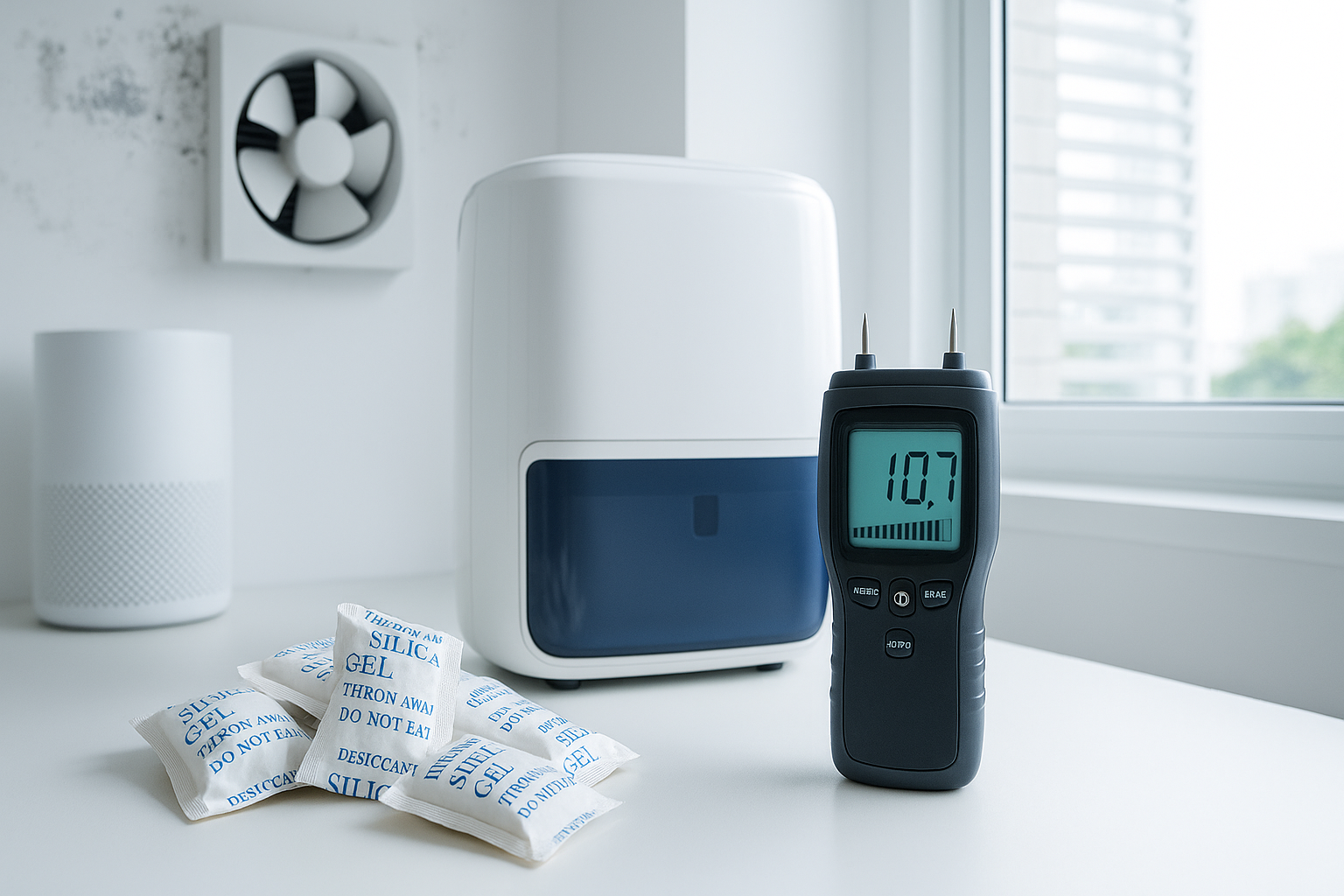
Silica gel is a desiccant, a substance that induces dryness in its vicinity. It works by absorbing moisture from the air, making it an effective tool for combating humidity.
- Non-toxic and inert: Safe for use in homes.
- Versatile usage: Can be placed in wardrobes, shoe cabinets, and storage areas.
Types of Moisture Absorbers
Moisture absorbers come in various forms, each suited for different applications:
- Calcium Chloride: Highly effective for large spaces, often used in professional-grade dehumidifiers.
- Activated Charcoal: Absorbs moisture and odours, suitable for smaller, enclosed spaces.
- Clay Desiccants: Used for delicate items, ideal for use in storage or display cabinets.
How to Use Silica Gel and Moisture Absorbers Effectively
Placement Strategies
DIY vs. Professional Moisture Management
While DIY moisture management can be effective for minor issues, professional services are recommended for persistent or severe moisture problems. Professional-grade equipment and trained specialists can offer:
- Comprehensive Assessments: Identify hidden sources of moisture.
- Tailored Solutions: Custom strategies for different property types.
- Long-term Monitoring: Regular inspections to prevent recurrence.
Expert Insight: "For areas like Bishan and Marina Bay, where humidity can be especially high due to proximity to water bodies, consider using larger capacity moisture absorbers or consulting a professional for a full home assessment."
Cost Considerations for Moisture Control in Singapore
Investment in Moisture Absorbers
- Silica Gel Packs: S$5 to S$20 depending on size and quantity.
- Calcium Chloride Absorbers: S$10 to S$30 for a pack suitable for a small room.
- Professional Services: Comprehensive moisture control services can range from S$200 to S$500, depending on the property's size and condition.
Long-Term Savings
Investing in effective moisture control can save money in the long run by:
- Reducing Repair Costs: Prevents damage to walls, ceilings, and furnishings.
- Improving Health: Minimizes medical expenses associated with mould-related health issues.
Industry Best Practices for Moisture Management
Regular Monitoring and Maintenance
- Use Hygrometers: Track humidity levels in different parts of your home.
- Ventilation: Ensure proper airflow in all rooms, especially bathrooms and kitchens.
Professional-Grade Equipment
- Dehumidifiers: Consider using dehumidifiers for larger areas or rooms with persistent moisture issues.
- Regular Inspections: Schedule inspections with trained specialists to ensure ongoing moisture management.
Best Practice: "Regularly rotate the placement of silica gel packs and moisture absorbers to cover different areas of your home effectively."
Conclusion
Managing moisture in your Singapore home is not just about comfort but also about maintaining a healthy living environment. By leveraging silica gel, moisture absorbers, and professional-grade solutions, you can effectively combat the challenges posed by Singapore's tropical climate. If you're experiencing persistent moisture issues or want a comprehensive assessment of your home's moisture levels, consider scheduling a free inspection with our trained specialists.
Frequently Asked Questions
How often should I replace silica gel and moisture absorbers in my home?
Silica gel and moisture absorbers should be replaced every 1-3 months, depending on the humidity levels in your home. In areas with higher moisture, such as bathrooms or storerooms, more frequent replacement might be necessary. Monitoring the saturation level of the absorbers is key to ensuring they are functioning effectively.
Can I use silica gel and moisture absorbers in all areas of my home?
Yes, silica gel and moisture absorbers can be used in various areas, including wardrobes, shoe cabinets, storerooms, and bathrooms. However, for larger areas or spaces with severe moisture issues, using a combination of absorbers and dehumidifiers, or consulting a professional, may be more effective.
Are there any health risks associated with using moisture absorbers?
Moisture absorbers like silica gel and calcium chloride are generally safe for use in homes. However, it is essential to keep them out of reach of children and pets to avoid accidental ingestion. Always follow the manufacturer's instructions for safe use.
How can I tell if my home has a moisture problem?
Signs of a moisture problem include persistent damp smells, visible mould growth, condensation on windows, and peeling paint or wallpaper. Using a hygrometer to measure humidity levels can also help identify moisture issues. If levels consistently exceed 60%, you may need to take action to reduce humidity.
What are the costs associated with professional moisture management services in Singapore?
Professional moisture management services in Singapore can range from S$200 to S$500, depending on the size and condition of the property. These services typically include a comprehensive assessment, tailored solutions, and ongoing monitoring to prevent moisture-related issues.