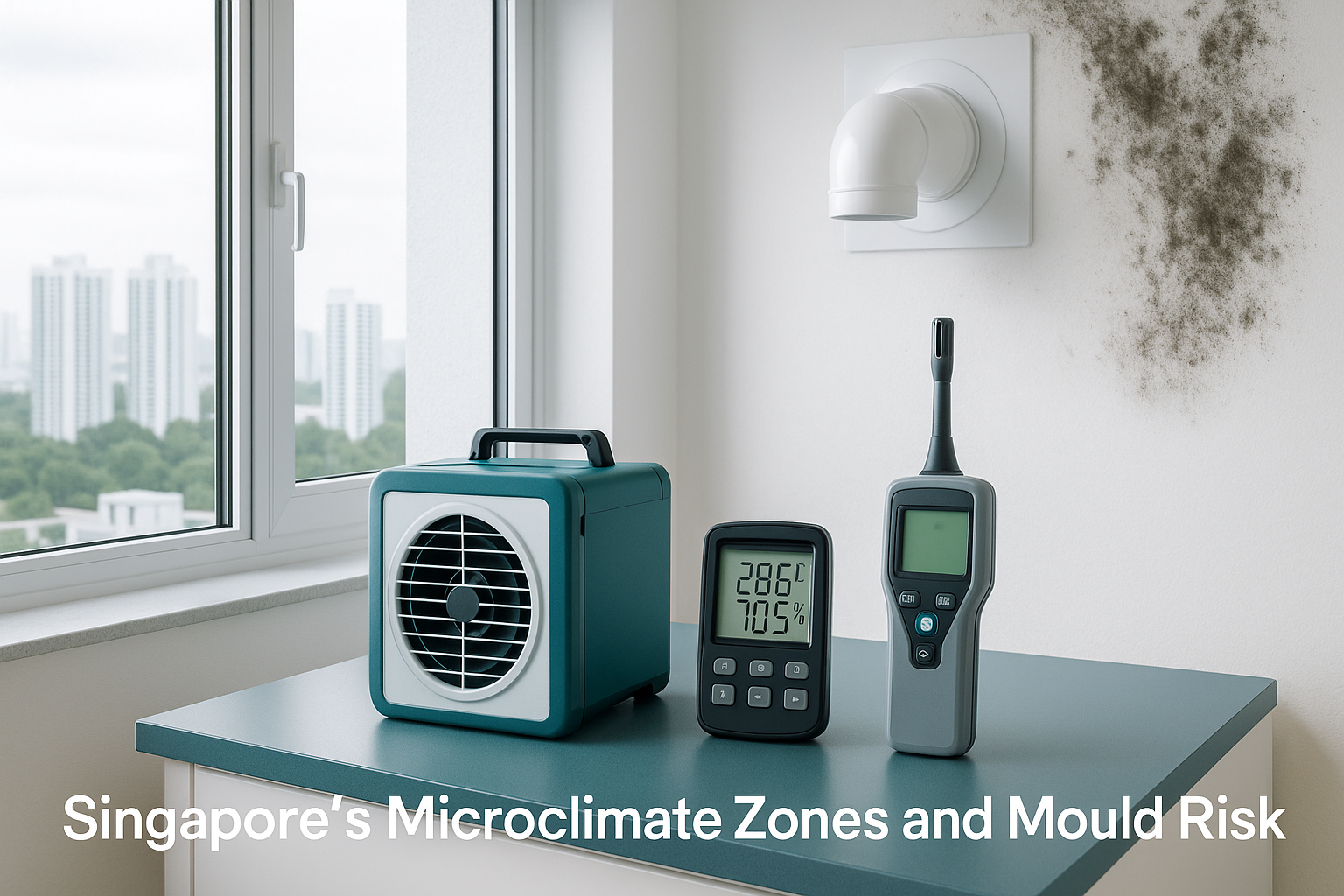
# Singapore's Microclimate Zones and Mould Risk: A Comprehensive Guide for Homeowners
Singapore, with its unique tropical environment, presents particular challenges for homeowners when it comes to managing mould. With a geographical setup that includes urban hubs, lush green spaces, and coastal regions, understanding the microclimate zones of Singapore is crucial in mitigating mould risks. This guide is designed to provide homeowners with insights into how these zones affect mould growth and offer practical advice for mould prevention and remediation.
Understanding Singapore's Microclimate Zones
The Influence of Tropical Climate
Singapore’s tropical climate, characterized by high humidity and consistent rainfall, creates an ideal environment for mould growth. With average temperatures ranging from 25°C to 31°C and humidity levels often exceeding 80%, it's no surprise that mould can become a persistent issue in homes.
Key Climate Stats:
- Average annual rainfall: 2,340 mm
- Humidity levels: 70% - 90%
- Temperature range: 25°C - 31°C
Key Stat: Singapore experiences more than 170 rainy days a year, contributing to high moisture levels critical for mould proliferation.
Microclimate Zones in Singapore
Expert Insight: Homes located near water bodies or dense foliage might experience higher humidity levels, requiring more frequent checks for mould.
Common Mould-Prone Areas in Singaporean Homes
HDB Flats
In HDB flats, mould tends to develop in areas with poor ventilation such as bathrooms, kitchens, and storerooms. The compact design of many HDB units can trap moisture, creating a breeding ground for mould.
Condominiums
Condo units, often featuring larger windows and glass facades, may have better natural light but still face mould issues in areas like air-conditioning vents, under carpets, and behind large furniture.
Landed Properties
Landed properties, particularly those with basements or attics, are susceptible to mould due to their size and sometimes inadequate ventilation systems. The presence of gardens and lawns can also contribute to higher humidity levels.
Industry Best Practices for Mould Prevention
Ventilation and Airflow
Ensuring adequate ventilation is key to preventing mould growth. This can be achieved through:
- Installing exhaust fans in bathrooms and kitchens
- Keeping windows open where possible to promote airflow
- Using dehumidifiers to maintain indoor humidity below 60%
Regular Inspections and Maintenance
Routine inspections can help identify and mitigate mould issues early. Homeowners should:
- Inspect under sinks, behind appliances, and in corners for signs of mould
- Regularly clean air-conditioner filters and ensure drainage systems are clear
- Address leaks promptly to prevent moisture accumulation
Best Practice: Conduct a thorough mould inspection annually to catch potential problems early, especially after monsoon seasons.
Professional Mould Remediation
For extensive mould issues, professional remediation is recommended. A trained specialist can:
Cost Breakdown for Mould Remediation in Singapore
The cost of mould remediation can vary based on the extent of damage and the property type. Here's a general cost breakdown:
- Inspection and Assessment: S$100 - S$300
- Basic Removal Services: S$500 - S$1,500 for minor cases
- Extensive Remediation: S$2,000 - S$10,000 for severe infestations
Pro Tip: Investing in professional-grade mould remediation can save homeowners from more costly repairs and health risks in the long run.
Conclusion
Understanding Singapore's microclimate zones and their impact on mould risk is essential for effective prevention and management. By implementing industry best practices and seeking professional advice when necessary, homeowners can maintain a healthy, mould-free environment.
If you're concerned about mould in your home, contact us for a free inspection and take the first step towards a healthier living space.
Frequently Asked Questions
How can I reduce humidity levels in my HDB flat to prevent mould?
To reduce humidity levels in your HDB flat, ensure proper ventilation by using exhaust fans in bathrooms and kitchens. Keep windows open when possible to promote natural airflow. Additionally, consider using a dehumidifier to maintain indoor humidity below 60%.
What are the signs of mould infestation in a condominium?
Common signs of mould infestation in a condominium include musty odors, visible mould growth on walls or ceilings, and discolored patches around air-conditioning vents or behind furniture. Mould may also be found under carpets or near windows where condensation is frequent.
Is professional mould remediation necessary for minor mould issues?
While minor mould issues can sometimes be addressed with DIY methods, professional mould remediation is recommended to ensure comprehensive removal and prevent recurrence. Trained specialists use industry-standard techniques to tackle mould effectively and can provide valuable advice on long-term prevention.
What is the typical cost of a professional mould inspection in Singapore?
The typical cost of a professional mould inspection in Singapore ranges from S$100 to S$300. The price may vary depending on the size of the property and the extent of the inspection required. Investing in a thorough inspection can help identify potential mould issues early.