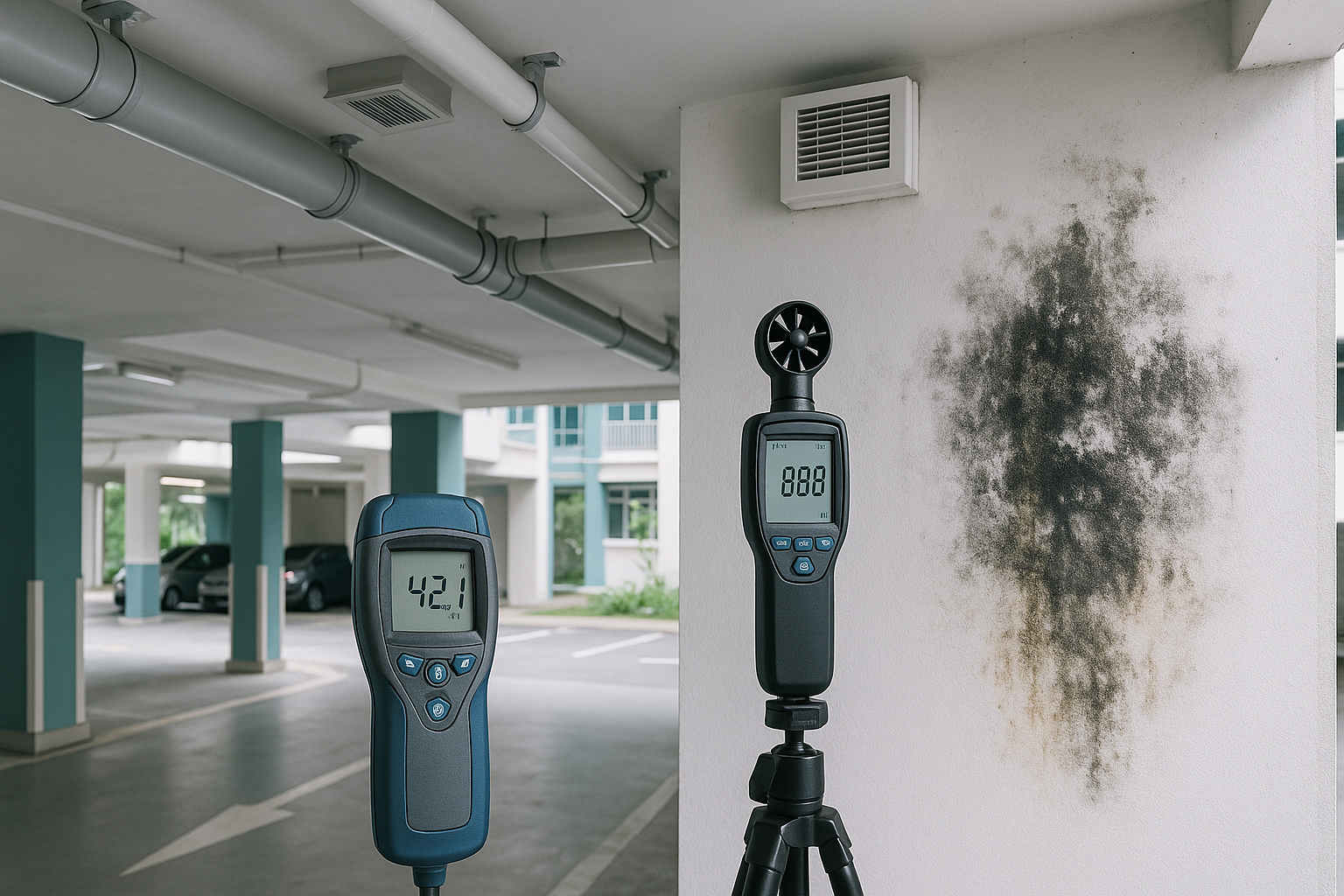
# Underground Carpark Moisture and Its Effects on Your Unit
Singapore's tropical climate, known for its high humidity and frequent rainfall, poses unique challenges for homeowners. One often overlooked issue is the impact of underground carpark moisture on residential units. Whether you live in an HDB flat in Tampines, a condo in Marina Bay, or a landed property in Jurong, moisture issues can silently affect your living environment. Let's delve into how underground carpark moisture can impact your home and what you can do about it.
Understanding Singapore's Climate and Its Impact on Underground Carparks
Singapore's Humidity and Rainfall
Singapore experiences high humidity levels year-round, often exceeding 80%. Coupled with an average annual rainfall of about 2,340mm, this creates a perfect environment for moisture accumulation. Underground carparks, typically found in HDBs, condos, and even some landed properties, are particularly vulnerable to these conditions due to their below-ground nature.
How Does Moisture Accumulate in Underground Carparks?
Moisture in underground carparks can stem from several sources:
- Rainwater seepage: Poor drainage systems or construction flaws can allow rainwater to seep through ceilings and walls.
- Condensation: High humidity and temperature fluctuations can cause water vapour to condense on cooler surfaces, like concrete walls and floors.
- Water leaks: Pipes running through these areas may develop leaks, adding to the moisture levels.
Expert Insight: "Moisture is a silent invader. It might not be visible immediately, but over time, it can lead to significant structural and health issues."
Effects of Underground Carpark Moisture on Your Unit
Structural Damage
Moisture can lead to:
- Concrete spalling: Excess moisture can cause concrete to flake or chip, compromising structural integrity.
- Corrosion of metal structures: Metal components like beams and rebar can rust and weaken.
- Deterioration of finishes: Paint, plaster, and other finishes in your unit can peel or blister due to dampness.
Health Risks Due to Mould Growth
One of the most concerning effects of moisture is mould growth. Mould thrives in damp, humid environments and can spread quickly, affecting:
- Indoor air quality: Mould spores can reduce air quality and trigger allergies or respiratory issues.
- Visual appeal of your home: Mould stains are unsightly and can devalue your property.
Warning: "Mould exposure can be hazardous, especially for children, the elderly, and those with compromised immune systems."
Industry Best Practices for Mitigating Moisture Issues
Professional Moisture Inspection
- Conduct regular moisture inspections, especially if you notice signs of dampness or mould.
- Use professional-grade moisture meters and thermal imaging to detect hidden moisture not visible to the naked eye.
Implementing Effective Drainage Solutions
- Ensure that the carpark's drainage systems are functioning correctly to prevent water pooling.
- Consider installing dehumidifiers or ventilation systems to reduce humidity levels.
Regular Maintenance and Repairs
- Seal cracks and repair leaks promptly to prevent moisture ingress.
- Apply industry-standard waterproofing treatments to vulnerable areas.
Best Practice: "Regular maintenance and early detection are key to preventing long-term damage from moisture."
Cost Considerations for Moisture Mitigation
Inspection and Treatment Costs
- Professional moisture inspection: Typically ranges from S$200 to S$500, depending on the size and complexity of the property.
- Mould remediation: Can vary widely, from S$500 to S$5,000, depending on the extent of the infestation and required repairs.
Financial Impact of Ignoring Moisture Issues
Ignoring moisture problems can lead to higher costs in the long run due to extensive repairs and potential health-related expenses.
Key Stat: "Addressing moisture issues early can save homeowners up to 50% in repair costs."
Real-Life Examples from Singapore
Case Study: Condo in Marina Bay
A condo in Marina Bay experienced significant mould growth due to a poorly maintained underground carpark. After professional intervention, effective drainage solutions and dehumidifiers were installed, reducing humidity levels significantly.
Case Study: HDB in Tampines
An HDB in Tampines had recurring issues with concrete spalling in the carpark. Professional waterproofing and regular inspections have since mitigated these problems, preserving the building's structural integrity.
Conclusion: Take Action Today
Moisture in underground carparks is a hidden risk that can have serious consequences for your home and health. By understanding the signs, effects, and solutions, you can take proactive steps to protect your property. Schedule a professional inspection today to ensure your home remains a safe and pleasant environment.
---
FAQ
Frequently Asked Questions
How can I tell if my underground carpark is affecting my unit?
Look for signs of moisture such as musty odours, visible mould, peeling paint, or condensation on windows. If these signs are present, a professional moisture inspection is advisable.
What is the cost of professional mould removal in Singapore?
The cost of mould removal varies based on the severity of the infestation and the area affected. It typically ranges from S$500 to S$5,000.
Can I handle mould removal myself?
While small areas of mould can sometimes be cleaned with household products, professional remediation is recommended for larger infestations to ensure thorough removal and prevent recurrence.
What are the health risks associated with mould exposure?
Mould exposure can cause respiratory problems, allergic reactions, and exacerbate asthma. It is particularly harmful to children, the elderly, and individuals with weakened immune systems.
How often should I have my carpark inspected for moisture?
Regular inspections are recommended, ideally once a year, or sooner if you observe signs of moisture or mould.