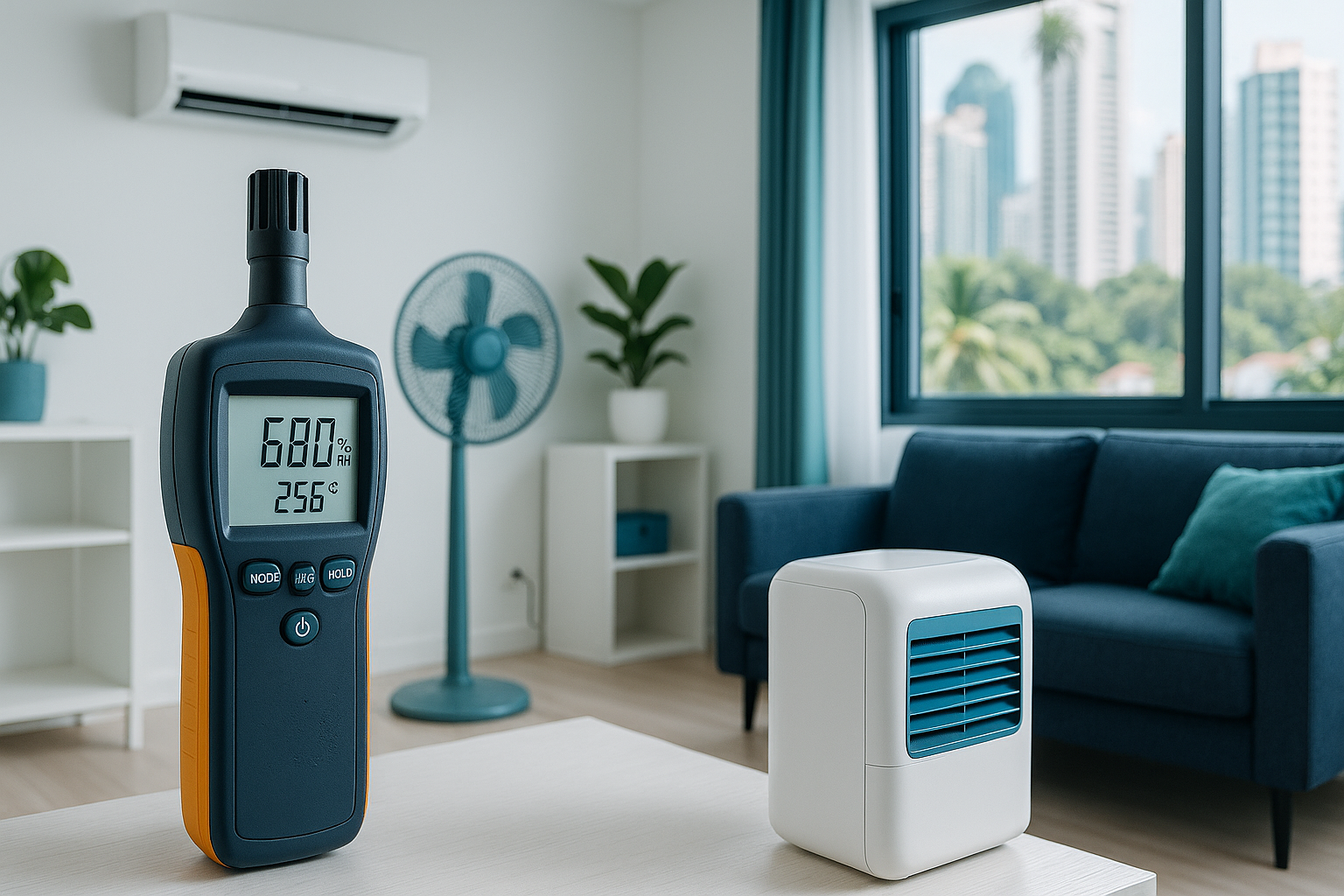
Singapore's Humidity Profile
Located just 1° north of the equator, Singapore experiences consistently high humidity year-round. With no dry season and regular rainfall, managing indoor moisture is an ongoing challenge for every homeowner.
- Average RH: 84%
- Morning peak: 90-95%
- Afternoon low: 60-70%
- Monsoon season: Sustained 85%+ throughout day
Understanding Relative Humidity
Relative humidity (RH) measures how much moisture air contains compared to its maximum capacity at a given temperature. Warm air holds more moisture, which is why Singapore's tropical heat combined with high RH creates ideal mould conditions.
Target Levels for Your Home
| Location | Target RH |
|---|---|
| Living areas | 50-60% |
| Bedrooms | 50-55% |
| Bathrooms | Below 70% when not in use |
| Wardrobes/storage | Below 60% |
Frequently Asked Questions
What is the average humidity in Singapore?
Singapore's outdoor relative humidity averages 84% annually, ranging from 60-95%. Early mornings typically see higher humidity (90%+), while afternoon levels may drop to 60-70%. During monsoon season (Nov-Jan), humidity remains consistently high throughout the day.
What indoor humidity level is ideal for Singapore homes?
Maintain indoor humidity between 50-60% for optimal comfort and mould prevention. Below 50% may cause dry skin and respiratory discomfort. Above 60% significantly increases mould risk. Use a hygrometer to monitor levels throughout your home.
Why is humidity higher in some rooms than others?
Humidity varies by room due to: moisture-generating activities (cooking, showering), ventilation differences, sun exposure, proximity to external walls, air conditioning usage, and room contents (plants, clothes drying). Bathrooms and kitchens typically have highest humidity.
Does air conditioning reduce humidity effectively?
Yes, AC systems reduce humidity while cooling. The cooling process causes water vapour to condense on evaporator coils, removing moisture from air. However, over-cooling can be uncomfortable. For humidity control without extreme cooling, use the 'dry' mode or a dedicated dehumidifier.