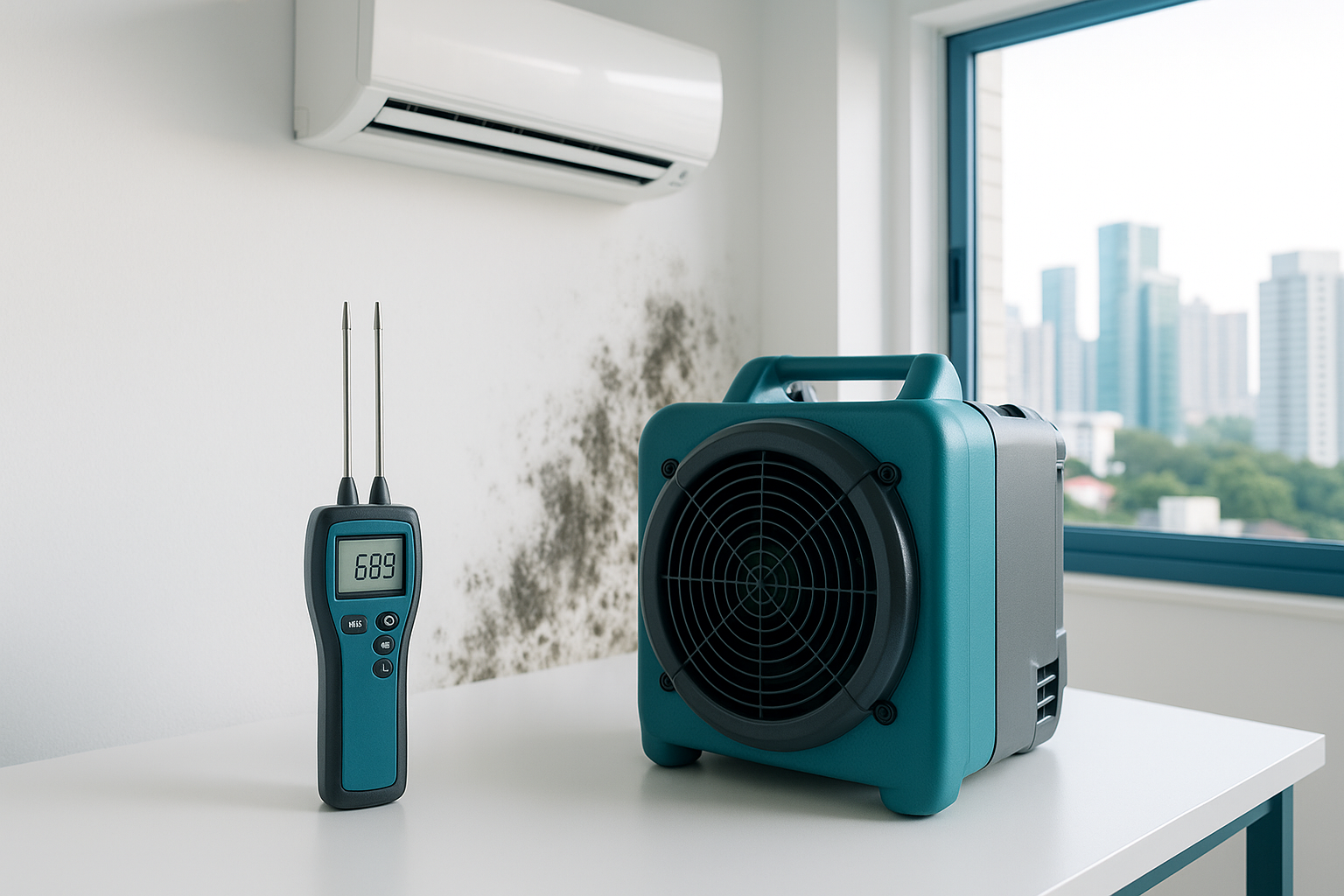
Singapore: A Mould Paradise
Located just 1° north of the equator, Singapore has a tropical rainforest climate that provides everything mould needs to thrive:
- Constant warmth: 25-32°C year-round - ideal mould temperature range
- High humidity: 84% average RH - mould needs only 60%
- Abundant rainfall: 2,340mm annually - consistent moisture supply
- No dry season: Unlike other tropical regions, no extended dry period
- Year-round growth: No winter to interrupt mould life cycles
The Science Behind It
Mould requires three things to grow: moisture, warmth, and organic matter. Singapore provides the first two in abundance, and every home contains organic matter (wood, fabric, paper, skin cells, food particles). This means every Singapore home is essentially a potential mould incubator.
Living With This Reality
Accepting that Singapore's climate favours mould shifts the focus from "preventing mould" to "managing mould risk." This means:
- Active humidity control is essential, not optional
- Regular inspection catches problems early
- Quick response to moisture issues is critical
- Professional help should be sought promptly
- Prevention is ongoing, not one-time
When prevention isn't enough, our professional mould removal service provides treatment with food-grade, VOC-free products that are safe for babies and pets - essential for Singapore families.
Frequently Asked Questions
What makes Singapore's climate perfect for mould?
Singapore's climate provides all conditions mould needs: constant warmth (25-32°C year-round), high humidity (84% average), abundant moisture from rainfall (2,340mm annually), and no dry season to interrupt mould growth cycles. These factors combine to create year-round ideal mould conditions.
Is mould worse during certain seasons in Singapore?
Yes, monsoon seasons (Nov-Jan and Jun-Aug) bring higher humidity and more rainfall, accelerating mould growth. The northeast monsoon (Nov-Jan) is typically worse due to sustained wet conditions. However, mould can grow year-round in Singapore - there's no truly 'safe' season.
Can any home in Singapore completely avoid mould?
Complete mould prevention is extremely difficult in Singapore's climate. Even well-maintained homes will face mould challenges. The goal is management and rapid response rather than total prevention. Consistent humidity control, ventilation, and regular inspection minimize risk but cannot eliminate it entirely.
How do modern buildings compare to older ones for mould?
Modern buildings often have better sealing and insulation but can trap moisture inside. Older buildings may have more natural ventilation but poorer waterproofing. Each has unique challenges. Modern buildings need dehumidification; older buildings need waterproofing attention. Neither is immune to mould.