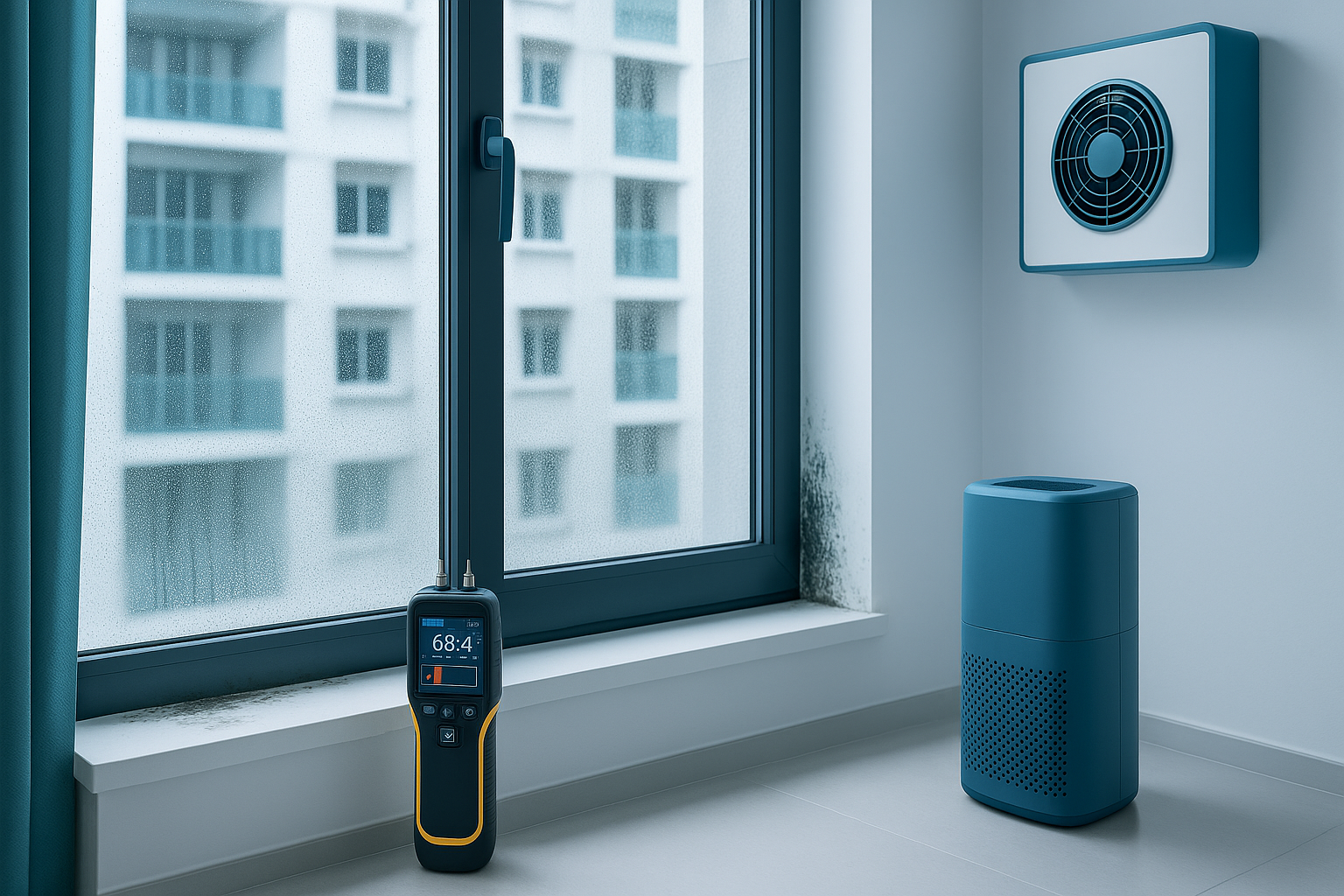
The Science of Window Condensation
Condensation forms when warm, moisture-laden air contacts a cooler surface. In Singapore's tropical climate, air-conditioned rooms create a significant temperature differential between indoor and outdoor environments. This difference causes water vapour to condense on window glass and frames.
How Condensation Leads to Mould
Persistent moisture on windows creates ideal conditions for mould:
- Water pools on sills and seeps into cracks
- Rubber seals and caulking remain constantly damp
- Organic materials in window frames feed mould growth
- Poor ventilation prevents drying
Prevention Strategies
- Control humidity - Keep indoor levels below 60% using dehumidifiers or AC
- Improve ventilation - Open windows briefly each morning for air exchange
- Wipe down daily - Remove condensation before it accumulates
- Check seals - Replace damaged caulking and weatherstripping
- Consider window film - Insulating film reduces temperature differential
Frequently Asked Questions
Why do my windows have condensation in Singapore's hot weather?
Condensation occurs when warm, humid air meets a cooler surface. In air-conditioned Singapore homes, windows can be significantly cooler than the humid outdoor air, causing moisture to form. This is especially common in bedrooms and living rooms with heavy AC use.
Can window condensation lead to mould growth?
Yes, persistent window condensation creates the perfect environment for mould. Water collects on window frames and sills, seeps into gaps, and provides the moisture mould needs. Black mould around window frames is a common sight in Singapore homes with condensation issues.
How can I reduce window condensation in my HDB flat?
Improve ventilation by opening windows briefly each day, use exhaust fans in bathrooms and kitchens, run a dehumidifier to reduce indoor humidity below 60%, set your AC to a moderate temperature (24-25°C), and wipe down wet windows daily to prevent moisture accumulation.
Should I keep windows open or closed to prevent condensation?
It depends on conditions. During hot, humid weather, keeping windows closed with AC running is usually better. However, briefly opening windows in the morning helps exchange stale air and reduce indoor humidity. The key is maintaining consistent indoor humidity below 60%.
What's the ideal indoor humidity level to prevent condensation?
Maintain indoor humidity between 50-60% to prevent condensation and mould growth. Use a hygrometer to monitor levels. In Singapore's climate, this often requires using air conditioning, dehumidifiers, or both, especially during monsoon season.