Navigating Tenant vs Landlord Responsibilities for Mould in Singapore
Mould can be more than just an unsightly nuisance; it poses health risks and can damage the structural integrity of your property. In the humid climate of Singapore, mould growth is a common issue faced by both tenants and landlords. Understanding the division of responsibilities when it comes to dealing with mould is essential to maintain a harmonious landlord-tenant relationship and ensure a healthy living environment.
Key Stat: Singapore's average relative humidity ranges between 70% and 90%, creating an ideal environment for mould growth.
As an expert in mould remediation with over 15 years of experience in the industry, I’ve encountered various scenarios across HDB flats, condominiums, and landed properties in Singapore. In this guide, we'll explore the responsibilities of tenants and landlords, providing clarity and actionable steps for effectively managing mould issues.
Understanding Mould in Singapore's Climate
The Impact of Humidity and Temperature
Singapore's tropical climate, characterized by high humidity and warm temperatures, is conducive to mould proliferation. Mould spores thrive in environments with humidity levels above 60%, making Singapore an ideal breeding ground.
- Humidity: Consistently high humidity levels accelerate mould growth, especially in poorly ventilated areas like bathrooms and kitchens.
- Temperature: Warm temperatures further enhance mould activity, particularly in areas exposed to sunlight or heat.
Expert Insight: To mitigate mould growth, maintain indoor humidity levels between 40% and 60% using dehumidifiers or air conditioning.
Common Areas for Mould Growth
Mould commonly appears in specific areas within properties, including:
- Bathrooms: High moisture levels from showers and inadequate ventilation.
- Kitchens: Steam from cooking and leaks around sinks can lead to mould.
- Air Conditioning Units: Condensation and trapped moisture.
- Windows and Doors: Condensation from temperature differentials.
Understanding these hotspots helps in proactive prevention and effective remediation.
Responsibilities of Tenants
Maintaining a Healthy Living Environment
Tenants play a crucial role in preventing mould growth by:
Best Practice: Tenants should conduct regular inspections of their living space to catch potential mould growth early.
When is the Tenant Responsible?
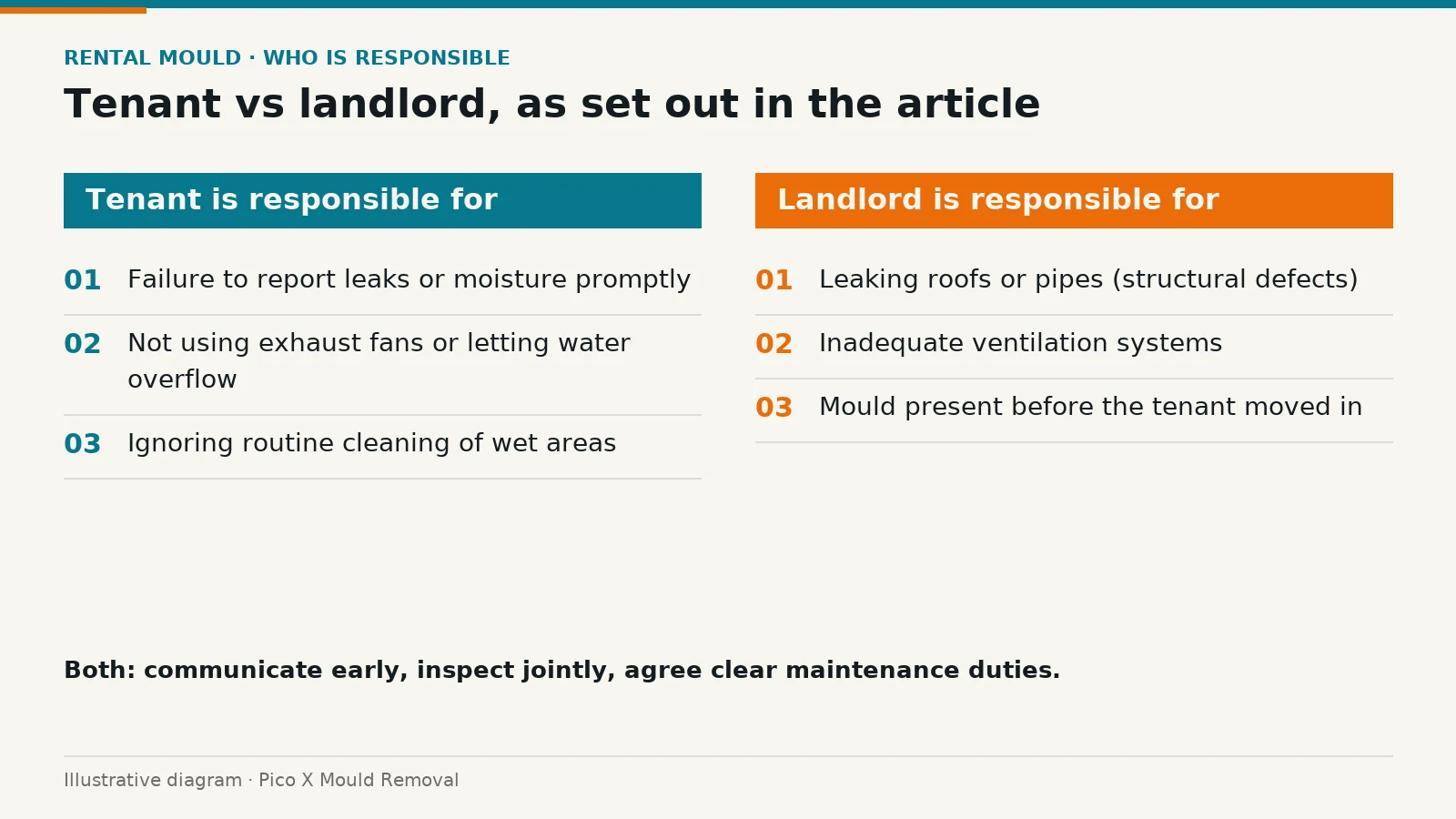
Tenants may be held responsible for mould issues under the following circumstances:
- Negligence: Failure to report leaks or moisture problems promptly.
- Improper Use of Facilities: Not using exhaust fans or allowing water to overflow.
- Lack of Cleaning: Ignoring routine cleaning duties, leading to mould growth.
Responsibilities of Landlords
Ensuring Property Conditions
Landlords must ensure that their properties are in a condition that prevents mould growth:
- Pre-inspection and Maintenance: Conduct thorough inspections before a new tenant moves in and address any potential issues.
- Addressing Structural Problems: Fix leaks, poor ventilation, or insulation issues promptly.
- Providing Necessary Appliances: Ensure air conditioning and ventilation systems are functioning correctly.
When is the Landlord Responsible?
Landlords are typically responsible for mould issues that arise due to structural or maintenance failures, such as:
- Leaking Roofs or Pipes: Any structural defect leading to water ingress.
- Inadequate Ventilation: Failure to provide adequate ventilation systems.
- Pre-existing Conditions: Mould present before the tenant's occupancy.
Industry Best Practices for Mould Remediation
Professional Mould Assessment and Removal
When tackling mould issues, professional remediation ensures thorough and effective treatment:
- Assessment: Professional-grade assessments identify the extent and cause of mould problems.
- Remediation: Industry-standard techniques involve safe removal and cleaning of affected areas.
- Prevention: Implementing measures to prevent future occurrences, such as improved ventilation or moisture control.
Pro Tip: Engage specialists with a track record of handling mould issues in Singapore's unique climate, ensuring effective and lasting solutions.
Cost Breakdown for Mould Remediation
Understanding potential costs associated with professional mould remediation can help both tenants and landlords plan effectively:
- Inspection and Assessment: Typically ranges from S$150 to S$500.
- Remediation and Removal: Costs can vary from S$500 to S$5,000 depending on the severity and area affected.
- Preventative Measures: Installing dehumidifiers or additional ventilation may incur extra charges.
Preventative Measures for Both Parties
Collaborative Prevention Strategies
Both tenants and landlords can work together to prevent mould problems by:
- Regular Communication: Maintain open lines of communication for prompt issue reporting and resolution.
- Routine Inspections: Joint inspections to identify and address potential issues.
- Shared Responsibilities: Clear agreements on maintenance duties and responsibilities.
Implementing Long-term Solutions
For lasting mould prevention, consider:
- Improving Ventilation: Install exhaust fans or windows in areas prone to moisture accumulation.
- Regular Maintenance: Schedule regular maintenance checks for plumbing, roofing, and air conditioning systems.
- Awareness and Education: Educate tenants about mould prevention techniques and signs to watch for.
Warning: Ignoring small mould issues can lead to significant health risks and property damage over time.
Conclusion: Protect Your Property from Mould
In Singapore's humid climate, mould is a persistent challenge, but understanding and addressing tenant and landlord responsibilities can significantly mitigate its impact. By taking proactive measures and engaging professional assistance when necessary, you can ensure a healthy and mould-free living environment.
Schedule a Free Inspection: If you're experiencing mould issues or want a professional assessment, contact our team of trained specialists to schedule a free inspection today.Frequently Asked Questions
Who is responsible for mould in a rented property in Singapore?
In Singapore, responsibility for mould typically depends on the cause. Tenants are responsible if mould results from neglect, such as failing to ventilate the bathroom properly. Landlords are responsible for mould due to structural issues, such as leaks or poor ventilation, that they must address to prevent mould growth.
What can tenants do to prevent mould in their Singapore home?
Tenants can prevent mould by ensuring proper ventilation, using exhaust fans during showers, regularly cleaning high-moisture areas, and promptly reporting any leaks or moisture issues to their landlord. Using a dehumidifier can also help maintain optimal indoor humidity levels.
How does Singapore's climate affect mould growth?
Singapore's tropical climate, with high humidity and warm temperatures, provides ideal conditions for mould growth. These conditions make it crucial for property owners and tenants to take proactive measures, such as ensuring proper ventilation and using dehumidifiers, to prevent mould proliferation.
What are the costs associated with professional mould remediation in Singapore?
Professional mould remediation costs in Singapore can vary widely. A basic inspection and assessment might cost between S$150 and S$500, while remediation efforts could range from S$500 to S$5,000 depending on the severity and extent of the mould problem. Preventative measures, like installing dehumidifiers, may incur additional costs.
Can mould issues affect rental agreements in Singapore?
Yes, mould issues can affect rental agreements, particularly if there is a disagreement over responsibility. It's important for both tenants and landlords to clearly outline responsibilities for maintenance and repairs within the lease agreement to prevent disputes and ensure timely resolution of mould issues.