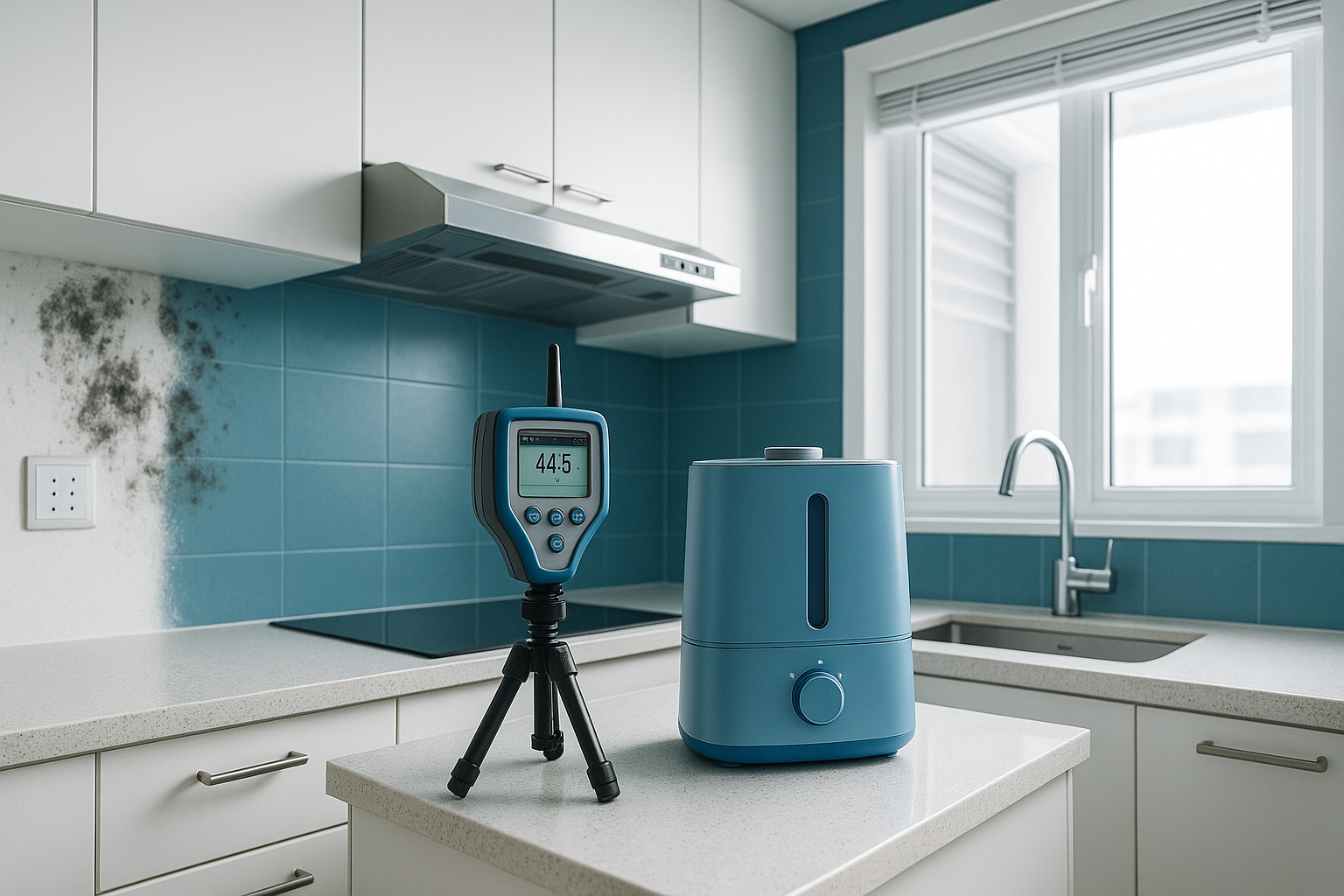
Why Kitchens Are Mould Hotspots
Singapore kitchens face unique challenges that make them particularly susceptible to mould growth:
- Cooking steam - Daily cooking releases significant moisture into the air
- Washing activities - Dishwashing and food prep add to humidity levels
- Food particles - Organic matter provides nutrients for mould
- Poor ventilation - Many HDB and condo kitchens have limited airflow
- Pipe condensation - Cold water pipes sweat in humid conditions
Essential Prevention Strategies
1. Maximise Ventilation
Always run your range hood while cooking and for 15-20 minutes after. If your kitchen lacks windows, consider installing an exhaust fan. In enclosed kitchens, a small dehumidifier can make a significant difference.
2. Control Moisture
Wipe down wet surfaces immediately after use. Fix any leaking taps or pipes promptly. Check under-sink areas regularly for moisture accumulation. Use moisture-absorbing products in cabinets.
3. Regular Cleaning Routine
Develop a consistent cleaning schedule:
- Daily: Wipe counters, stovetop, and sink
- Weekly: Clean cabinet interiors, refrigerator seals, exhaust fan filters
- Monthly: Deep clean behind appliances, check for hidden moisture
Common Kitchen Trouble Spots
- Under the sink - Check for leaks and condensation regularly
- Behind the refrigerator - Warm, hidden space with poor airflow
- Near the stove - Steam accumulation on walls and cabinets
- Window sills - Condensation from temperature differences
- Cabinet corners - Poor ventilation and trapped moisture
Frequently Asked Questions
Why does mould grow so easily in Singapore kitchens?
Singapore kitchens face a triple threat: high ambient humidity (80-90%), steam from cooking, and moisture from washing. Combined with organic matter from food preparation, kitchens provide ideal conditions for mould growth. Poor ventilation in many HDB and condo kitchens compounds the problem.
How often should I clean my kitchen to prevent mould?
Daily: Wipe down counters and stovetop after cooking. Weekly: Clean inside cabinets, check under sink for leaks, clean exhaust fan filters. Monthly: Deep clean behind appliances and inside the refrigerator. Quarterly: Professional deep cleaning of extraction systems recommended.
What's the best way to ventilate a Singapore kitchen?
Always run your exhaust hood while cooking and for 15-20 minutes after. Open windows for cross-ventilation when possible. Consider installing a kitchen exhaust fan if your hood ventilation is poor. Use a small dehumidifier in enclosed kitchens during high-humidity periods.
Can mould grow inside kitchen cabinets?
Yes, kitchen cabinets are common mould spots, especially under sinks where pipe condensation occurs and near stoves where steam accumulates. Line cabinet shelves with moisture-absorbing liners, keep doors slightly open for air circulation, and check regularly for signs of mould.
Is it safe to use natural cleaning products for kitchen mould?
Yes, natural solutions like white vinegar, baking soda, and tea tree oil are effective for minor kitchen mould and safe around food preparation areas. For stubborn mould or large areas, professional treatment may be needed. Always ensure good ventilation when cleaning.