Ceiling Mould Removal in Bedok
From S$720 — photo quote on WhatsApp.
Limited-time promoEssential Care at S$199 for the first full wall or ceiling — non-toxic treatment + anti-mould paint.
Quick Answer
Bedok ceiling mould comes mostly from two sources: top-floor roof-deck heat and monsoon ingress, and inter-flat seepage in dense 40-year-old blocks where the unit above has an ageing bathroom. We take moisture readings first to tell seepage from condensation, because the fixes are different. Treatment and anti-mould repaint start at Limited-time promoS$199 per ceiling surface (promo, usually $299).
Local diagnostic insight
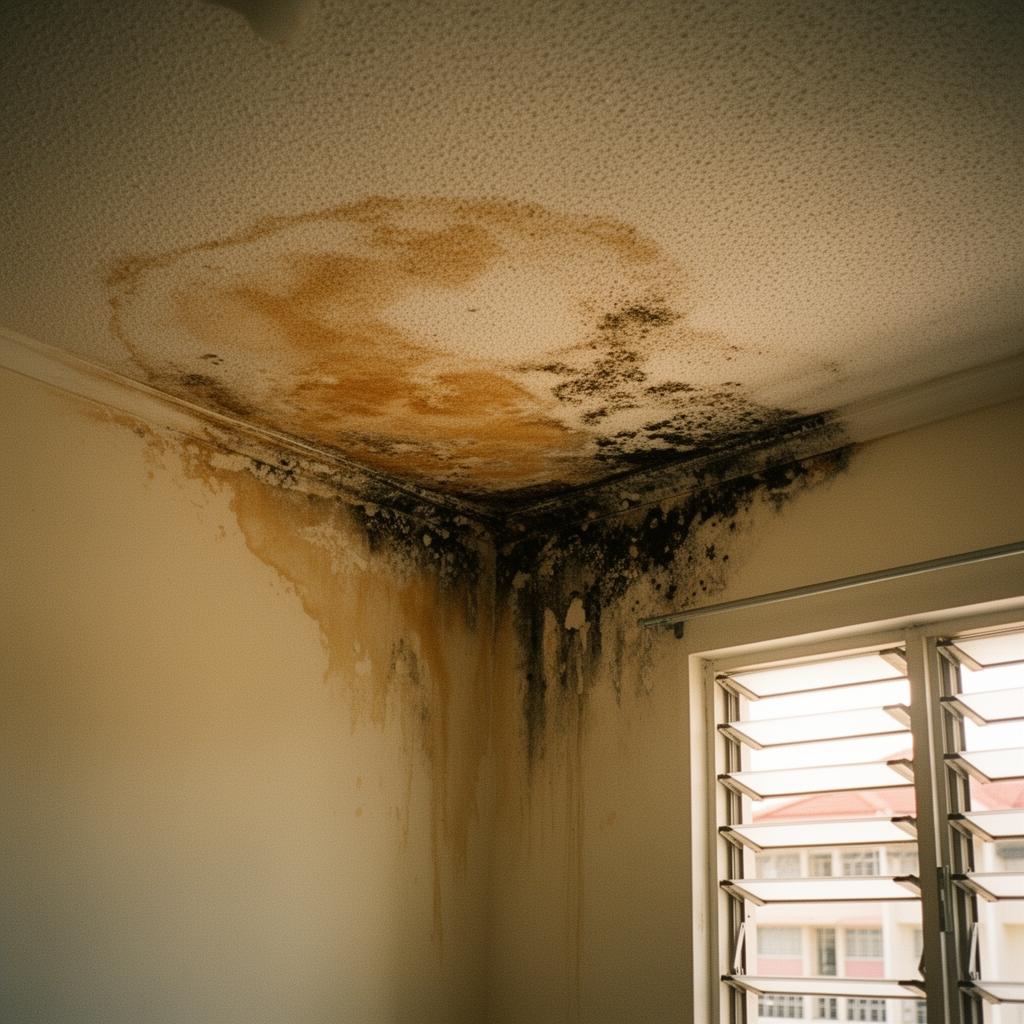
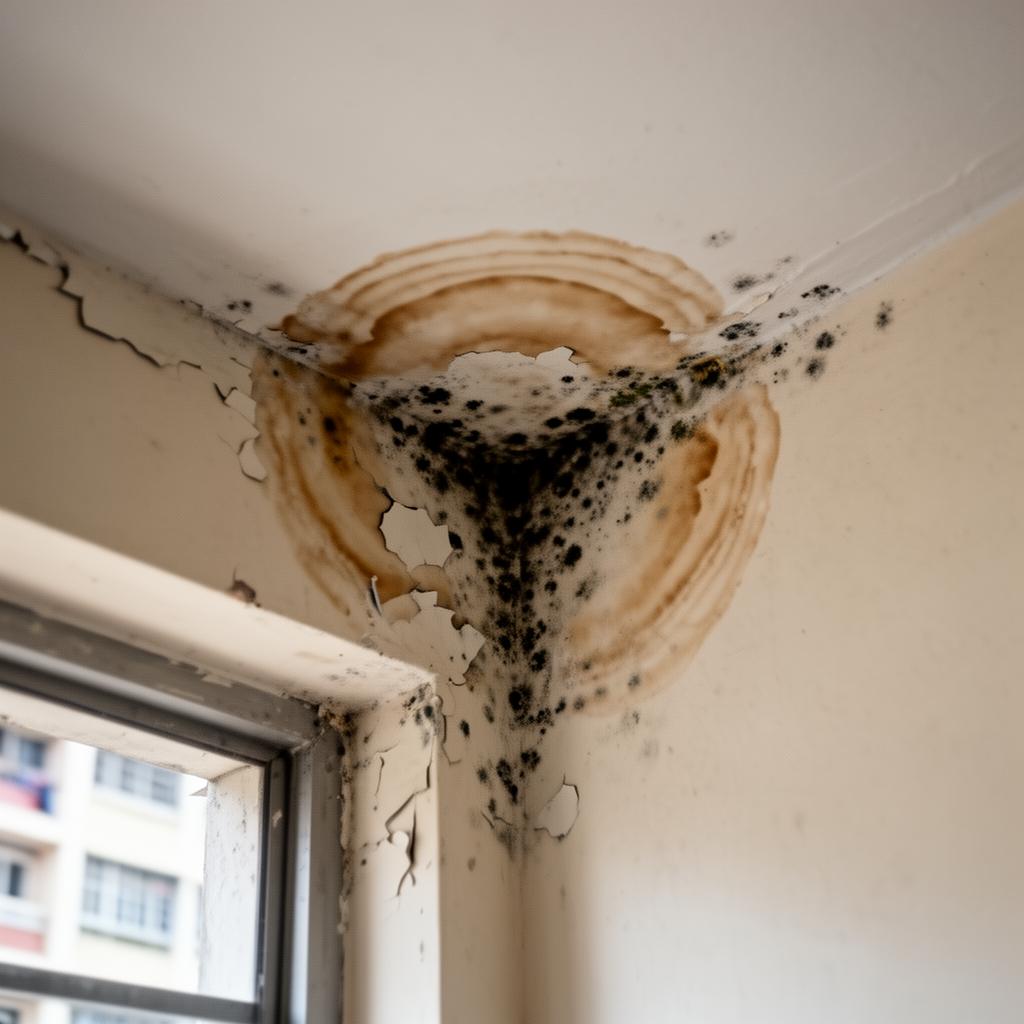
Bedok ceiling mould falls into two camps: top-floor units suffering roof-deck heat-driven condensation through ageing screed, and mid-floor units catching seepage from upstairs bathrooms. Bedok's dense 40-year-old blocks have closely spaced bathroom stacks, so misdiagnosis is common. A seepage ceiling shows a slow-spreading brown-edged stain that stays damp days after rain, while a condensation ceiling shows even grey speckling that darkens overnight along the aircon side of the room and dries out when the unit is off. Getting that call right matters, because repainting a seepage ceiling without fixing the source upstairs simply pushes the same patch back through the new coat within months. Salt-laden east-coast air also shortens the life of older ceiling paint in Bedok, so we finish with a mould-resistant system rather than a standard emulsion.
Diagnostic protocol — Bedok Ceiling Mould
- Stain-pattern analysis to separate seepage vs condensation
- Thermal imaging on top-floor units (roof-deck cold-bridge)
- Moisture-meter readings taken over two visits where seepage is suspected
- Sealed containment to protect adjacent rooms
- Neighbour coordination letter when the source sits in the unit above
- Anti-mould Zinsser/Gush repaint
Bedok Area Health profile
A zone-level read of the conditions that drive mould in Bedok, scored on the same weighting as our Home Wellness Index: outdoor air 30%, humidity and mould risk 30%, thermal comfort 25%, with a 15% noise allowance.
Composite area score: 64/100 — Fair · East reporting zone
Outdoor air quality 80/100
Bedok shares the East zone reporting with Tampines. Readings are usually good, with short PM2.5 spikes during haze and around the expressway corridors at peak hours.
Humidity & mould risk 46/100
Bedok has Singapore's oldest housing stock and, in our records, the most persistent damp. Salt-laden air off East Coast Park keeps painted surfaces hygroscopic, and low-floor units next to mature planting see morning humidity above 85% at skirting level.
Thermal / heat load 62/100
Forty-year-old blocks have thinner insulation values and roof decks that radiate into top-floor ceilings through the evening. Ceiling soffits stay warm and damp overnight — the classic Bedok cornice-mould pattern.
Ambient noise 70/100
Included for parity with the Home Wellness Index; it has no bearing on mould risk.
Mould risk through the year
Typical seasonal mould-risk index for Bedok. Peak: November to January, with a secondary rise in April.
- Jan82
- Feb74
- Mar70
- Apr74
- May72
- Jun66
- Jul64
- Aug66
- Sep70
- Oct78
- Nov88
- Dec92
What this means inside a Bedok home
Bedok scores lowest of our covered estates on the humidity component. Treatment that only removes the visible growth will fail here; the surface has to be sealed and finished with an anti-mould system or regrowth is a matter of months.
How to read this: these figures are a typical seasonal profile for the reporting zone — an estate-level estimate, not a live reading and not a measurement of any individual home. For a score on your own address, use the Aira Hales Home Wellness Index.
Sources: NEA / data.gov.sg — PSI, PM2.5 and weather records by reporting zone; Pico X Health Island AMRI — our humidity and mould-risk composite; ASHRAE 160 humidity and moisture-control guidance; Pico X Health field records and Aira Sense sensor data.
What we actually find in Bedok
Ceiling mould in Bedok top-floor and mid-floor units is a temperature problem before it is a hygiene problem. The soffit is the coldest or the dampest surface in the room, so airborne moisture condenses there first. We check the ceiling against the slab above, look for the ring pattern that indicates seepage from another unit, and separate that from the even, diffuse speckling that indicates condensation. The two need different work, and quoting them the same way is how homeowners end up paying twice.
Warning signs worth acting on
- Even grey speckling across the ceiling rather than one defined patch
- Cornice corners darker than the middle of the ceiling
- Flaking or blistering paint on the soffit
- The ceiling feeling cool to the touch when the aircon has been running
How we treat ceiling mould here
- Photo assessment, then on arrival we distinguish seepage staining from condensation growth — they look similar and are fixed differently.
- Furniture and flooring protected with sheeting and masking before any work starts.
- Mouldicide treatment across the full ceiling to kill the growth at the root, not just bleach the colour out of it.
- Gush MouldSeal applied over the treated surface to close the porous plaster.
- Anti-mould finish coat with additive blended in — Gush Core for Essential Care, Gush Care or Zinsser Perma-White for Signature Care.
- Recovery clean and debris removal before handover.
One full ceiling is a single visit, typically three to four hours including drying between coats. Clear the floor under the working area if you can; we sheet everything else. The room is usable the same day.
Severity and price guide
| Severity | What it looks like | Recommended | Price |
|---|---|---|---|
| Early patch | Scattered spotting smaller than a sheet of A4, paint film still sound. | Essential Care on the affected full wall or ceiling | Limited-time promoS$199 first surface (promo), then S$299 each |
| Established growth | Continuous colonisation across a wall or ceiling, staining through the paint. | Essential Care on every affected full wall or ceiling | S$299 per full wall or ceiling |
| Recurring or high-humidity room | Mould has returned after a previous clean or repaint, or the room never dries. | Signature Care — Gush Care or Zinsser Perma-White over Gush MouldSeal | S$400 per full wall or ceiling, 12-month warranty |
Before: Diffuse ceiling colonisation before treatment, with staining following the cold soffit.
After: The same ceiling after mouldicide treatment, Gush MouldSeal and an anti-mould finish coat.
Bedok Ceiling Mould — common questions
The stain came from my upstairs neighbour. Can you still treat it?
We can treat and repaint the ceiling, but if water is still coming through it will return. We document what we find so you have evidence for the conversation with your neighbour or town council, and we recommend fixing the source first.
Does one price cover the whole ceiling?
Yes. Essential Care is S$299 for a full ceiling — Limited-time promoS$199 for your first surface under the current promotion — and Signature Care is S$400. There is no per-square-foot charge inside one ceiling.
Why not just paint over it?
Paint over living mould fails within months; the colony feeds on the binder and pushes back through the film. Our tested sequence is mouldicide first, then Gush MouldSeal, then an anti-mould finish coat with additive — our methods research scores that combination highest for residential use.
Across the Pico X network
More mould help in Bedok
Other Bedok mould problems
Ceiling Mould in other estates
Estates we cover
Related Reading
Get a Same-Day Quote for Bedok
WhatsApp a clear photo of the affected area for transparent pricing — no on-site inspection fee.