
Should I DIY or Engage a Company to Remove Mould?
Three questions — the surface, the size and the symptoms — decide it. Below is the same decision table our crews use on site, and exactly why each rule exists.
WhatsApp a photo for assessmentQuick Answer
DIY mould removal is only reasonable when the patch is smaller than half an A4 sheet (about 15 × 10 cm), sits on a hard non-porous surface such as tile, glass or metal, has not come back before, and the moisture source is already fixed. Call a professional for porous materials, aircon and ducting, anything larger than an A4 sheet, recurring patches, active leaks, or when a baby, elderly, pregnant, asthmatic or immunocompromised person lives in the space.
Based on: Safe DIY Mould Removal Guide, When to Call Professionals vs DIY, Mould Removal Methods Compared
The eligibility rules
Any single red flag wins. If one row says call a professional, the job is a professional job regardless of how small the patch looks.
| Surface | Under half A4 (15 × 10 cm) | Bigger than A4 | Why |
|---|---|---|---|
| Tile, glass, glazed grout, metal | DIY reasonable under half A4 | Borderline above A4 | The one case DIY genuinely finishes — you can clean back to bare material. |
| Painted wall or ceiling | Borderline | Call a professional | Semi-porous: scrubbing lifts paint and reveals growth already in the skim coat. |
| Ceiling board, timber, wallpaper, fabric | Call a professional | Call a professional | The colony lives inside the substrate; wiping the face leaves the roots alive. |
| Aircon, ducting, exhaust fan housing | Call a professional | Call a professional | Disturbing it blows spores through the whole room; needs opening up and proper cleaning. |
| Silicone sealant, stained caulk | Borderline | Call a professional | Stained silicone is usually colonised through — replacement beats cleaning. |
| Any surface with an active leak | Call a professional | Call a professional | Moisture source still feeding it — cleaning now just resets the clock. |
Automatic professional job, any size: the patch has returned after cleaning, there is a musty smell you cannot locate, the extent is hidden behind or above something, there is an active leak or damp wall, or a baby, elderly, pregnant, asthmatic or immunocompromised person lives in the space.
The half-A4 rule, and why we hold it
Half an A4 sheet is about 15 × 10 cm — the size of a postcard. Below that, a homeowner with an N95, gloves and eye protection can clean a hard surface back to bare material and seal it without releasing more spores than the room can clear. Above it, exposure during cleaning rises faster than most people expect, and the chance that what you see is the whole colony drops sharply.
Disturbing a colony releases spores
Scrubbing, scraping or dry-brushing mould aerosolises millions of spores into a closed room. Without an N95, eye protection and ventilation to outside, you inhale most of them and carry the rest into the next room on your clothes.
The health risk is not evenly shared
Babies, the elderly, pregnant women, asthmatics and anyone immunocompromised react at far lower exposure levels. If someone in that group lives in the space, the cleaning itself is the hazard — not the mould you can see.
Visible mould is a symptom of hidden water
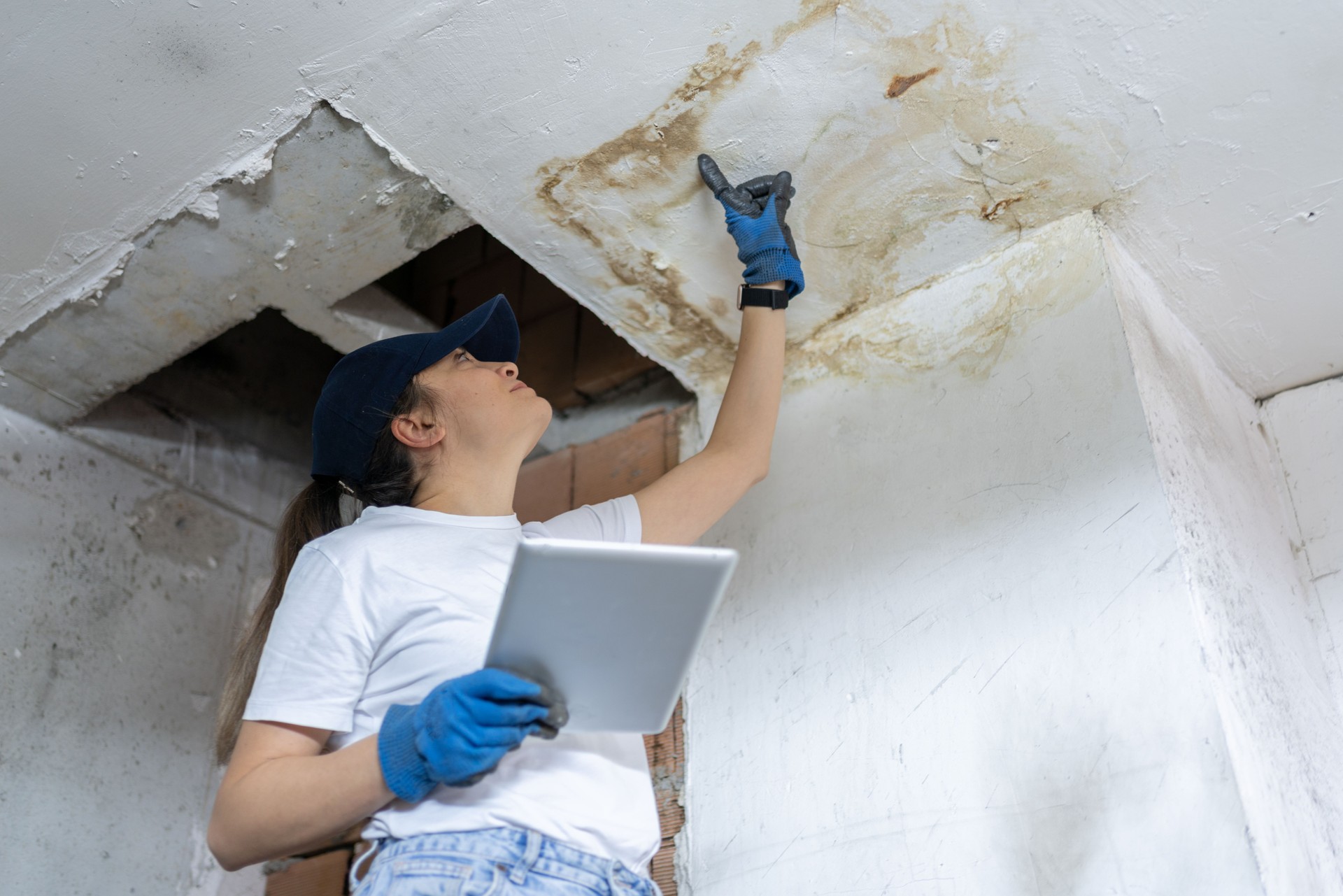
Mould does not grow without a moisture source. A recurring patch, a musty smell or bubbling paint means water is arriving from a leak, condensation or failed waterproofing behind the surface. Cleaning the face hides the evidence while the substrate keeps degrading.
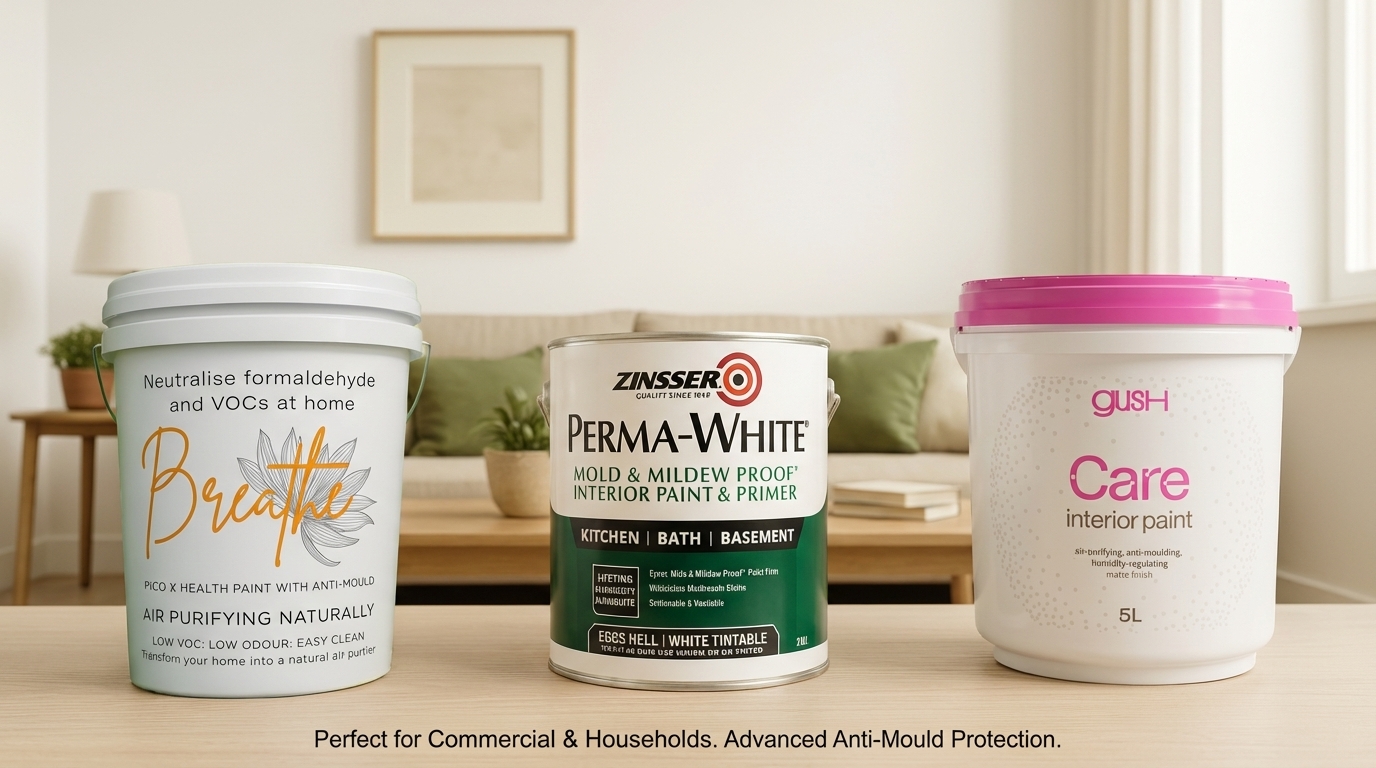
Cleared for DIY? Finish properly with an anti-mould system: Gush Care interior paint or Zinsser Perma-White, and compare them on our anti-mould paint guide.
Common questions
Should I DIY or engage a company to remove mould?
DIY is reasonable only when all three conditions are met: the patch is smaller than half an A4 sheet (about 15 × 10 cm), it is on a hard non-porous surface such as tile, glass or metal, and there are no warning signs — no recurrence, no musty smell, no active leak and no vulnerable occupants. If any one of those fails, engage a professional. Cleaning a patch that fails those conditions spreads spores and hides the moisture problem underneath.
How much mould is too much to clean myself?
Half an A4 sheet, roughly 15 × 10 cm. Above that, the spore load released during cleaning in an enclosed Singapore bathroom or bedroom is more than an unprotected homeowner should handle, and containment becomes necessary. Several small patches in different places count as a larger job, not several small ones.
Is it safe to remove mould myself if I wear a mask?
An N95 mask, gloves and eye protection are the minimum for even a small patch, and they make a small job on a hard surface acceptable. They do not make a large, porous or recurring job safe, because the colony survives inside the material and the water source keeps feeding it.
Can I just paint over mould?
No. Paint applied over living mould traps the colony, which keeps feeding on the substrate and pushes the film off within months. Any surface must be treated with an antimicrobial, cleaned back and fully dried before an anti-mould coating such as Zinsser Perma-White or Gush Care goes on.
When should I definitely call a professional for mould?
Call a specialist when the mould covers more than an A4 sheet, is on ceiling board, timber, wallpaper or fabric, is inside an aircon unit, duct or exhaust fan, has returned after you cleaned it, comes with a musty smell you cannot locate, sits near a damp wall or active leak, or when a baby, elderly, pregnant, asthmatic or immunocompromised person lives in the space.
What does professional mould removal cost in Singapore?
Pico X Health Essential Care is Limited-time promoS$199 for the first full wall or ceiling during the limited-time promotion (usual S$299), then S$100 per additional full surface, with a 6-month warranty. Signature Care is S$400 for the first full surface, then S$150 per additional full surface, with a 12-month warranty.
What do I need to clean a small mould patch safely?
An N95 respirator, nitrile gloves, sealed eye protection, a proper antimicrobial cleaner rather than household bleach, disposable cloths that go straight into a sealed bag, ventilation to outside rather than into the rest of the home, and an anti-mould topcoat once the surface is completely dry.
Got a "call a professional" verdict?
Send us a photo on WhatsApp and we will tell you what it is, what is feeding it and what it costs. Essential Care is Limited-time promoS$199 for the first full wall or ceiling during the promotion, then S$100 per additional full surface. Signature Care is S$400 for the first full surface, then S$150 per additional full surface.
WhatsApp a photo for assessment See full pricing · Book a mould inspection
Related reading
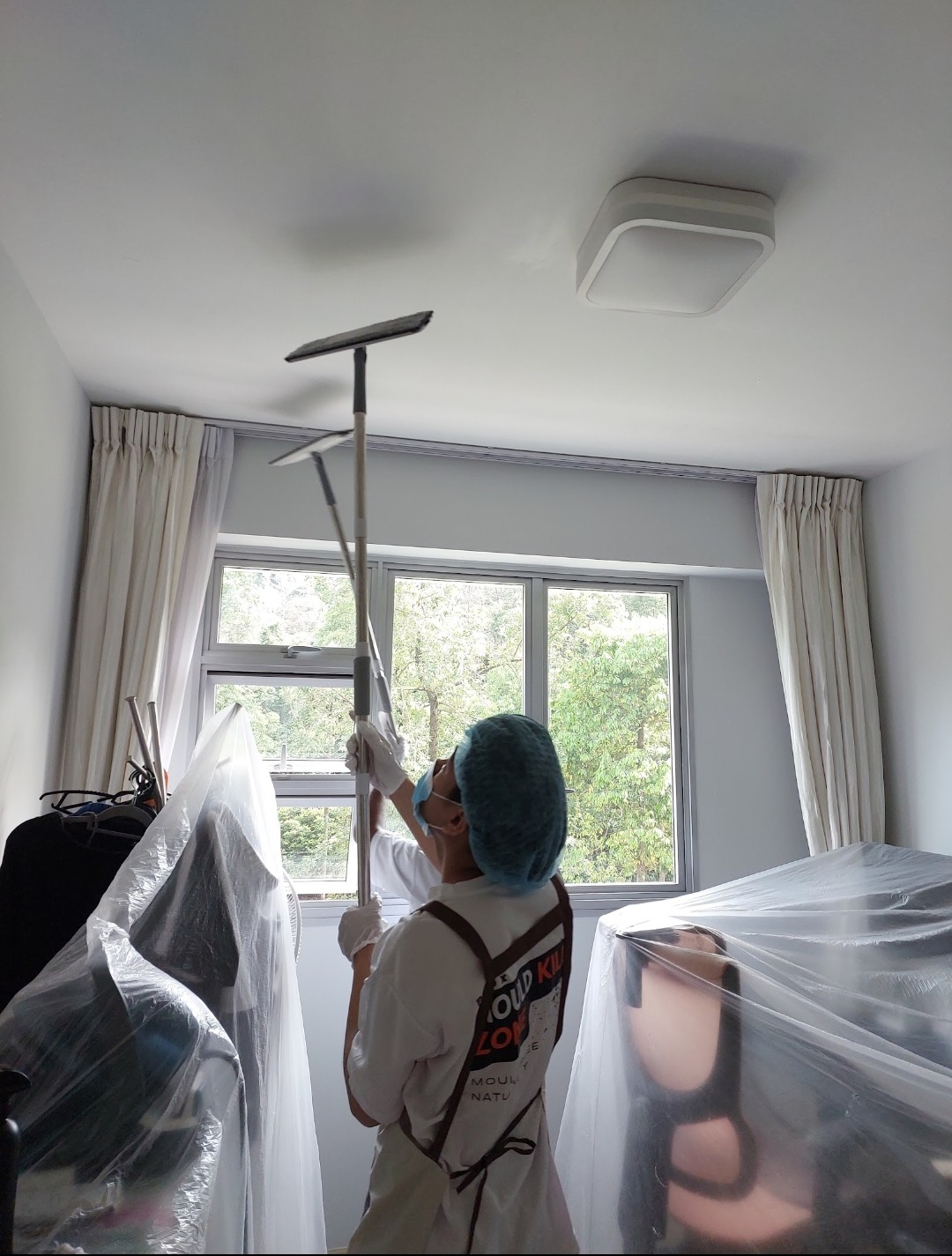
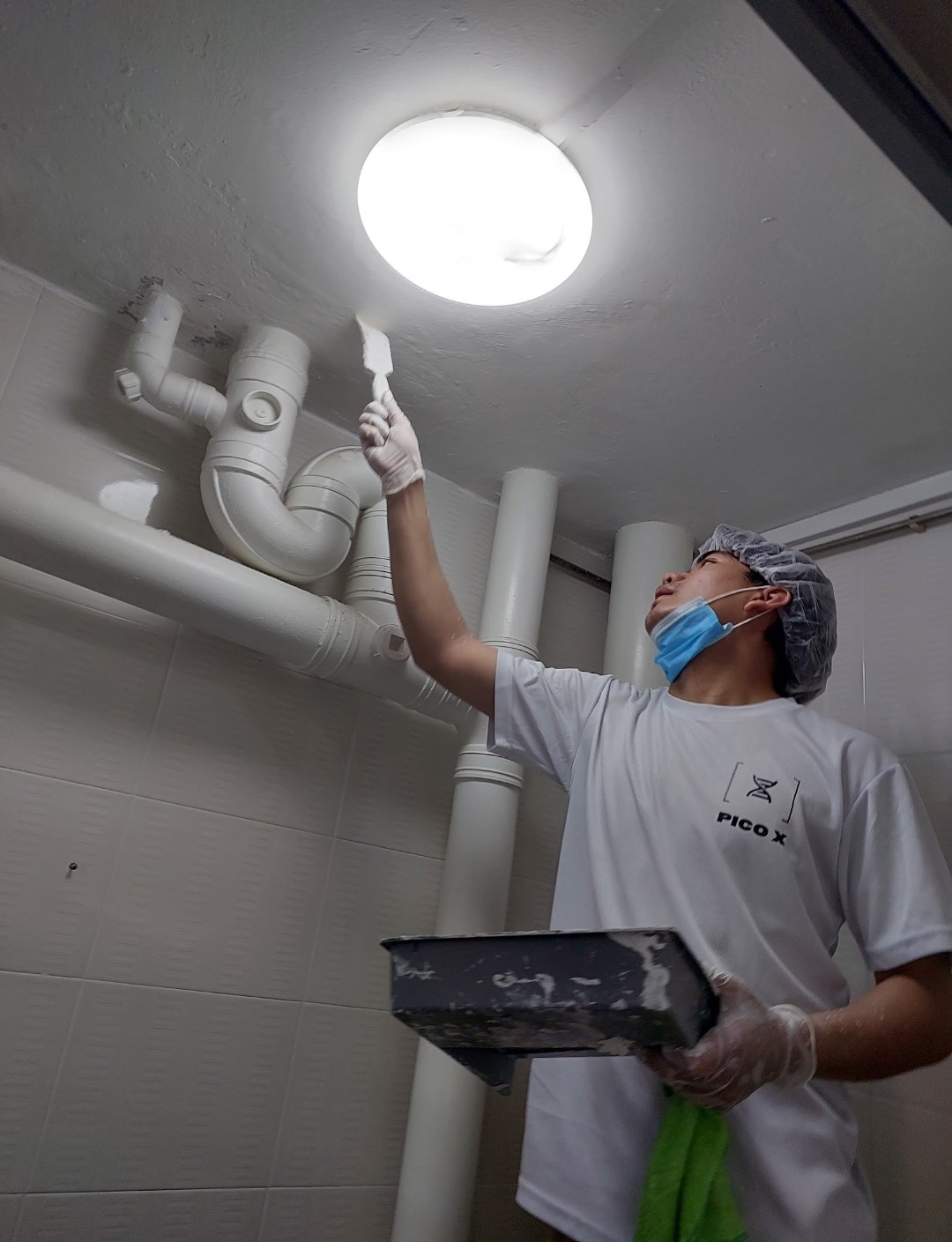
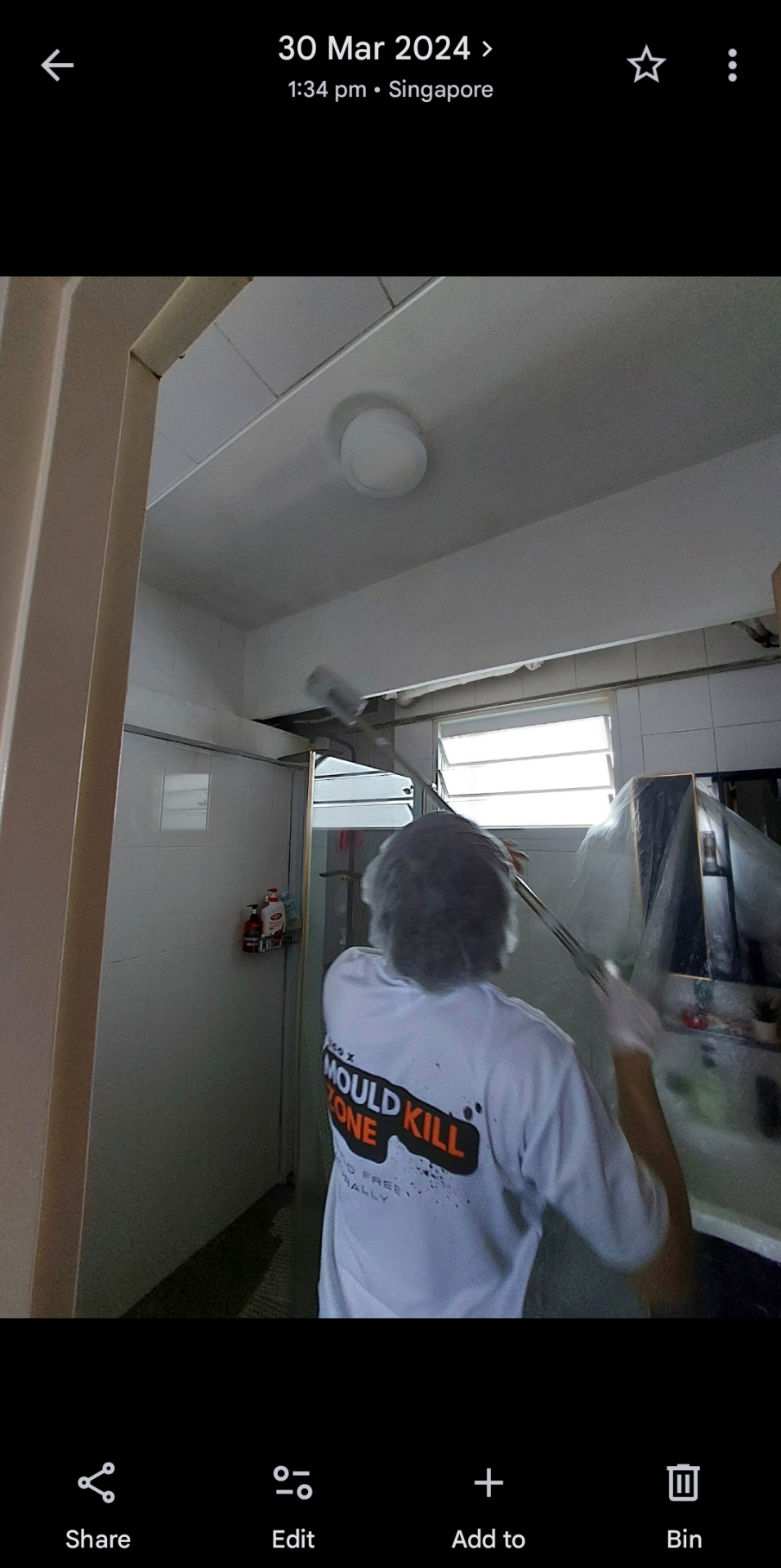
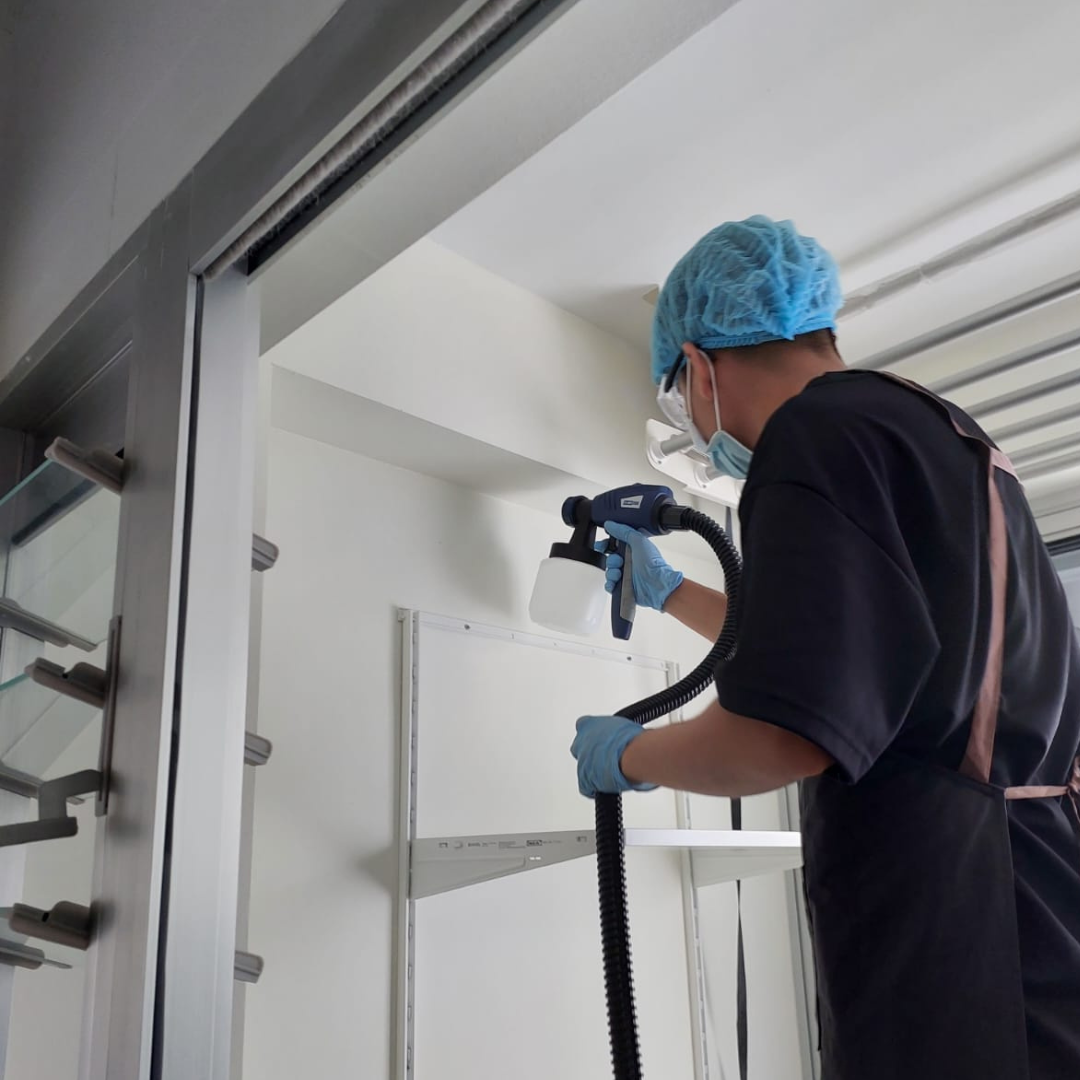
Our Team in Action
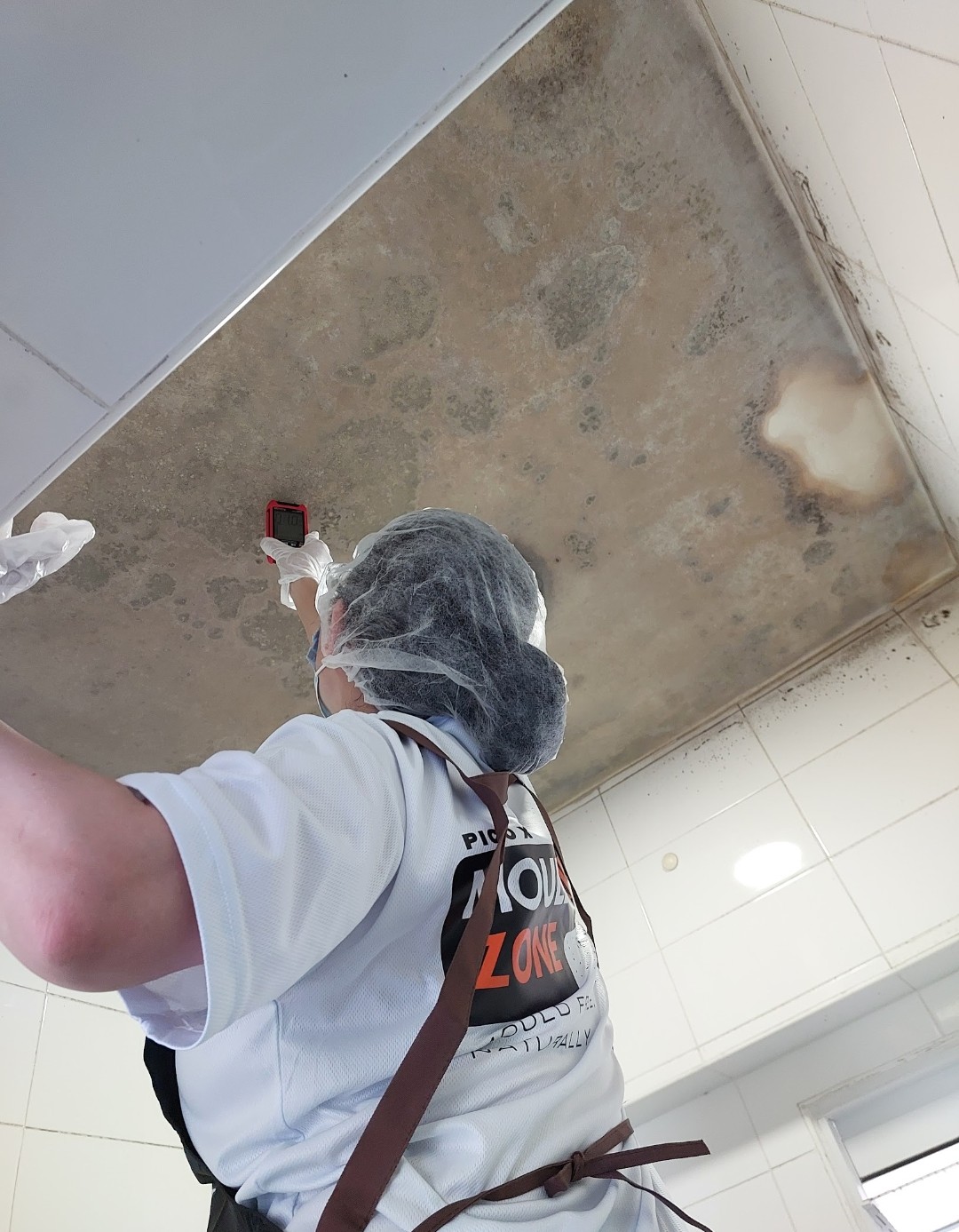
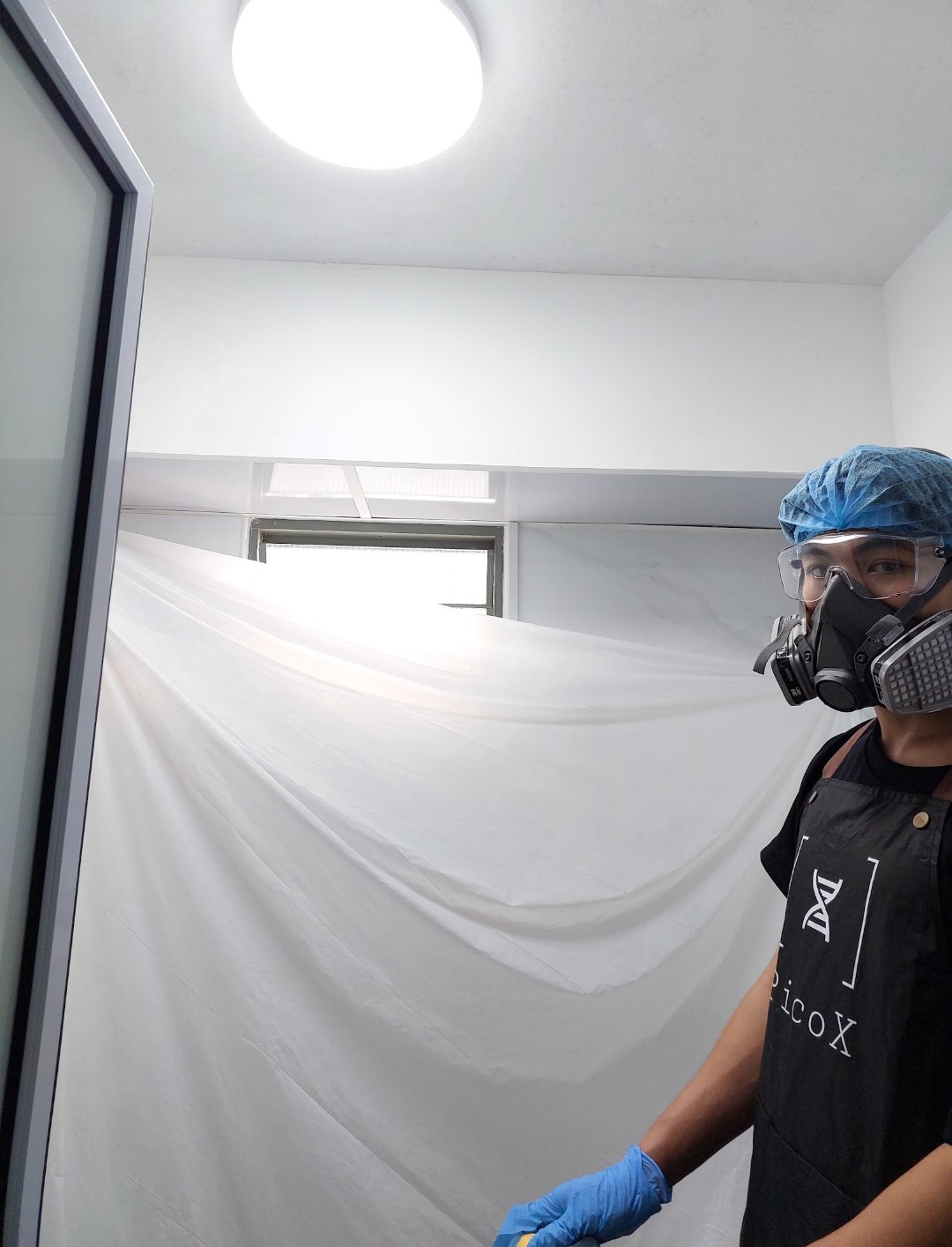
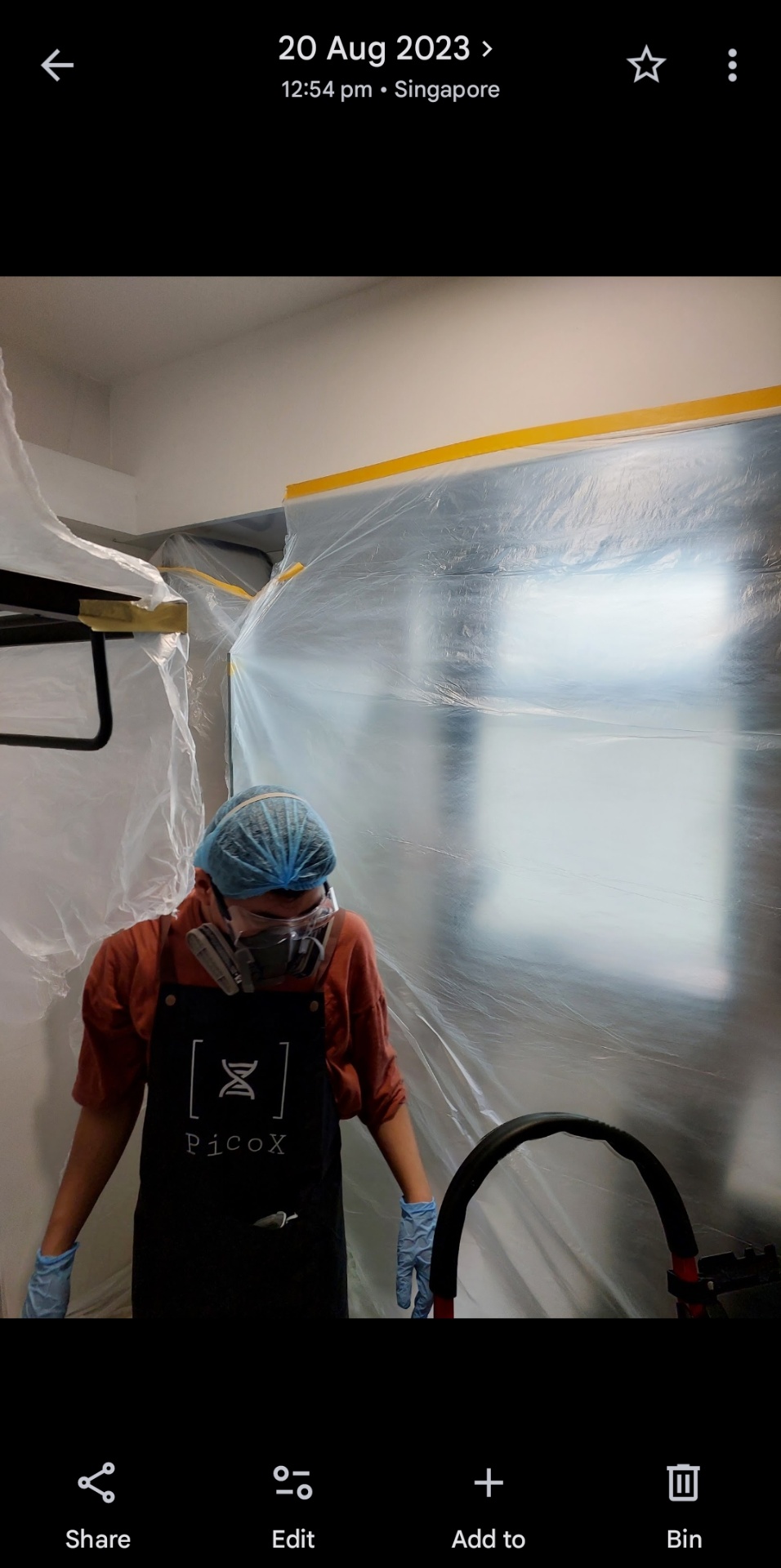
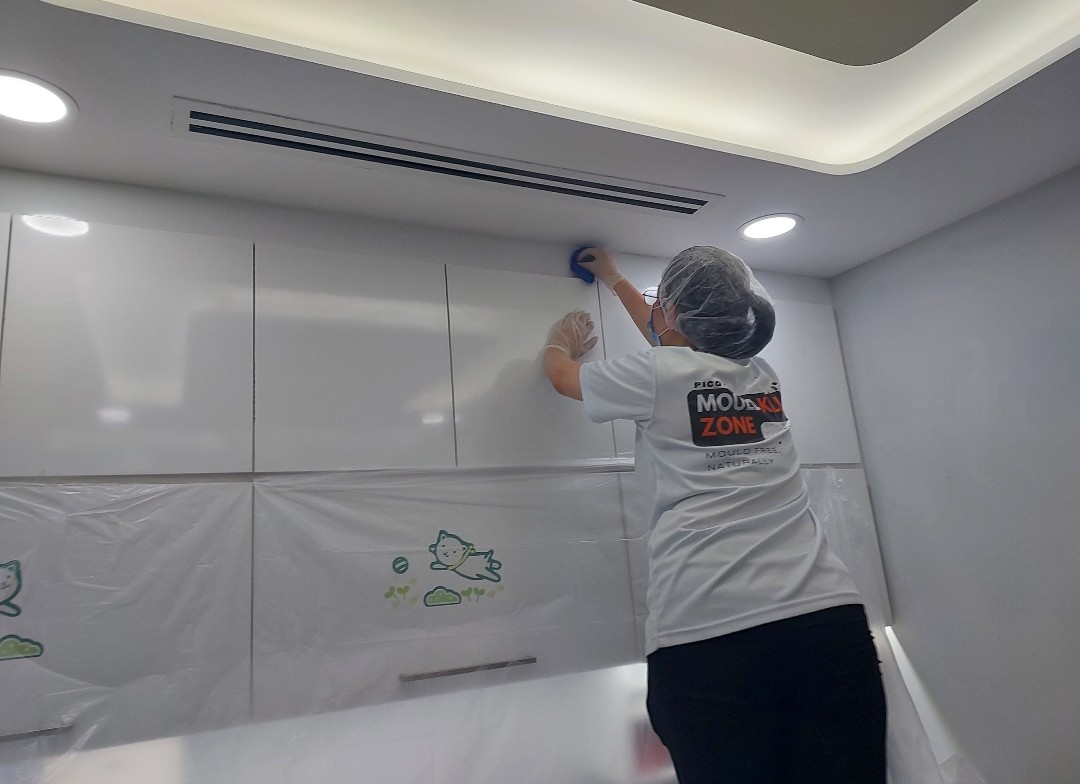
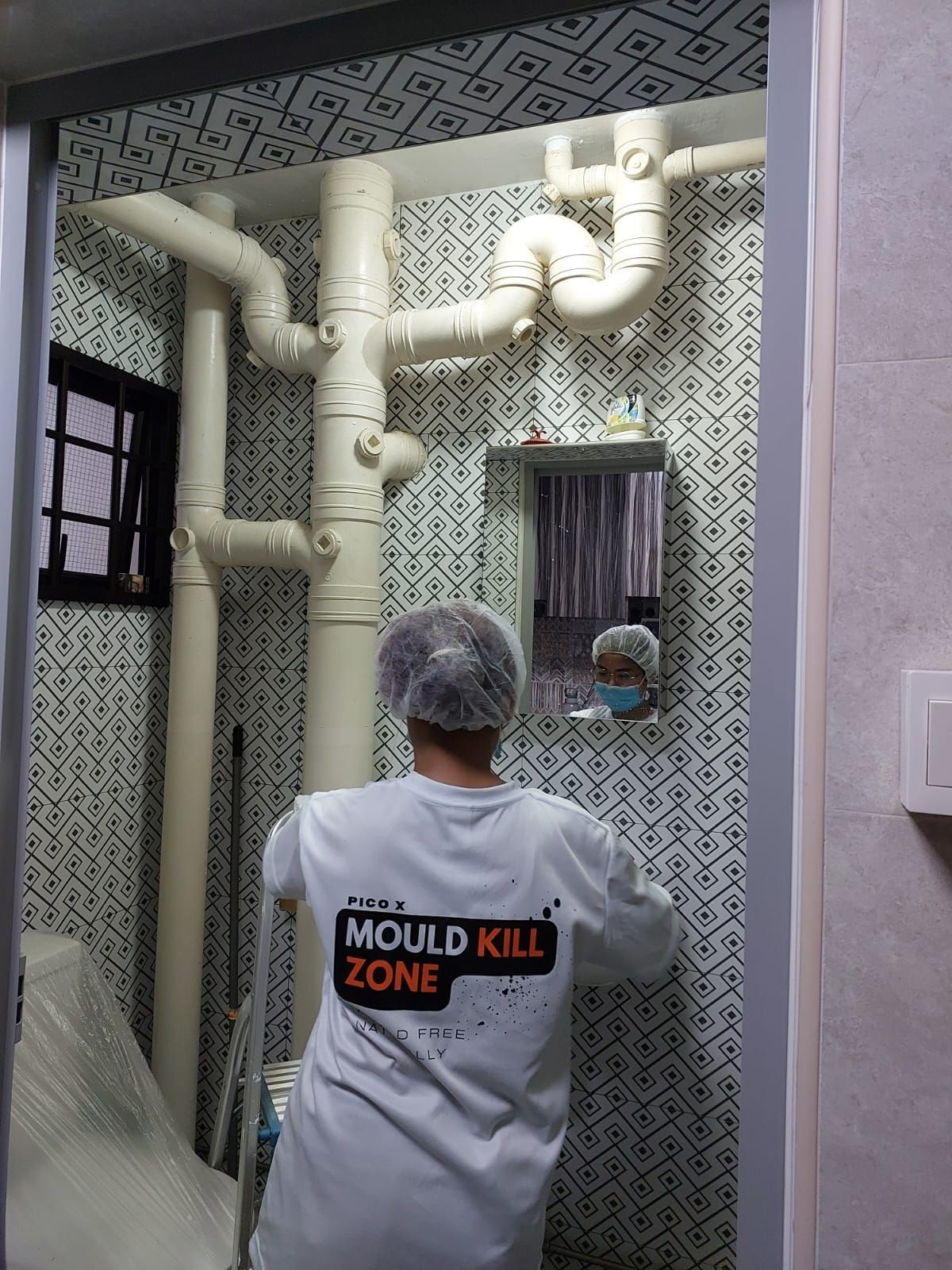
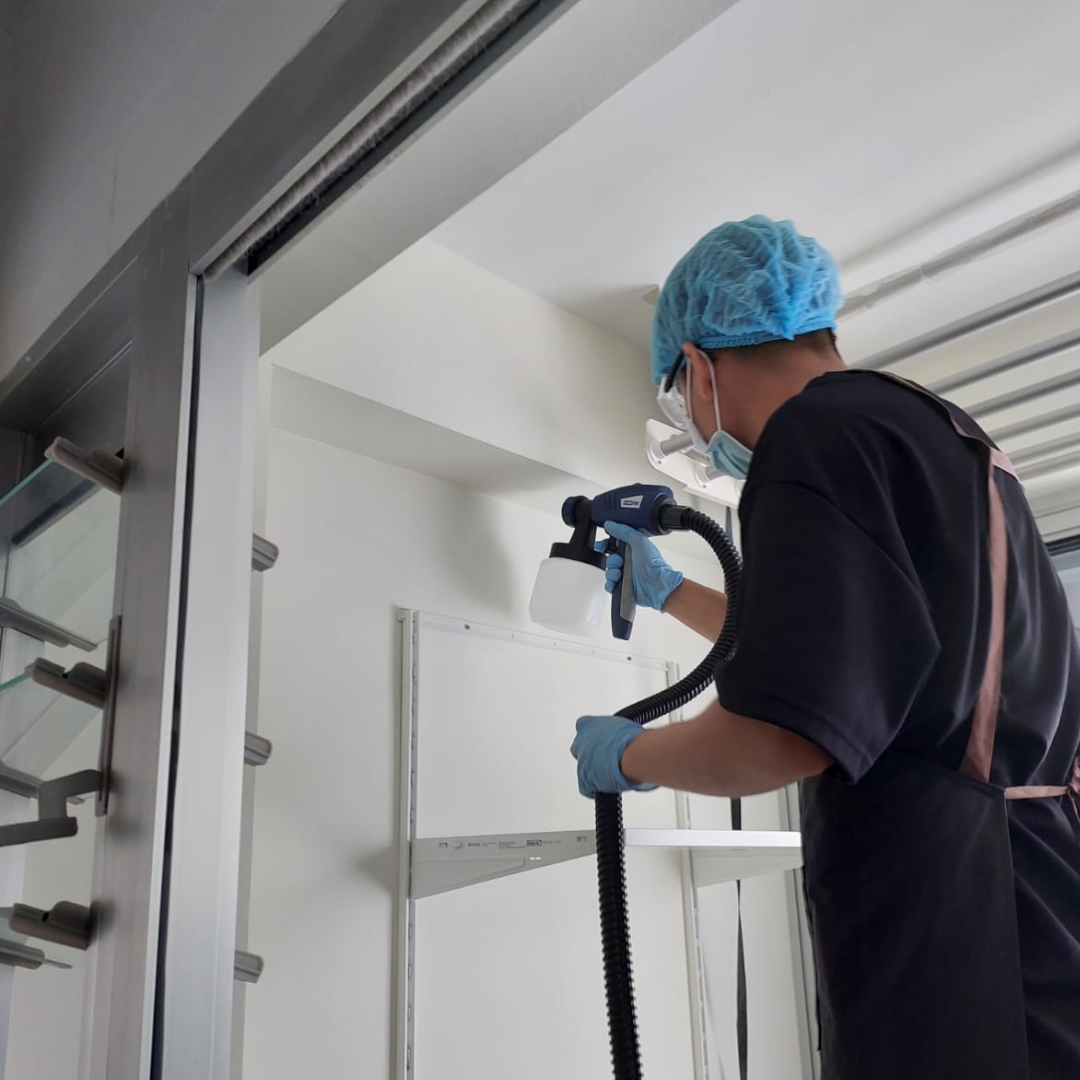
Trained Pico X Health technicians follow strict containment, PPE, and protocols on every job in Singapore.
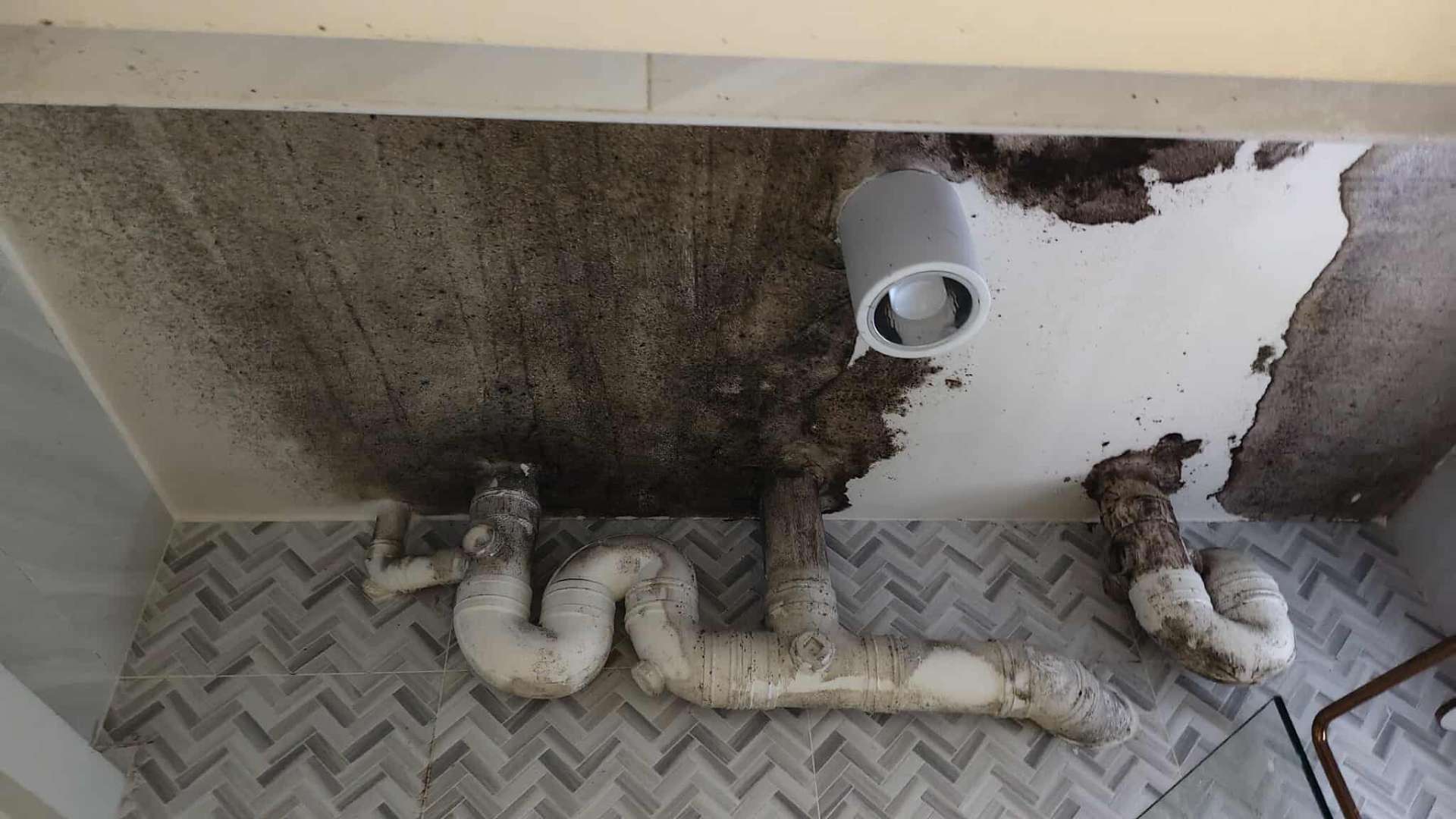
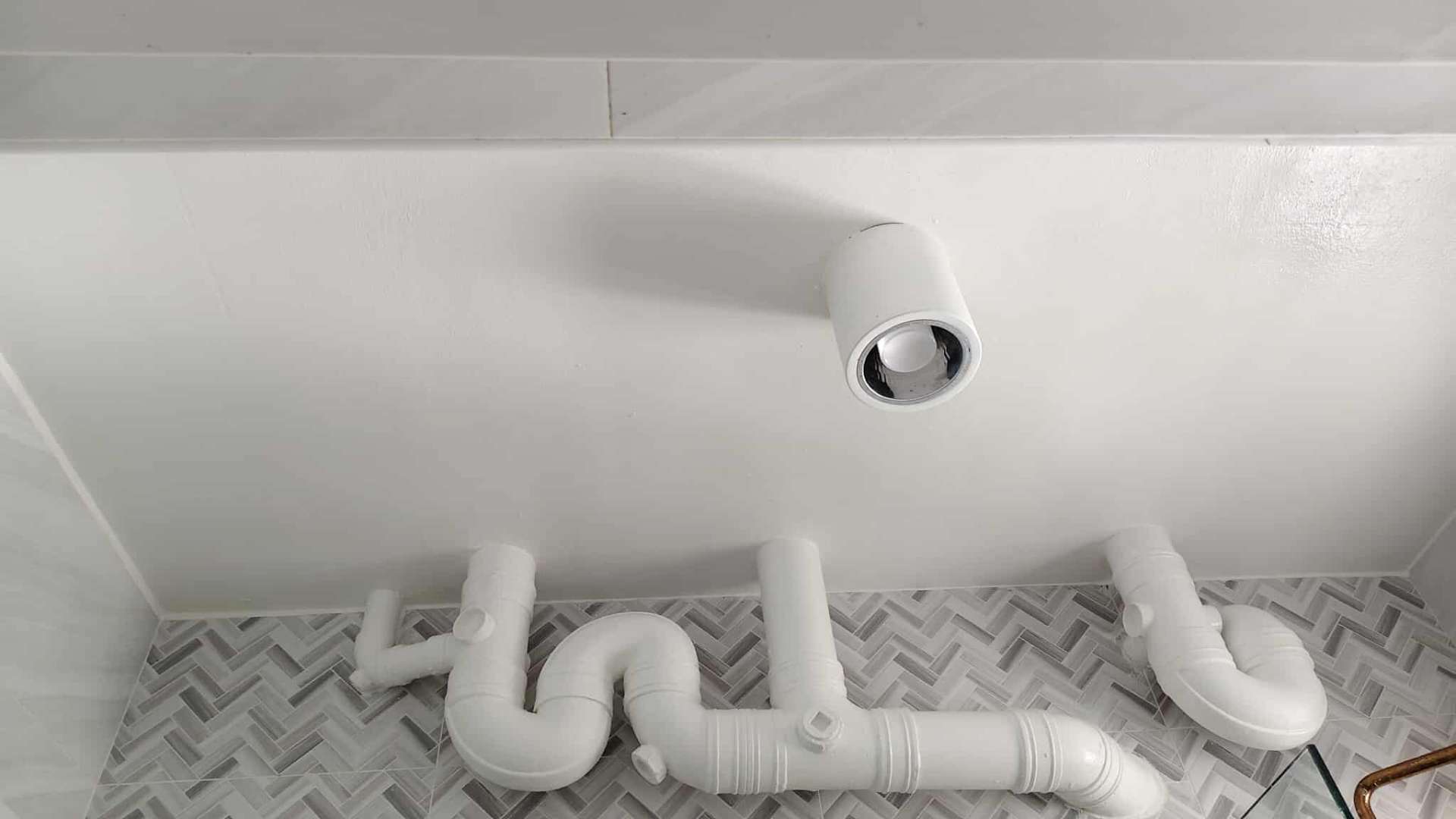
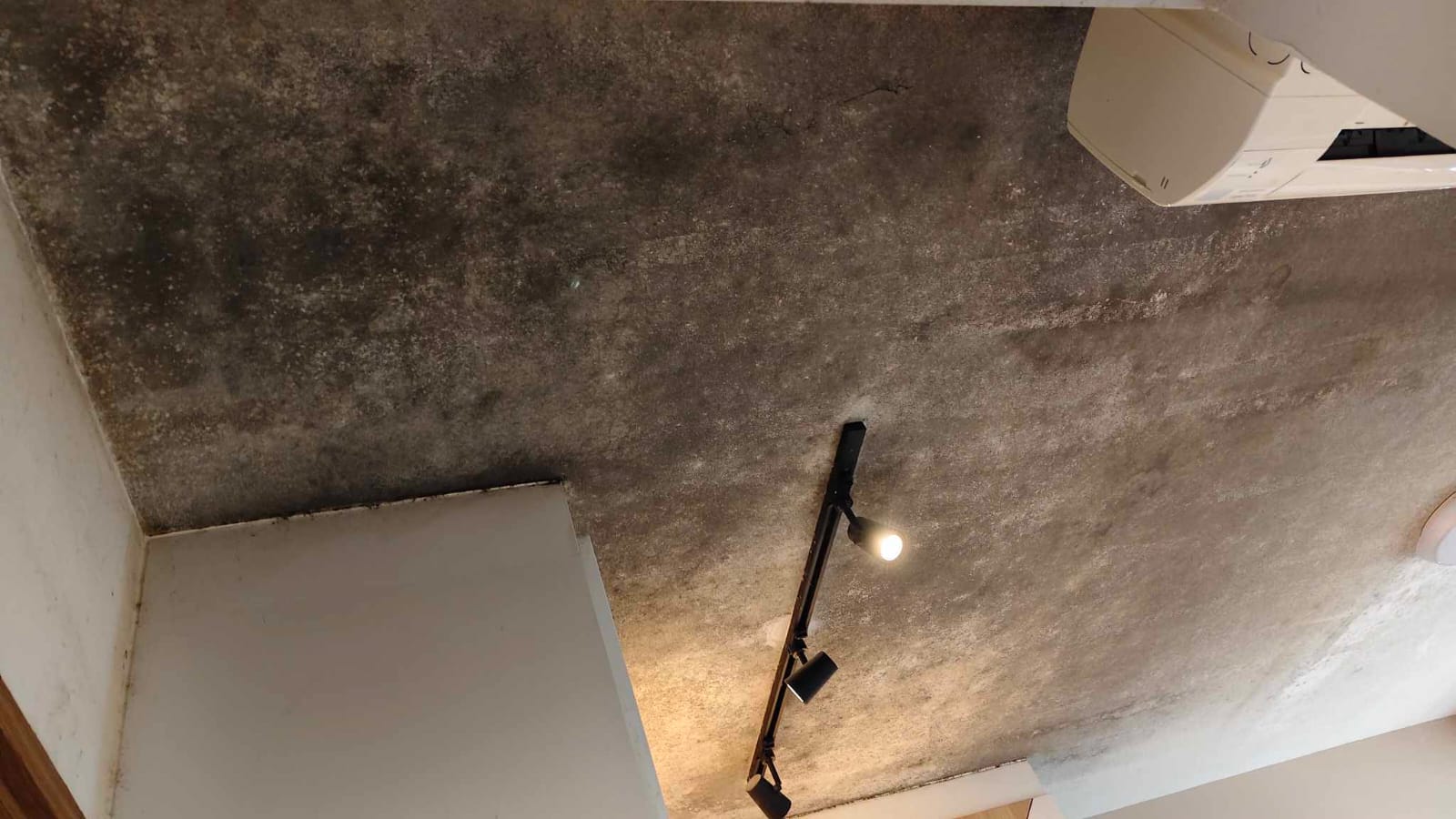
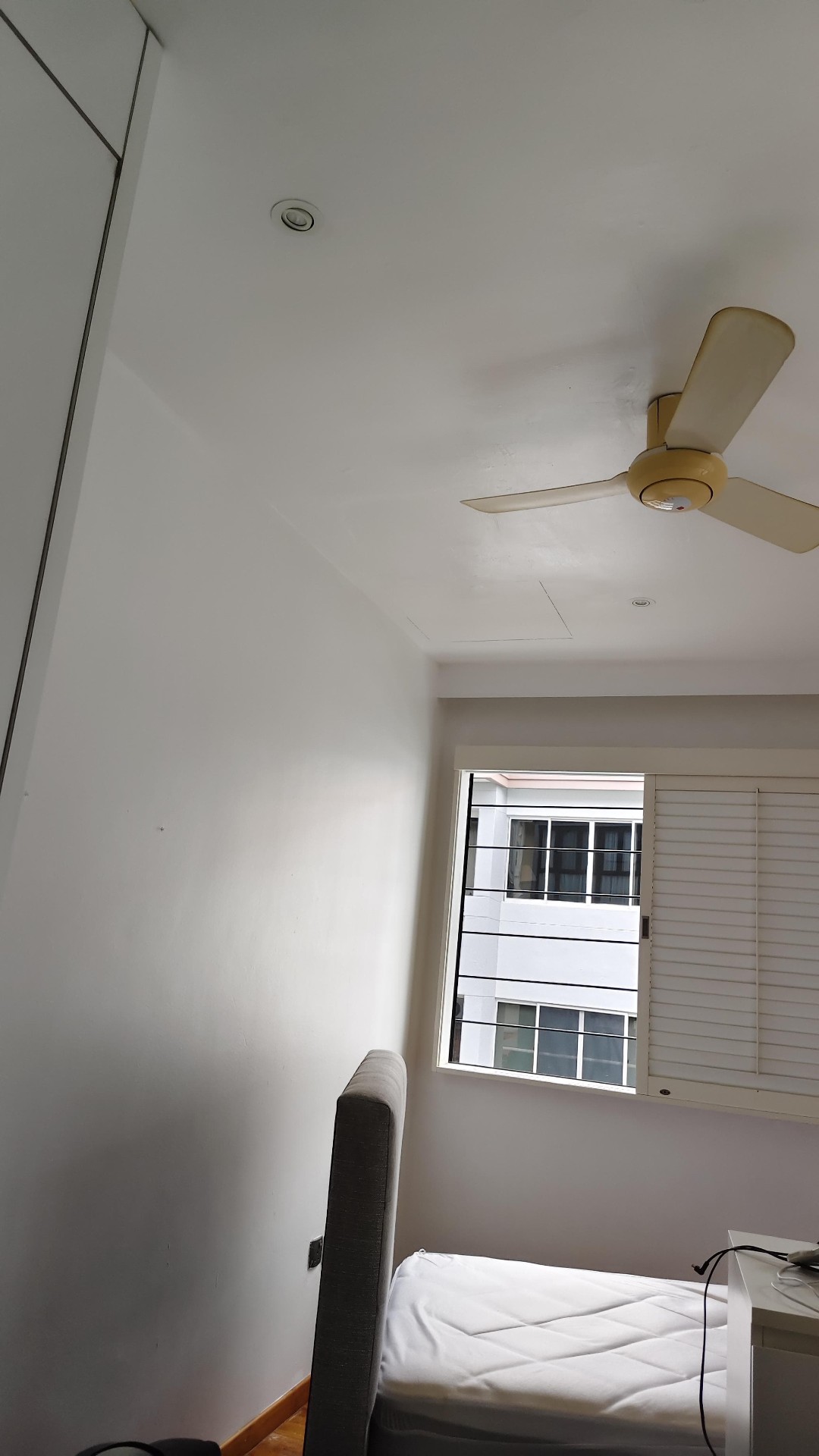
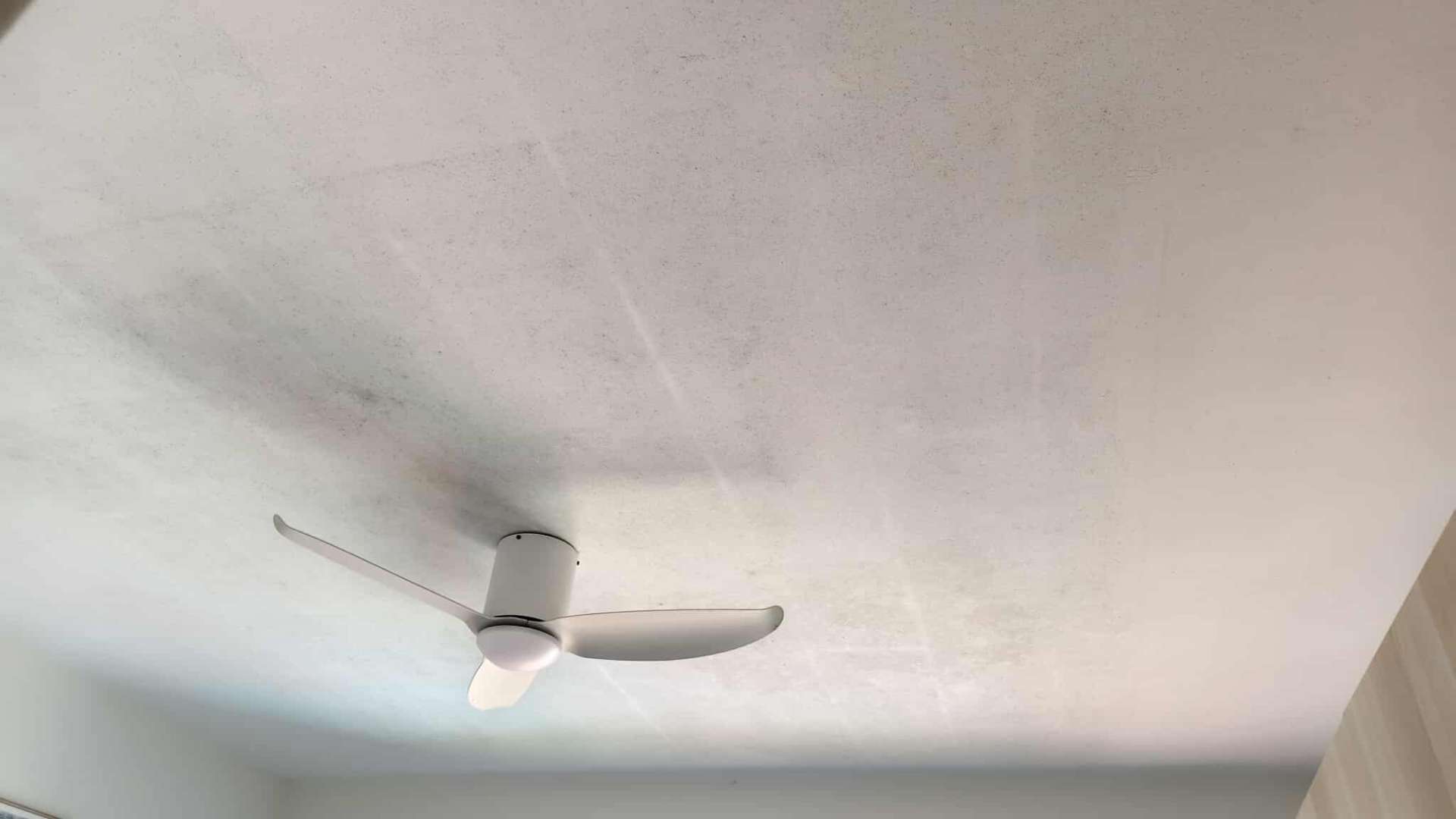
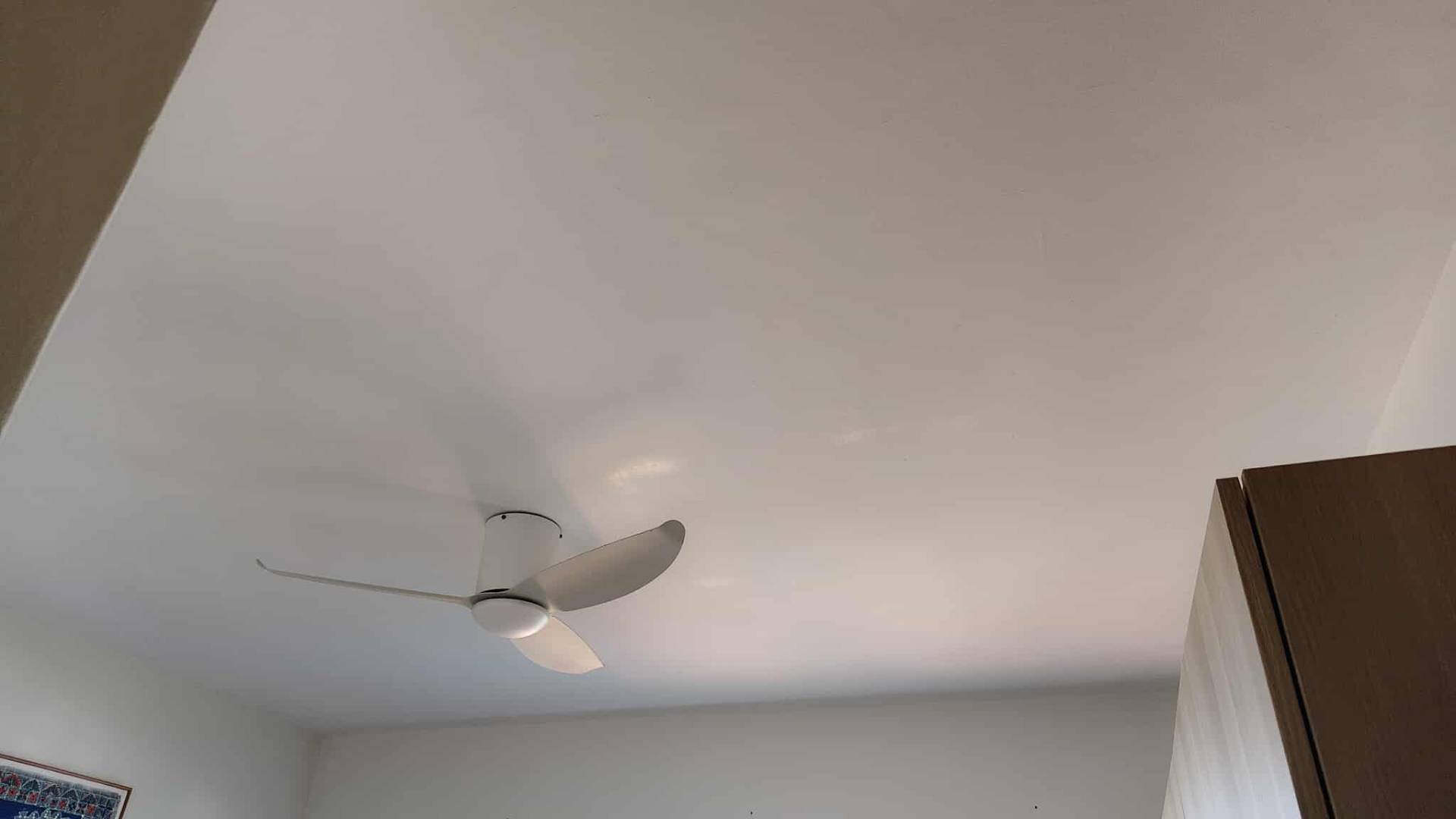
Before & After: Real Singapore Jobs
Documented mould remediation across HDB, condo, landed and commercial spaces.
Products We Use & Recommend
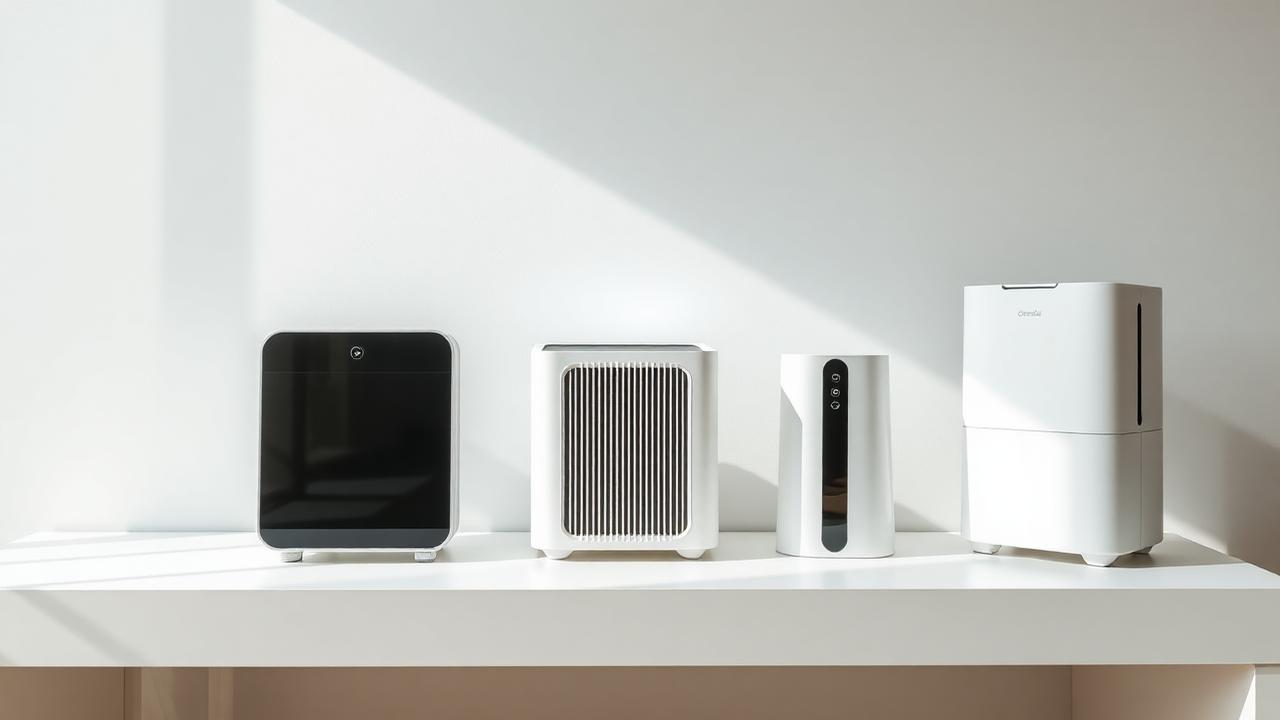
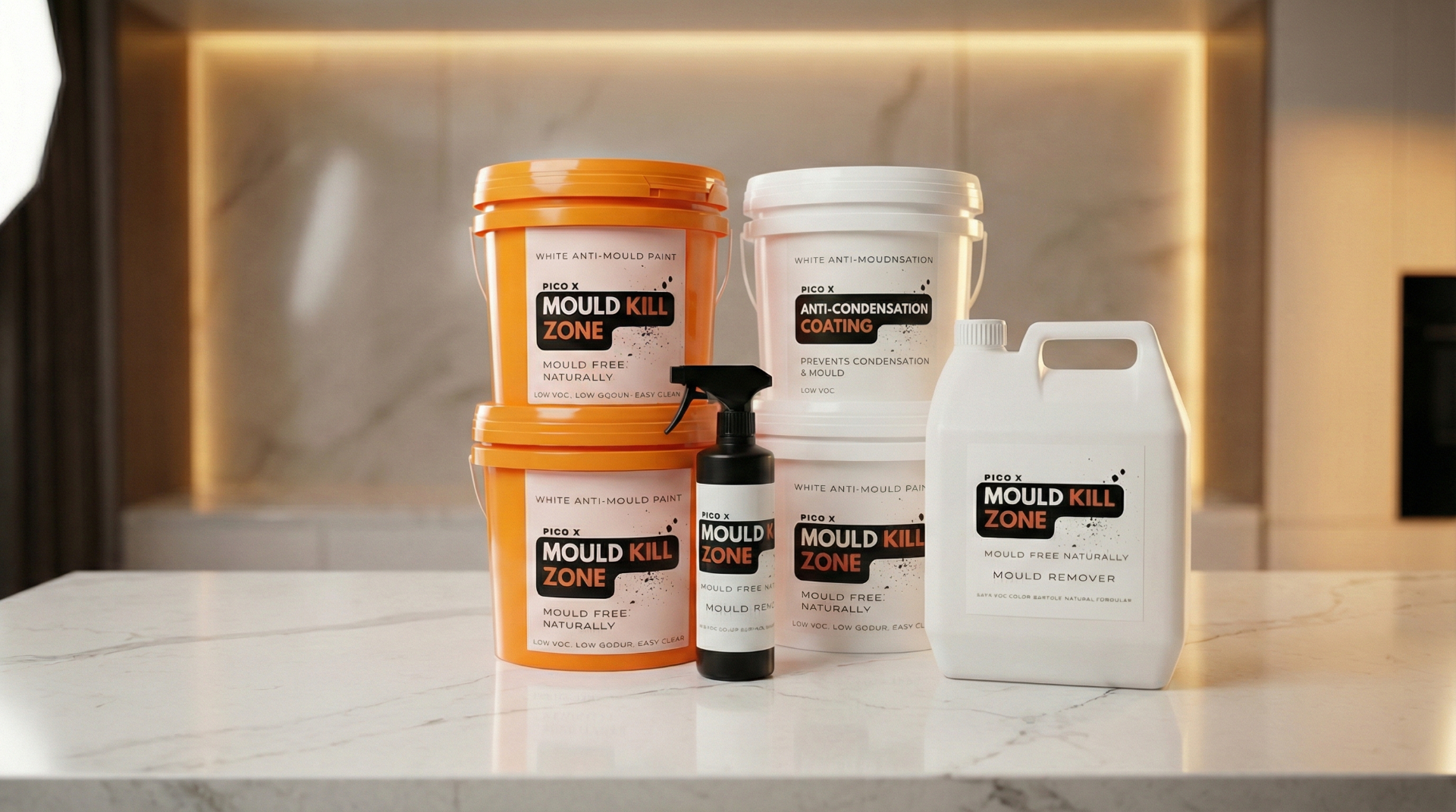
Professional-grade equipment and coatings selected for Singapore's humid climate.
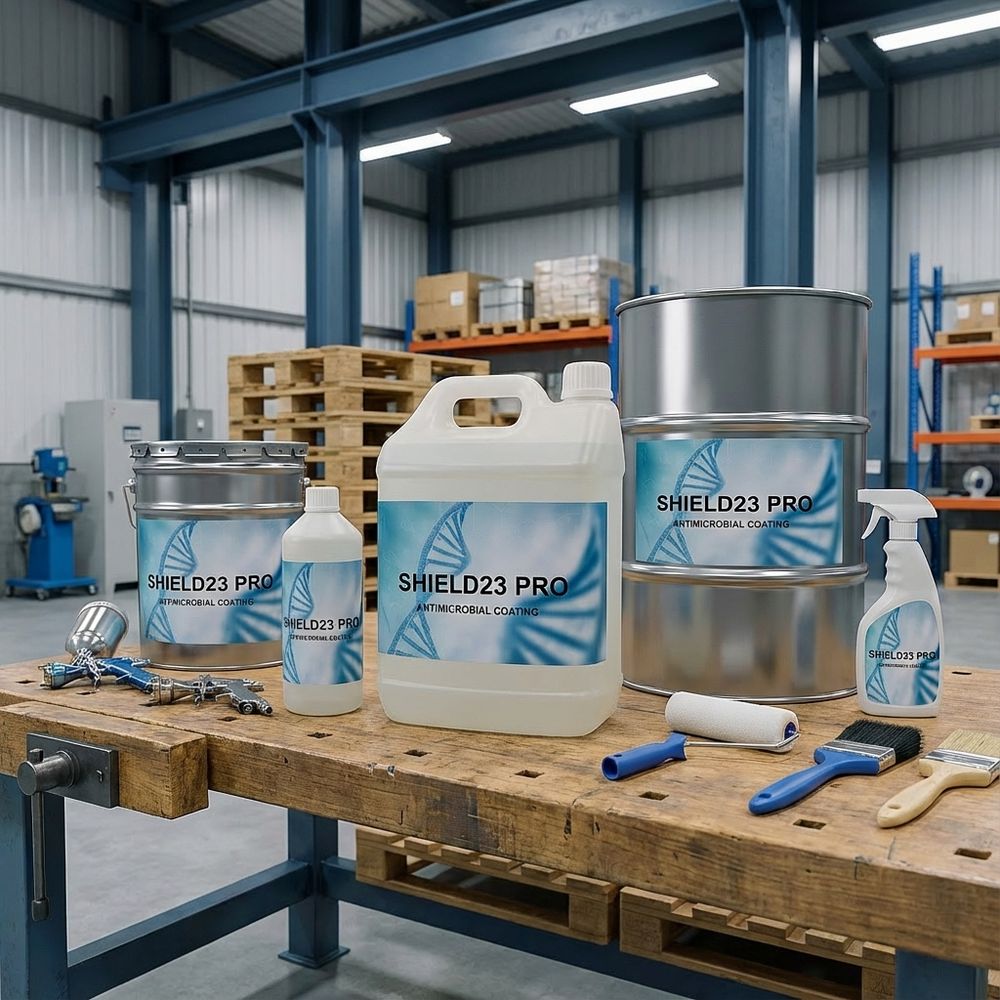
Shield23 Pro — Antimicrobial Coating
Long-life inorganic-ion defense applied by trained Pico X Health technicians across hospitals, F&B, schools, and homes.
Recommended Services
Pico X Health services most relevant to this topic.
Explore Next
- Full Price List — Every service and shop price in one place, with what is fixed and what is quoted.
- Professional Mould Report (S$299) — Written findings with equipment readings for claims, disputes and mediation.
- Mould Removal Methods Compared — Ozone, UV, steam, mouldicide and sealers — what actually works in Singapore homes.
- Is Ozone Fogging Safe at Home? — Why ozone is not used in occupied Singapore homes.
- Do Sealers and Anti-Mould Paint Stop Regrowth? — What a sealer plus anti-mould top coat can and cannot prevent.
- Should I DIY Mould Removal? — A quick checker for when DIY is fine and when it makes things worse.
- Case Studies — Documented before-and-after jobs across HDB, condo and commercial spaces.
- Video Library — Watch treatment, containment and prevention work in real Singapore homes.
- What to Expect After Booking — Preparation, arrival windows, payment options and warranty cover.
See the full price list
Full Price List — Every Pico X price in one place — mould treatment, bathroom packages, assessments, aircon care and shop products, with what is fixed and what is quoted.